Have you ever heard someone call Scranton, Pennsylvania, the “Electric City”? The name sounds like something out of a science fiction movie. But it’s not fiction at all. It’s a real piece of American history.
Scranton earned this nickname more than 130 years ago. Back then, electricity was still new and exciting. Most cities still used gas lamps and horse-drawn streetcars. But Scranton was different. This small Pennsylvania city became one of the first places in the entire country to embrace electric power in a big way.
People search for “why is Scranton called the Electric City” because the nickname appears everywhere. You’ll see it on local businesses, signs, and even a famous trolley museum. It’s also a question that comes up when people watch TV shows or read about Scranton. The nickname is more than just a fun name. It tells the story of a city that helped shape the modern world.
Understanding this nickname gives you a window into Scranton’s proud past. It’s a story about innovation, coal, steel, and the birth of electric transportation. Let’s explore that story together.
Short Answer
Scranton is called the “Electric City” because it was one of the first cities in the United States to operate a successful electric streetcar system. The Scranton Suburban Railway began running electric trolleys in 1886. Before that, most cities used horse-drawn streetcars or steam engines. Scranton’s early adoption of electric technology made the nickname stick.
Quick Facts Table
What Does “Electric City” Mean?
The meaning of “Electric City” is pretty simple. It means a city that became known for electricity. But in Scranton’s case, it has a specific meaning. It refers to the city’s early and successful use of electric streetcars.
In the late 1800s, most streetcars were pulled by horses. Some used steam engines. But Scranton was one of the first cities in America to run streetcars powered by electricity. These electric trolleys were clean, quiet, and fast. They were a huge improvement over the old ways.
The name “Electric City” also points to something bigger. It shows that Scranton was not afraid to try new technology. While other cities waited, Scranton jumped ahead. That bold spirit became part of the city’s identity.
Today, the name still appears on signs, businesses, and community events. It reminds people that Scranton was once at the forefront of a technological revolution.
Why Is Scranton Called “Electric City”?
The main reason Scranton is called the “Electric City” comes down to one thing: electric streetcars. But there’s more to the story than just trolleys.
In the 1880s, Scranton was a growing industrial city. Coal mining and iron production were booming. The city needed a better way to move people around. Horse-drawn streetcars were slow and messy. Steam-powered ones were loud and smoky. Electric streetcars offered a cleaner, faster alternative.
The Scranton Suburban Railway began operating electric trolleys in 1886. This was a big deal. It was one of the first successful electric streetcar systems in the United States. Other cities had tried electric streetcars before, but many failed. Scranton’s system worked.
The city’s geography also played a role. Scranton sits in a valley surrounded by hills. This made horse-drawn streetcars especially difficult. Horses struggled to climb the steep slopes. Electric motors did not have that problem. They could handle the hills with ease.
Because of this, electric streetcars quickly became a symbol of Scranton. They represented progress, innovation, and a bright future. Over time, people started calling Scranton the “Electric City.” The name stuck.
There’s also another layer to the story. Scranton was an early adopter of electric streetlights. Some sources suggest the city had electric lights as early as the 1880s. This added to the “electric” reputation. But the streetcars were the main reason for the nickname.
So why did people start calling it that? The answer is simple. Scranton embraced electricity before most other American cities. It became famous for its electric trolleys. And the nickname “Electric City” was born.
Origin of the Nickname
The exact origin of the “Electric City” nickname is a bit fuzzy. Historians have not found a single document that declares, “From this day forward, Scranton shall be known as the Electric City.” The name seems to have developed slowly over time.
What we do know is this: after the electric streetcar system began operating in 1886, local newspapers started using the term. They wrote about Scranton’s “electric street railway” and the city’s “electric cars.” Over time, the phrase “Electric City” appeared more and more often.
By the early 1900s, the nickname was widely used. Local businesses adopted it. Postcards featured it. Civic leaders embraced it. The name had become part of Scranton’s identity.
One important thing to understand is that the nickname was not a marketing gimmick. It grew from real achievements. Scranton genuinely was one of the first cities in the country with a successful electric streetcar system. The name was earned, not invented.
Who Coined the Nickname?
Here’s an honest answer: historians have not identified a single person who coined the nickname “Electric City.” Unlike some nicknames that can be traced to a specific writer or politician, Scranton’s nickname evolved naturally.
The leading historical evidence suggests the name came from newspapers and everyday conversation. Local reporters wrote about Scranton’s electric streetcars so often that the association became permanent. Civic boosters and business owners also helped spread the name. They used it to promote the city as a modern, forward-thinking place.
The Electric City Trolley Museum notes that the nickname grew from the city’s pioneering electric trolley system. But no single individual has been credited with creating the phrase.
This is common with city nicknames. Many nicknames develop from repeated use rather than a single moment of invention. Scranton’s “Electric City” appears to be one of those cases.
History Behind the Nickname
To really understand the nickname, you have to understand Scranton in the late 1800s. The city was booming. Anthracite coal from the surrounding mines fueled factories and homes across the Northeast. Iron and steel mills operated around the clock. Railroads connected Scranton to major markets.
But the city had a transportation problem. Its hills made horse-drawn streetcars slow and unreliable. The growing population needed a better way to get around.
Enter the electric streetcar. In 1886, the Scranton Suburban Railway began running electric trolleys. According to local historical records, the system was one of the first of its kind in the United States. It proved that electric streetcars could work on a large scale.
The success of the system was huge. Other cities sent engineers to Scranton to study the trolleys. The city became a model for electric transportation. This reputation spread through newspapers, trade journals, and word of mouth.
The nickname “Electric City” was a natural result. Scranton had become synonymous with electric innovation. The name captured the city’s spirit of progress and industrial might.
During the same period, Scranton was also known for its coal and iron industries. The city was sometimes called the “Anthracite Capital of the World.” But the “Electric City” name had a special ring to it. It sounded modern. It sounded exciting. And it stuck.
Timeline
How the Nickname Became Popular
The “Electric City” nickname spread through several channels. Local newspapers played a huge role. Reporters wrote about the electric streetcars constantly. They described Scranton as a city powered by electricity. The phrase caught on.
Tourism also helped. In the late 1800s and early 1900s, people traveled to Scranton to see the electric trolleys. Postcards from that era often feature the city’s electric streetcars and the “Electric City” name. These postcards spread the nickname far beyond Pennsylvania.
Local businesses embraced the name too. Shops, hotels, and restaurants started using “Electric City” in their names. This created a sense of local pride. The nickname became a brand.
Civic leaders and boosters also promoted the name. They used it to attract investment and new residents. Scranton was presented as a modern, electric-powered city. It worked. The nickname helped shape the city’s image for generations.
Myths vs Facts
Is the Nickname Still Used Today?
Yes, absolutely. The “Electric City” nickname is still alive and well in Scranton. You can see it everywhere.
Local businesses use the name. There’s the Electric City Trolley Museum, the Electric City Sign, and countless shops and restaurants with “Electric City” in their names. The city’s tourism materials proudly promote the nickname.
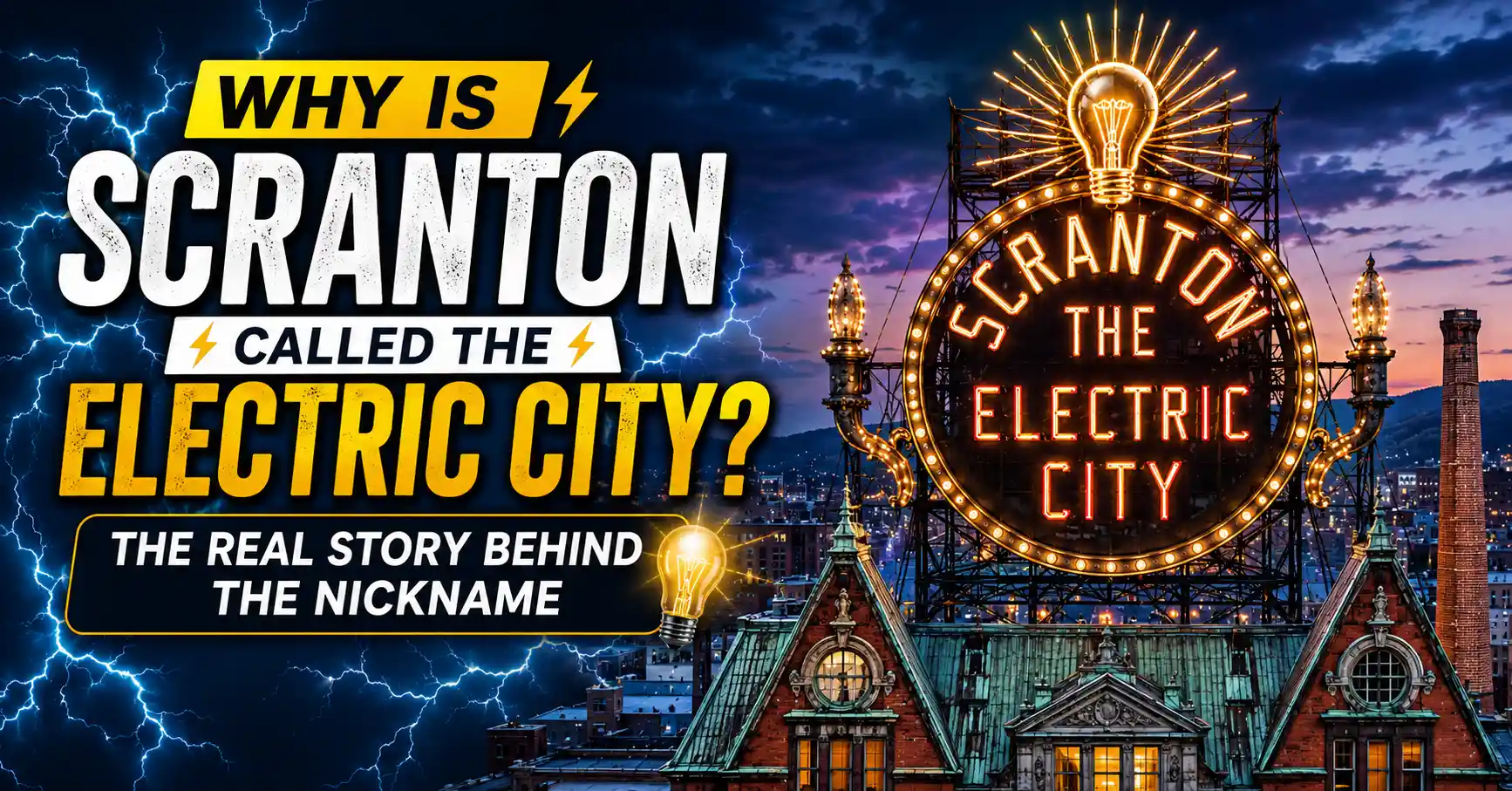
The famous Electric City sign is a landmark. It lights up the night and welcomes visitors to downtown Scranton. Locals are proud of the name. It connects them to their city’s history.
The nickname also appears in local events and community programs. It’s part of Scranton’s identity. Even young people who grew up in the city know the name. It’s taught in local schools and shared through family stories.
Cultural Impact
The “Electric City” nickname has shaped Scranton’s identity in many ways. It gives the city a unique sense of pride. While many cities have industrial nicknames, few sound as exciting as “Electric City.”
The nickname has appeared in books about Scranton’s history. Local authors have written about the electric streetcar era. The story of the city’s innovation is shared through museums and historical societies.
The Electric City Trolley Museum is a major cultural attraction. It preserves restored electric trolleys and tells the story of Scranton’s transit history. Visitors can ride historic trolleys and learn why the city earned its nickname.
The nickname also appears in local art, music, and events. It’s a symbol of Scranton’s resilience and forward-thinking spirit. Even though the original trolley system is gone, the name lives on.
Interesting Facts
Here are some unique facts about Scranton’s “Electric City” nickname that you might not know:
- The Scranton Suburban Railway system was so successful that engineers from other cities came to study it. Scranton became a model for electric streetcar systems across the country.
- The city’s hills actually helped make the electric streetcars more necessary. Horses struggled on the steep slopes, but electric motors handled them easily.
- The Electric City Trolley Museum is located in the city’s historic railroad station. It features restored electric trolleys that visitors can ride.
- Scranton was also home to the first commercially operated electric streetcar in the United States, according to some local historical accounts. The exact date is disputed, but the general timeframe is the mid-1880s.
- The famous “Electric City” sign in downtown Scranton is a popular photo spot for visitors and locals alike.
- Before the electric streetcar era, Scranton used horse-drawn streetcars. They were slow and often struggled on the city’s hills.
- The nickname “Electric City” appears in the names of dozens of local businesses, from restaurants to real estate companies.
- Scranton’s electric streetcar system operated for more than 60 years before being replaced by buses in the mid-20th century.
- The city’s electric history is preserved at the Steamtown National Historic Site, which focuses on steam railroads but also tells the story of Scranton’s transportation innovations.
- The nickname has been used in popular culture, including references in TV shows and movies set in Scranton.
Other Nicknames of Scranton
Scranton has more than one nickname. While “Electric City” is the most famous, the city has been called other things over the years.
The most common other nickname is “The Anthracite Capital of the World.” This name comes from Scranton’s role as a major center for anthracite coal mining. Anthracite is a hard, clean-burning type of coal that was highly valued. Scranton produced and shipped huge amounts of it.
Scranton is also sometimes called “Steamtown.” This nickname relates to the city’s railroad history. The Steamtown National Historic Site preserves this part of Scranton’s past.
If you want to learn more about all of Scranton’s nicknames, check out our complete Scranton Nicknames guide. It covers every name the city has earned over the years.
Related City Nicknames
Scranton’s “Electric City” is just one of many fascinating city nicknames across the United States. Here are a few others you might enjoy learning about:
Comparison: Electric City vs Steel City
Scranton’s “Electric City” nickname is often compared to Pittsburgh’s “Steel City.” Both are Pennsylvania cities with industrial nicknames. Both nicknames come from the late 1800s and early 1900s. But they tell different stories.
⚡ Electric City (Scranton)
- Named for early electric streetcars
- Focused on innovation and new technology
- Smaller city, regional impact
- Nickname emerged in the late 1880s
- Celebrates transportation and electricity
🏭 Steel City (Pittsburgh)
- Named for steel production
- Focused on heavy industry and manufacturing
- Larger city, national impact
- Nickname became popular in the early 1900s
- Celebrates industrial might and labor
Both nicknames reflect a time when Pennsylvania cities powered America’s growth. Scranton gave the country electric transportation. Pittsburgh gave the country steel for bridges, buildings, and railroads. Together, they show how important Pennsylvania was to the nation’s industrial revolution.
If you’re curious about other industrial city nicknames, explore our Famous City Nicknames page for more stories like this.
Frequently Asked Questions
Explore More
If you enjoyed learning about Scranton’s “Electric City” nickname, there’s a lot more to discover. Here are some great places to continue your journey:
Conclusion
So why is Scranton called the “Electric City”? The answer is rooted in real history. In the late 1800s, this Pennsylvania city became one of the first places in America to operate a successful electric streetcar system. The Scranton Suburban Railway started running electric trolleys in 1886. It was a bold move at a time when most cities still relied on horses and steam.
The nickname grew naturally from this achievement. Newspapers wrote about the electric streetcars. Businesses adopted the name. Civic leaders promoted it. Over time, “Electric City” became part of Scranton’s identity.
Today, the nickname is still everywhere. It’s on signs, in business names, and in the hearts of locals. It reminds people that Scranton was once at the forefront of a technological revolution. The city helped show the world what electricity could do.
The next time you hear “Electric City,” you’ll know the story. It’s not just a nickname. It’s a piece of American history, born from innovation and the spirit of a small city that dared to try something new.
Sources & References
The following authoritative sources were used to ensure the accuracy of this article:
- Electric City Trolley Museum Association — “History of Electric Trolleys in Scranton”
- Lackawanna Historical Society — “Scranton’s Electric Streetcar History”
- City of Scranton, Pennsylvania — Official City Website
- Encyclopaedia Britannica — “Scranton, Pennsylvania”
- Pennsylvania Historical and Museum Commission — “Electric City Historical Marker”
- National Park Service — “Steamtown National Historic Site: Scranton History”
Note: Some historical details about early electric streetcar experiments are based on local historical society records. Where exact dates or original documents are uncertain, this article explains the leading historical interpretations rather than presenting speculation as fact.