Nottingham is a city steeped in legend, industry, and rebellion. Located in the East Midlands of England, it is globally recognized as the home of Robin Hood.
Beyond the folklore, this vibrant city has earned several distinct monikers that reflect its unique history, from its underground wonders to its rebellious spirit. Here are the fascinating Nottingham Nicknames explained.
Quick Answer Box
⚡ Quick Answer
The most famous nickname for Nottingham is “The City of Robin Hood” or simply “Robin Hood’s City.” Other prominent nicknames include “The Queen of the Midlands,” “The City of Caves,” and historically, “The Rebel City.”
Quick Facts Table
Official Nickname of Nottingham
Unlike some cities that have passed legislation to adopt a slogan (such as “The Windy City” in Chicago), Nottingham does not have an “official” nickname in a legal or municipal sense. However, “The City of Robin Hood” is the most commonly recognized and officially used moniker in tourism and branding. It functions as a de facto official title due to its global recognition.
What Are the Nicknames of Nottingham?
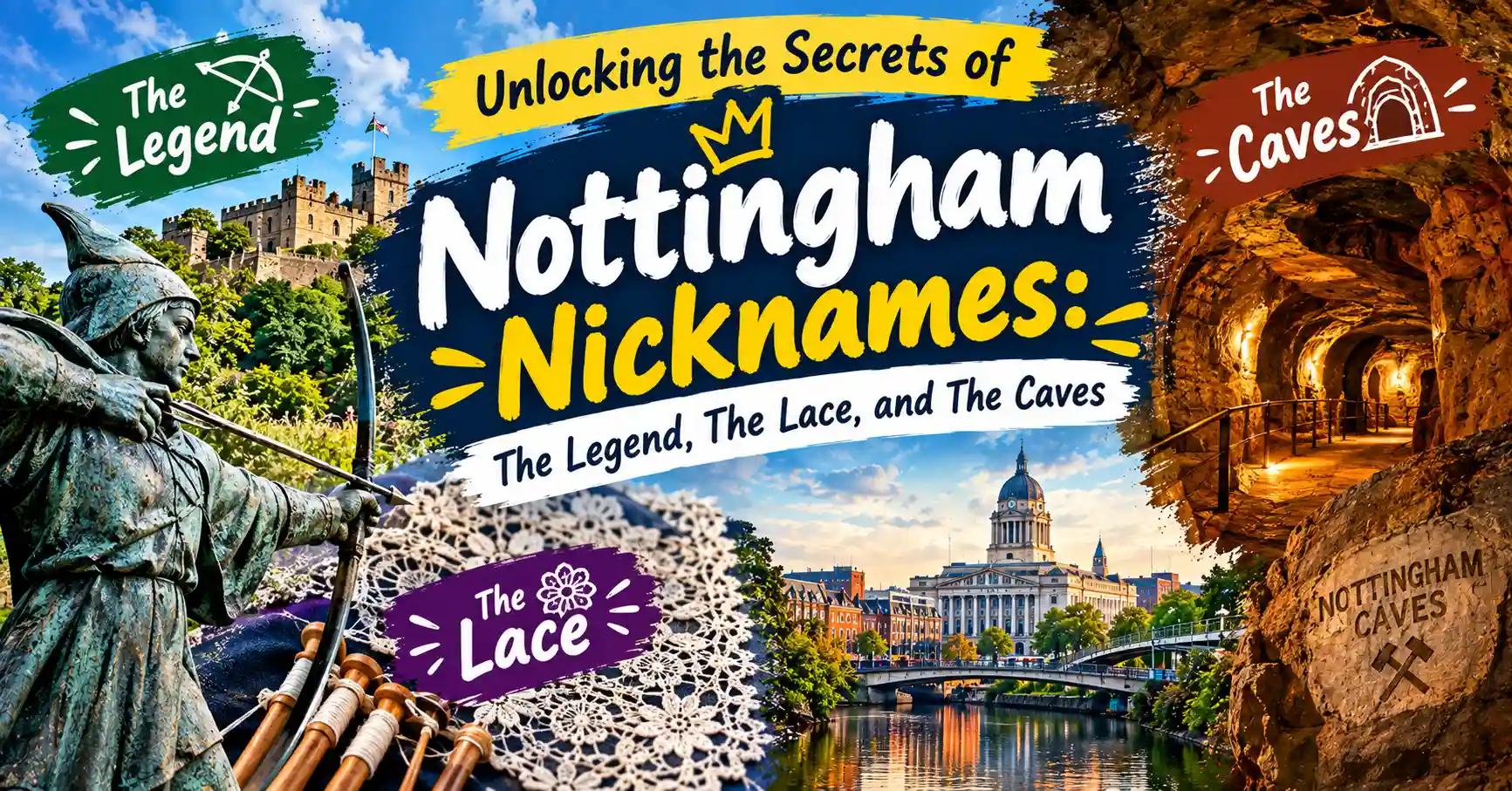
The nicknames of Nottingham are deeply tied to the city’s geography, its most famous folklore hero, and its history of rebellion and industry. While the Robin Hood connection is global, locals also identify strongly with the city’s underground sandstone caves and its historical role as a center of lace production.
The Major Categories
The nicknames generally fall into three categories:
- Legendary: Titles derived from the folklore of Robin Hood.
- Geographical: Names based on the city’s unique physical features.
- Historical/Industrial: Names reflecting its economic impact and political history.
Complete List of Nottingham Nicknames
Most Popular Nicknames of Nottingham
The most recognized nicknames are undeniably linked to the city’s legend and its geography. “The City of Robin Hood” resonates globally, drawing tourists from around the world. “The Queen of the Midlands” is a point of civic pride, asserting Nottingham’s status as the cultural and economic capital of the East Midlands. Meanwhile, “The City of Caves” has gained significant traction in recent years as the city has opened its underground history to the public.
Main Nicknames Explained
The City of Robin Hood
Meaning: This nickname identifies Nottingham as the primary setting for the legendary tales of Robin Hood, the heroic outlaw who stole from the rich to give to the poor.
Short Origin Story: The association comes from the earliest surviving ballads of Robin Hood, which place him in Nottingham and Sherwood Forest. The city’s proximity to the forest and the presence of Nottingham Castle (the seat of the villainous Sheriff) cemented the link.
Historical Background: While the historical existence of Robin Hood is debated, the myth has been part of Nottingham’s identity since the Middle Ages. Authors like Sir Walter Scott popularized the connection in the 19th century.
Modern Usage: The city leans heavily into this branding. The Robin Hood statue outside the castle is a major landmark, and the local tourism board uses the imagery extensively.
Cultural Impact: It defines Nottingham’s global identity. It represents justice, resistance against tyranny, and adventure.
Interesting Fact: The “Sheriff of Nottingham” is a real, modern political office in the county, though the duties are now largely ceremonial.
The Queen of the Midlands
Meaning: A title denoting Nottingham’s status as the principal city in the East Midlands region of England.
Short Origin Story: This nickname emerged during the Industrial Revolution when Nottingham’s economy and population exploded, surpassing neighboring cities like Derby and Leicester in prominence.
Historical Background: It was reinforced during the 20th century as Nottingham became a major hub for commerce, education (with two universities), and culture.
Modern Usage: Often used in local media, business promotions, and civic speeches to assert the city’s regional dominance.
Cultural Impact: It fosters a sense of pride among locals, positioning their city as the “capital” of the Midlands.
Interesting Fact: While Nottingham claims the “Queen” title, the title of “King of the Midlands” is less commonly used, though Birmingham often competes for the overall dominance of the wider Midlands region.
The City of Caves
Meaning: A nickname derived from the extensive network of man-made caves carved into the soft sandstone beneath the city streets.
Short Origin Story: Nottingham sits on a bed of sandstone, which is easy to carve. Over centuries, residents dug caves for housing, storage, and industry.
Historical Background: These caves have been used since the Medieval period. They served as tanneries, beer cellars, and even air-raid shelters during World War II.
Modern Usage: This nickname is heavily promoted by the “City of Caves” tourist attraction and the Nottingham Caves Survey.
Cultural Impact: It highlights the unique subterranean aspect of the city, distinguishing it from other UK cities.
Interesting Fact: There are over 800 known caves beneath Nottingham, and some are still accessible today, including a pub called “The Hand & Heart” that has a cave system in its basement.
The Rebel City
Meaning: A nickname reflecting Nottingham’s history of political uprisings and defiance against authority.
Short Origin Story: The name stems from several historical events, most notably the Reform Bill Riots of 1831, where citizens burned down Nottingham Castle in protest against the Duke of Newcastle’s opposition to voting reform.
Historical Background: Nottingham also played a significant role in the English Civil War, and later saw Chartist unrest.
Modern Usage: It is used less frequently today but is a point of interest for historians and those interested in the city’s radical past.
Cultural Impact: It adds a layer of grit and defiance to the city’s character, contrasting with the romanticized Robin Hood image.
Interesting Fact: The burning of Nottingham Castle in 1831 was so severe that the medieval structure was essentially destroyed, leading to the current Ducal Palace being built on the site.
The Lace City
Meaning: A tribute to Nottingham’s history as the world center of lace production.
Short Origin Story: In the 19th century, Nottingham became famous for its lace, particularly after the invention of the lace-making machine (the Leavers machine).
Historical Background: The Lace Market area of the city was the hub of this industry, employing thousands of women and children.
Modern Usage: The Lace Market is now a trendy district full of bars and restaurants, and the nickname is a nod to this industrial heritage.
Cultural Impact: It represents the city’s industrial ingenuity and craftsmanship.
Interesting Fact: Nottingham lace was used for Queen Victoria’s wedding dress and is still used in high-end fashion today.
Which Nickname Is Most Famous?
“The City of Robin Hood” is undeniably the most famous nickname. While locals might use “Notts” or “The Queen of the Midlands” in daily conversation, the global perception of Nottingham is almost entirely tied to the legend of the outlaw. It is the first thing most international travelers associate with the city, making it the most powerful branding tool in Nottingham’s arsenal.
How Nottingham Got Its Nicknames
Nottingham’s nicknames are a product of its unique environment and turbulent history. The geological luck of sitting on soft sandstone gave it the “City of Caves.” The political turbulence of the 19th century gave it the “Rebel City.” The industrial boom gave it “The Lace City” and “Queen of the Midlands.” However, it is the literary and folkloric tradition of Robin Hood that has had the longest-lasting impact, shaping the city’s identity for over 600 years.
Other Nicknames at a Glance
- Notts: The most common local abbreviation.
- The Metropolis of the Midlands: A grandiose Victorian-era title.
- The Queen City: A variation of the Queen of the Midlands.
- The Home of the Sheriff: A reference to the Robin Hood stories.
- The Beer Capital: Nottingham has a strong history of brewing, including the famous Shipstone’s brewery.
Fun Facts About Nottingham
- The Grand Old Duke of York: The nursery rhyme “The Grand Old Duke of York” is said to have been written about the 3rd Duke of York, who marched his men up and down the hill to Nottingham Castle.
- First Football: Nottingham Forest is one of the oldest football clubs in the world, founded in 1865.
- HP Sauce: The famous brown sauce was invented in Nottingham by Frederick Gibson Garton.
- The Caves: Nottingham has the largest network of caves in the UK.
- Sherwood Forest: While the forest is now a fraction of its former size, it is still home to the Major Oak, a tree estimated to be 800–1000 years old, linked to Robin Hood.
- The Goose Fair: One of Europe’s largest traveling fairs, running for over 700 years.
- Ibuprofen: The painkiller Ibuprofen was developed in Nottingham by Dr. Stewart Adams.
- The Council House: The city’s domed Council House was built using money from the estate of a local businessman who made his fortune in the potato trade.
Famous Attractions in Nottingham
- Nottingham Castle: Now a museum and art gallery, offering stunning views of the city.
- Wollaton Hall: An Elizabethan mansion set in a deer park, famously used as Wayne Manor in The Dark Knight Rises.
- The City of Caves: A tourist attraction allowing visitors to explore the underground sandstone caves.
- Sherwood Forest: The legendary home of Robin Hood and his Merry Men.
- The Lace Market: A historic district showcasing beautiful Victorian architecture.
- Old Market Square: The central hub of the city, home to the Council House and the famous Lions.
Nickname Comparison: Nottingham vs. Chicago
Both Nottingham and Chicago are major cities with rich histories, but their nicknames reflect different aspects of their identities. Nottingham is defined by legend and industry, while Chicago is defined by weather and architecture.
Related Cities and Their Nicknames
Explore other cities with unique monikers similar to Nottingham’s blend of history and legend.
Chicago Nicknames
Discover why Chicago is called “The Windy City” and “The Second City.”
New York City Nicknames
From “The Big Apple” to “Gotham,” explore NYC’s many names.
Las Vegas Nicknames
Why is Las Vegas called “Sin City” and “The Entertainment Capital”?
Frequently Asked Questions
What is the official nickname of Nottingham?
Nottingham does not have an official nickname designated by the city council, but “The City of Robin Hood” is widely recognized as its primary moniker.
Why is Nottingham called the City of Caves?
It is called the City of Caves because there are over 800 man-made sandstone caves beneath the city streets, used historically for housing, storage, and shelter.
Who gave Nottingham the nickname “The Queen of the Midlands”?
The nickname emerged organically in the 19th and 20th centuries as Nottingham grew to become the dominant economic and cultural hub of the East Midlands region.
Is Nottingham officially part of Sherwood Forest?
Historically, the area around Nottingham was part of the vast Sherwood Forest. Today, the remaining forest is a designated country park, but the legend ties the city inextricably to the forest.
Do locals actually use the nickname “The Rebel City”?
It is not used as commonly in daily conversation as “Notts,” but it is frequently referenced in historical contexts and by locals proud of the city’s history of standing up to authority.
Conclusion
From the depths of its sandstone caves to the heights of its castle, Nottingham is a city that has carved out a unique identity. Whether you know it as the Nottingham Nicknames like “The City of Robin Hood,” “The Queen of the Midlands,” or the “City of Caves,” these names tell the story of a place that values justice, resilience, and innovation.
To explore more about the history of this legendary city, you can visit the official Visit Nottinghamshire website.