
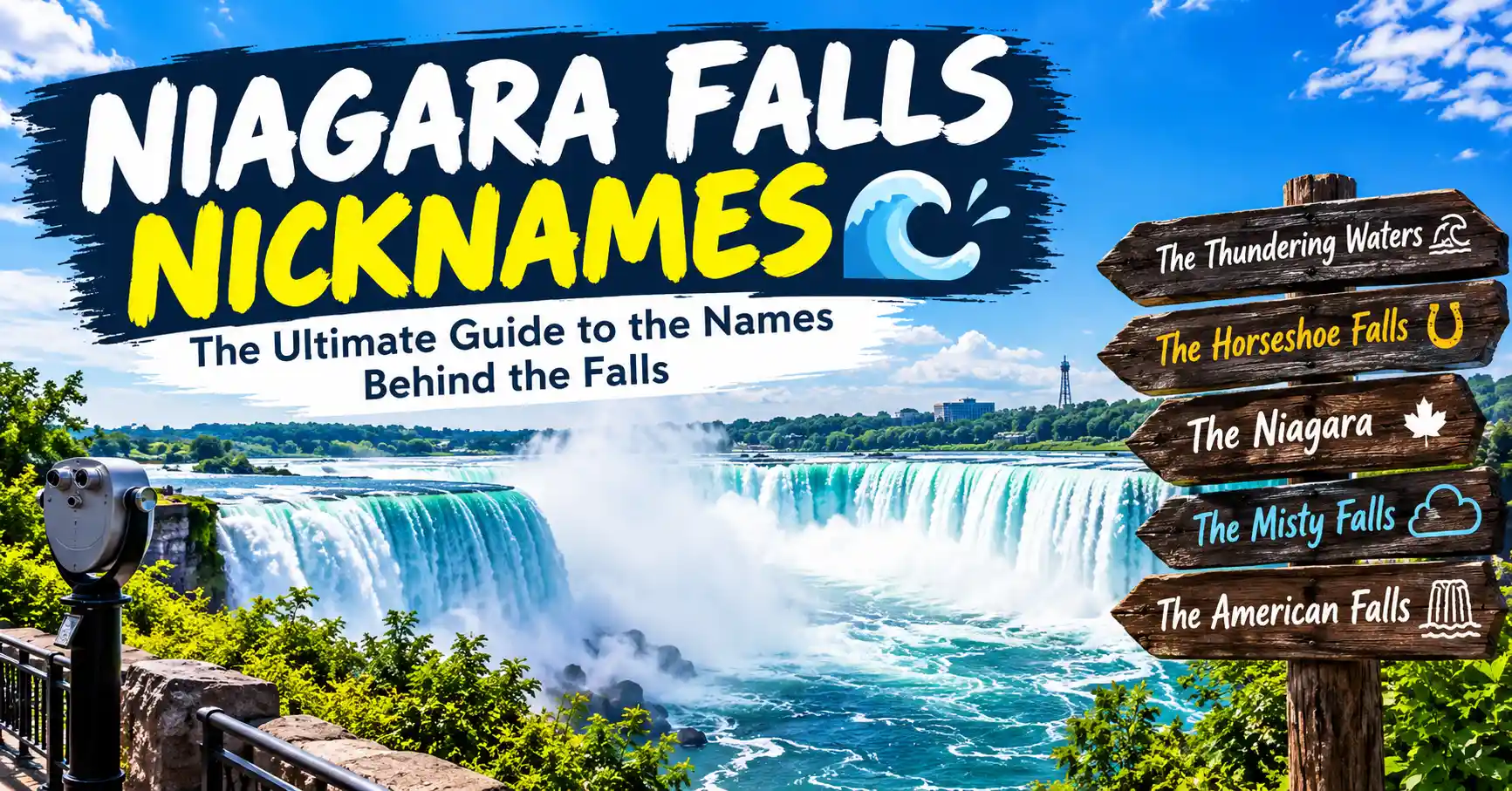
Niagara Falls is one of the most recognizable natural wonders in the world, drawing millions of visitors each year to the border of New York and Ontario. Beyond its thundering cascades, this iconic destination has earned several memorable Niagara Falls nicknames that capture its romance, power, and beauty.
From “Honeymoon Capital of the World” to “Cathedral of Power,” these monikers tell the story of a city shaped by water, tourism, and cultural fascination. Understanding these nicknames offers a window into why this destination holds such a special place in American and Canadian culture.
💡 What Is the Most Famous Nickname of Niagara Falls?
The most famous nickname for Niagara Falls is “Honeymoon Capital of the World.” Other well-known nicknames include “Cathedral of Power,” “City of Light,” and “Niagara Falls, USA.” These names reflect the destination’s romantic appeal, hydroelectric significance, and iconic status.
📊 Quick Facts About Niagara Falls
🏛️ Official Nickname of Niagara Falls
Niagara Falls does not have an officially designated nickname by any government authority. However, several informal and historically recognized nicknames have become widely accepted through popular culture, tourism marketing, and local tradition.
The most enduring nickname, “Honeymoon Capital of the World,” emerged organically in the early 19th century and has been used in tourism campaigns for over two centuries. While not “official” in a legal sense, it is the most commonly recognized and celebrated nickname associated with the destination.
Other nicknames like “Cathedral of Power” reference the region’s role in hydroelectric energy production, while “City of Light” highlights the illuminated falls that create a spectacular nighttime display.
📝 What Are the Nicknames of Niagara Falls?
Niagara Falls has accumulated numerous nicknames throughout its history, each reflecting a different aspect of its identity. Some emphasize its romantic appeal, others its natural power, and still others its cultural significance as a tourist destination.
These nicknames can be categorized into several themes:
- Romantic Names – Reflecting the destination’s popularity for weddings and honeymoons
- Power and Energy Names – Highlighting the hydroelectric significance of the falls
- Tourism and Entertainment Names – Emphasizing the area’s role as a vacation hotspot
- Natural Wonder Names – Celebrating the sheer beauty and scale of the falls
Each nickname tells a story about how Niagara Falls has been perceived and promoted over the centuries.
📋 Complete List of Niagara Falls Nicknames
🌟 Most Popular Nicknames of Niagara Falls
The most recognized nicknames for Niagara Falls are those that have been embraced by tourists, locals, and international audiences alike. “Honeymoon Capital of the World” stands above the rest, having been featured in countless travel guides, wedding publications, and romantic getaway promotions.
“Cathedral of Power” holds historical significance, particularly in the context of the region’s hydroelectric achievements. Meanwhile, “City of Light” captures the magical evening experience that visitors treasure.
These nicknames have become synonymous with the Niagara Falls experience and continue to shape how the destination is marketed and remembered.
🔍 Main Niagara Falls Nicknames Explained
1. Honeymoon Capital of the World 💕
Meaning: A destination specifically associated with newlywed couples celebrating their marriage.
Short Origin Story: Beginning in the early 19th century, Niagara Falls became a popular wedding trip destination for American couples. The trend grew as railroads made travel more accessible, and by the 1900s, the name was firmly established.
Historical Background: After the War of 1812, tourism to the falls increased dramatically. Couples from New York and New England found the falls to be a romantic and accessible getaway. The completion of the Erie Canal in 1825 further boosted visitation.
Modern Usage: Today, Niagara Falls continues to host thousands of weddings and honeymoons annually. Many hotels and attractions cater specifically to couples, offering romance packages and intimate experiences.
Cultural Impact: The nickname has influenced countless films, songs, and romantic literature. It has become shorthand for romantic getaways in American culture.
Interesting Fact: Napoleon Bonaparte’s brother, Jerome, reportedly honeymooned at Niagara Falls in 1804, helping popularize the trend among wealthy Americans.
2. Cathedral of Power ⚡
Meaning: A reference to the immense hydroelectric energy generated by the falls.
Short Origin Story: As hydroelectric plants were built in the late 19th and early 20th centuries, engineers and journalists began describing the falls as a “cathedral” of industrial might.
Historical Background: The first hydroelectric plant at Niagara Falls began operation in 1881. By the early 1900s, the region was producing a significant portion of electricity for the northeastern United States and Canada.
Modern Usage: The nickname is often used in historical contexts and by energy industry publications. It celebrates the falls as a symbol of human ingenuity harnessing natural power.
Cultural Impact: The nickname reinforces Niagara Falls’ dual identity as both a natural wonder and an industrial marvel.
Interesting Fact: The Adams Power Plant, built in 1895, was the first large-scale alternating current hydroelectric plant in the world.
3. City of Light ✨
Meaning: Refers to the spectacular illumination of the falls at night.
Short Origin Story: In 1860, the Prince of Wales visited Niagara Falls, prompting the first major illumination of the falls with colored lights. The tradition grew from there.
Historical Background: Regular nighttime illumination began in the early 20th century. Today, powerful spotlights create stunning light shows that change colors throughout the evening.
Modern Usage: The nickname is frequently used in tourism marketing and local pride campaigns. The illuminated falls are one of the most photographed nighttime scenes in North America.
Cultural Impact: The light displays have become a signature experience for visitors, symbolizing the magic and beauty of the destination.
Interesting Fact: The falls are illuminated every night of the year, with special colors often displayed for holidays and causes.
4. The Eighth Wonder of the World 🌍
Meaning: A designation suggesting the falls rival the Seven Wonders of the Ancient World.
Short Origin Story: This promotional phrase gained popularity in the 19th century as tourism boomed and writers sought to capture the awe-inspiring nature of the falls.
Historical Background: The phrase has been applied to numerous natural and man-made attractions over the years, but Niagara Falls was one of the earliest and most enduring recipients.
Modern Usage: While somewhat clichéd, the nickname still appears in travel literature and marketing materials.
Cultural Impact: It reinforces Niagara Falls’ status as a must-see destination for travelers worldwide.
Interesting Fact: Despite the nickname, Niagara Falls is not included in any modern list of world wonders, though it remains one of the most visited natural attractions in North America.
5. Thunder City 🌩️
Meaning: A reference to the constant roaring sound of the cascading water.
Short Origin Story: The name emerged from the sensory experience of standing near the falls, where the sound of millions of gallons of water crashing down creates a thunderous roar.
Historical Background: Early explorers and Native American tribes noted the powerful sound of the falls. The Seneca people called the area “Onguiaahra,” meaning “the strait” or “thunder of waters.”
Modern Usage: The nickname is less common today but still used in local contexts and historical discussions.
Cultural Impact: It connects modern visitors to the indigenous heritage of the region.
Interesting Fact: The sound of the falls can be heard from miles away, especially during periods of high water flow.
🏆 Which Niagara Falls Nickname Is Most Famous?
“Honeymoon Capital of the World” is by far the most famous and widely recognized nickname for Niagara Falls. This title has been used for over two centuries and has been featured in countless travel articles, romantic comedies, and wedding planning guides.
The nickname’s endurance stems from its emotional appeal and its accuracy—Niagara Falls genuinely remains one of the top honeymoon destinations in North America. Its fame also benefits from the destination’s natural beauty and the romantic atmosphere created by the falls themselves.
While other nicknames like “Cathedral of Power” and “City of Light” have their place, none have achieved the same level of international recognition.
📜 How Niagara Falls Got Its Nicknames
The nicknames of Niagara Falls developed organically over time, reflecting the evolving relationship between people and this natural wonder.
Indigenous peoples were the first to name the area, with the Seneca calling it “Onguiaahra.” European explorers and settlers later added their own descriptions. As tourism developed in the 19th century, promotional language and visitor experiences gave rise to romantic and celebratory nicknames.
The industrial era added names related to power and energy, while the advent of nighttime illumination created new inspiration for nicknames like “City of Light.”
Today, these nicknames coexist, each capturing a different facet of Niagara Falls’ multifaceted identity.
📌 Other Niagara Falls Nicknames at a Glance
- The Cataract City – Referring to the falls as a large waterfall
- Niagara – Simple shorthand used by locals
- The Honeymoon Haven – Emphasizing romantic appeal
- Power City – Highlighting hydroelectric significance
- Bridal Veil City – Named after Bridal Veil Falls, one of the three waterfalls
🎉 Fun Facts About Niagara Falls
- More than 3,000 tons of water flow over the falls every second during peak hours.
- The falls have been illuminated every night since 1925.
- Tightrope walkers have crossed the gorge multiple times, including Charles Blondin in 1859.
- The first honeymoon at Niagara Falls is believed to have occurred in 1804.
- Niagara Falls State Park is the oldest state park in the United States, established in 1885.
- The falls generate enough electricity to power millions of homes.
- Over 20 million visitors come to Niagara Falls each year.
- The Horseshoe Falls is the largest of the three waterfalls, carrying about 90% of the water.
- In 1969, the American Falls was temporarily dammed to allow geological study.
- The Niagara River is one of the few rivers in the world that flows north.
🗺️ Famous Attractions in Niagara Falls
Niagara Falls is home to numerous attractions that draw visitors from around the globe:
- Niagara Falls State Park – The oldest state park in the US
- Maid of the Mist – Iconic boat tour taking visitors close to the falls
- Cave of the Winds – Walkway experience at the base of Bridal Veil Falls
- Skylon Tower – Observation deck with panoramic views
- Journey Behind the Falls – Tunnel experience behind Horseshoe Falls
- Niagara SkyWheel – Ferris wheel offering aerial views
- Clifton Hill – Entertainment district with attractions and restaurants
⚖️ Nickname Comparison: Niagara Falls vs. Las Vegas
🌊 Niagara Falls
Most Famous Nickname:
Honeymoon Capital of the World
Theme: Romance, Nature, Power
Vibe: Romantic, Scenic, Inspiring
🎰 Las Vegas
Most Famous Nickname:
Sin City
Theme: Entertainment, Nightlife, Excess
Vibe: Energetic, Glamorous, Bold
Both destinations have earned iconic nicknames that define their identities. While Niagara Falls represents romance and natural beauty, Las Vegas embodies entertainment and excitement. Together, they showcase the diversity of American tourism destinations.
For more on Las Vegas nicknames, explore our Las Vegas Nicknames guide.
🔗 Related Cities and Their Nicknames
🏙️ Chicago Nicknames
The Windy City & More
🗽 New York City Nicknames
The Big Apple & Beyond
🎰 Las Vegas Nicknames
Sin City & More
🎸 Austin Nicknames
Live Music Capital & More
🌴 Miami Nicknames
Magic City & More
❓ Frequently Asked Questions
What is the official nickname of Niagara Falls?
Niagara Falls does not have an officially designated nickname. However, “Honeymoon Capital of the World” is the most widely recognized and commonly used nickname.
Why is Niagara Falls called the Honeymoon Capital of the World?
Niagara Falls earned this nickname due to its long-standing popularity as a romantic getaway for newlywed couples. The tradition began in the early 1800s and continues today, with thousands of couples visiting annually for honeymoons and weddings.
Who gave Niagara Falls its nickname?
The nickname “Honeymoon Capital of the World” emerged organically through tourism marketing and popular culture rather than being attributed to a single person. It developed gradually as the destination became increasingly associated with romantic getaways.
When did the nickname become popular?
The honeymoon association began in the early 19th century and grew steadily throughout the 1800s. By the early 20th century, the nickname was firmly established in American culture.
What are other nicknames of Niagara Falls?
Other nicknames include “Cathedral of Power,” “City of Light,” “The Eighth Wonder of the World,” “Thunder City,” and “Rainbow City.” Each reflects a different aspect of the destination’s identity.
What does “Cathedral of Power” mean?
“Cathedral of Power” refers to the massive hydroelectric energy generated by Niagara Falls. The nickname honors the region’s role as a pioneer in hydroelectric power production.
Is the nickname officially recognized?
No, the nicknames for Niagara Falls are not officially recognized by any government or authority. They are informal names that have gained popularity through common usage.
Do locals use these nicknames?
Locals primarily refer to the area simply as “Niagara Falls” or “The Falls.” The more elaborate nicknames are mainly used in tourism marketing and by visitors.
🌅 Conclusion
The Niagara Falls nicknames capture the many dimensions of this extraordinary destination—from its romantic allure as the “Honeymoon Capital of the World” to its industrial might as the “Cathedral of Power.” Each nickname tells a story about how people have experienced and celebrated this natural wonder over centuries.
Whether you’re planning a romantic getaway, exploring the region’s rich history, or simply marveling at the power of nature, Niagara Falls offers an experience that lives up to every one of its famous names. For more fascinating city nickname stories from around the world, explore CityNicknames.com and discover the tales behind the names that define our favorite cities.