
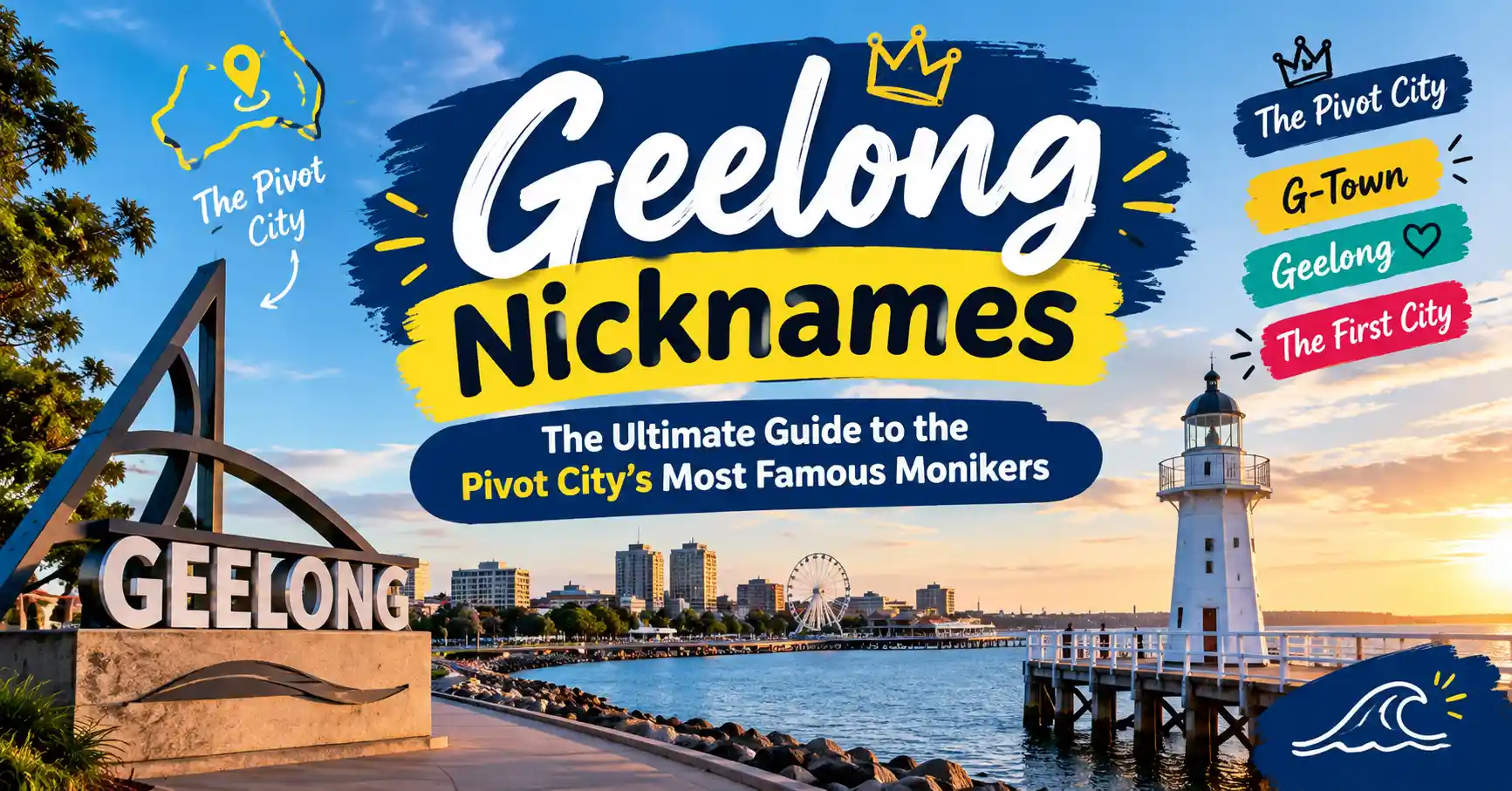
Geelong, Victoria’s second-largest city, sits gracefully on the shores of Corio Bay, roughly 75 kilometers southwest of Melbourne. This vibrant port city has earned a fascinating collection of Geelong Nicknames throughout its rich history. From its industrial heyday to its modern transformation, these nicknames tell the story of a community that has always punched above its weight.
The city’s nicknames reflect its unique identity—a blend of maritime heritage, industrial innovation, and sporting passion. Understanding these monikers offers a window into Geelong’s soul, revealing why locals embrace names like “The Pivot City” and “Sleepy Hollow” with such affection. These aren’t just labels; they’re badges of honor earned through decades of cultural significance.
⚡ Quick Answer Box
🏆 What Is Geelong’s Most Famous Nickname?
The most famous nickname of Geelong is “The Pivot City.” Other well-known nicknames include “Sleepy Hollow,” “The Wool City,” and “The City by the Bay.” These names reflect Geelong’s historical role as a transport hub, its wool industry heritage, and its stunning waterfront location.
📊 Quick Facts Table
🏛️ Official Nickname of Geelong
Geelong does not have an officially designated nickname sanctioned by local government or formal decree. However, “The Pivot City” holds the closest status to an official moniker, having been widely used in historical contexts and promotional materials throughout the late 19th and early 20th centuries. This nickname was embraced by the Geelong Chamber of Commerce and appeared frequently in newspapers and official publications during the city’s industrial boom.
The absence of a formal official nickname doesn’t diminish the significance of these monikers. Instead, it reflects Geelong’s organic, community-driven identity. These names emerged naturally from the city’s geography, economy, and culture, making them arguably more authentic than any government-designated title could be.
📍 What Are the Nicknames of Geelong?
Geelong’s nicknames form a diverse collection that captures different eras and aspects of the city’s identity. Some emerged from its strategic geographic position, others from its dominant industries, and a few from its unique social character. Understanding Geelong Nicknames requires appreciating how each name reflects a particular chapter in the city’s story.
These nicknames fall into several categories:
- Geographic nicknames – References to location and landscape
- Industrial nicknames – Names tied to major economic activities
- Cultural nicknames – Terms emerging from local character and lifestyle
- Sporting nicknames – References connected to the city’s beloved teams
📋 Complete List of Geelong Nicknames
🌟 Most Popular Nicknames of Geelong
Among the many Geelong Nicknames, three stand out for their widespread recognition and cultural significance. “The Pivot City” represents Geelong’s historical importance as a transportation and commercial hub. “Sleepy Hollow” captures the city’s relaxed pace of life, a quality that locals treasure. “Cat City” celebrates the city’s deep connection to Australian Rules Football and the beloved Geelong Football Club.
These nicknames have survived because they resonate with genuine aspects of Geelong’s identity. They’re used in local media, community conversations, and sometimes appear in tourism materials. Understanding these primary nicknames provides essential context for appreciating Geelong’s unique character.
📖 Main Nicknames Explained
🔄 The Pivot City
Meaning: The name “The Pivot City” refers to Geelong’s role as a central point around which surrounding regions revolved. It suggests a place of connection, movement, and strategic importance.
Short Origin Story: This nickname emerged during the 19th century when Geelong served as a crucial link between Melbourne, the Western District’s pastoral lands, and the goldfields beyond. The city functioned as a pivot point for goods, people, and commerce flowing through the region.
Historical Background: During the 1850s and 1860s, Geelong’s port was among the busiest in the colony. Wool from the Western District flowed through Geelong’s warehouses before shipping to international markets. The railway connecting Geelong to Ballarat and beyond further cemented its role as a transportation nexus.
Modern Usage: While less commonly used today, “The Pivot City” still appears in historical contexts and occasionally in promotional materials celebrating Geelong’s heritage. Local historians and long-time residents maintain the name as a point of civic pride.
Cultural Impact: The nickname represents an era when Geelong was not merely a satellite of Melbourne but a significant urban center in its own right. It speaks to the city’s historical confidence and ambition.
Interesting Fact: At its peak, Geelong’s port handled more wool exports than any other Australian port, justifying its “pivot” status in the colonial economy.
😴 Sleepy Hollow
Meaning: “Sleepy Hollow” describes Geelong’s perceived slower pace of life compared to bustling Melbourne. Rather than an insult, many locals embrace it as a compliment celebrating their city’s relaxed atmosphere.
Short Origin Story: The nickname emerged in the mid-20th century, possibly coined by Melbourne-based journalists or visitors struck by the contrast between the two cities. Geelong’s quieter streets and unhurried lifestyle inspired the comparison to Washington Irving’s famous tale.
Historical Background: As Melbourne grew into a major metropolis, Geelong maintained a more manageable scale. The city’s economy, while robust, didn’t generate the frenetic energy of its larger neighbor. This difference became a defining characteristic.
Modern Usage: “Sleepy Hollow” remains in use, sometimes affectionately and sometimes with a hint of defensiveness. As Geelong has grown and modernized, the nickname has evolved to suggest a desirable work-life balance rather than stagnation.
Cultural Impact: The nickname has become part of Geelong’s self-identity, with locals often using it humorously. It represents a conscious choice to value quality of life over metropolitan intensity.
Interesting Fact: During the 2010s, Geelong’s revival has led some to argue the “Sleepy Hollow” nickname no longer fits, prompting debates about the city’s changing identity.
🐑 The Wool City
Meaning: “The Wool City” directly references Geelong’s historical role as a major center for wool processing and export.
Short Origin Story: This nickname arose naturally from Geelong’s economic foundations. From the 1840s onward, wool became the region’s primary export, and Geelong’s warehouses, wool stores, and processing facilities made it the colony’s wool capital.
Historical Background: The Geelong Wool Exchange opened in 1927, becoming the largest of its kind in the Southern Hemisphere. At its peak, the city’s wool stores could hold hundreds of thousands of bales, and the industry employed thousands of workers.
Modern Usage: While the wool industry has declined, “The Wool City” persists in historical references and occasionally in marketing that celebrates Geelong’s heritage. The massive wool stores remain iconic landmarks.
Cultural Impact: The nickname represents an era when Geelong’s economy was built on agricultural processing. It connects modern residents to their city’s industrious past.
Interesting Fact: The former Dalgety Wool Store in Geelong, with its distinctive sawtooth roof, has been converted into a major shopping center, preserving the building’s industrial character while adapting it for modern use.
🌊 The City by the Bay
Meaning: This straightforward nickname highlights Geelong’s stunning location on Corio Bay, emphasizing its maritime character.
Short Origin Story: The name emerged from Geelong’s geographic reality. Unlike many inland Australian cities, Geelong developed around a natural bay that shaped its growth and identity.
Historical Background: Corio Bay provided the foundation for Geelong’s maritime industries, from shipping to fishing to recreational boating. The waterfront has always been central to the city’s identity.
Modern Usage: “The City by the Bay” appears in tourism materials and promotional content, particularly highlighting the waterfront precinct’s restaurants, beaches, and sailing opportunities.
Cultural Impact: This nickname celebrates Geelong’s natural advantages and positions the city as a destination for water-based recreation and scenic beauty.
Interesting Fact: Corio Bay is home to one of Australia’s premier sailing clubs, and the waterfront hosts major sailing events throughout the year.
🏆 Which Nickname Is Most Famous?
“The Pivot City” holds the distinction of being Geelong’s most famous nickname. Its historical significance, combined with its appearance in early promotional materials and government documents, gives it a quasi-official status that other nicknames lack. The name captures a specific era when Geelong was central to Victoria’s economic development, positioning the city as a vital connector rather than a peripheral settlement.
However, “Sleepy Hollow” has experienced a resurgence in popular usage, particularly in informal contexts and social media. This nickname resonates with contemporary discussions about lifestyle and work-life balance, making it relevant to modern audiences.
The “Cat City” moniker has also gained prominence due to the Geelong Football Club’s success in the Australian Football League. During premiership years, this nickname appears frequently in national media coverage.
🗺️ How Geelong Got Its Nicknames
Geelong’s nicknames emerged organically from the city’s geography, economy, and culture rather than being deliberately created through marketing campaigns. The earliest nicknames, including “The Pivot City” and “The Wool City,” arose during the 19th century when Geelong was establishing itself as an economic powerhouse.
As the city matured, new nicknames emerged to reflect changing circumstances. “Sleepy Hollow” captured the mid-20th century perception of Geelong as a quieter alternative to Melbourne. More recent nicknames like “Cat City” and “G-Town” reflect contemporary sporting culture and informal communication styles.
This organic development gives Geelong’s nicknames authenticity. They weren’t invented by committees or consultants but emerged from the community’s lived experience. Each nickname represents a genuine aspect of Geelong’s identity, contributing to the rich tapestry of Geelong Nicknames that residents and visitors appreciate today.
📝 Other Nicknames at a Glance
Here’s a quick overview of additional Geelong nicknames that occasionally appear:
- The Bay City – Simple reference to Corio Bay location
- G-Town – Contemporary informal shorthand
- The Cats’ Home – Sporting reference to Geelong Football Club
- The Gateway City – Position as entry point to southwest Victoria
- The Wool Capital – Alternative to “The Wool City”
- The Manufacturing Hub – Reference to industrial heritage
- The Bellarine Gateway – Connection to Bellarine Peninsula
🎉 Fun Facts About Geelong
- Wool Capital of the World: At its peak in the 1920s, Geelong was the largest wool-selling center in the world, handling more wool than any other port globally.
- Ford’s Australian Home: Geelong was home to Ford Australia’s manufacturing operations for over 90 years, producing iconic vehicles like the Falcon and Territory.
- The Cats’ Dynasty: The Geelong Football Club has won 10 AFL/VFL premierships, with a dominant era from 2007-2011 that included three flags.
- Historic Carousel: The Geelong Carousel on the waterfront is one of only a few operational 19th-century carousels in Australia, dating from 1892.
- The Bollard Trail: More than 100 painted bollards along the waterfront depict historical characters and events, creating an outdoor art gallery.
- Little Malop Street: This laneway transformation is considered one of Australia’s most successful urban renewal projects, transforming a declining area into a vibrant dining precinct.
- First Australian Rules Football: Some historians argue that the first recorded game of Australian Rules Football was played in Geelong in 1859.
- The Powerhouse: The Geelong Powerhouse, a former power station, has been converted into a major arts and events venue, preserving its industrial architecture.
🎯 Famous Attractions in Geelong
Geelong offers numerous attractions that reflect its nicknames and character:
- The Waterfront Precinct – Beautiful beaches, the Carousel, and waterfront dining that justify “The City by the Bay” nickname
- The Bollard Trail – Painted bollards telling Geelong’s history
- Geelong Gallery – One of Australia’s oldest regional galleries
- The National Wool Museum – Celebrating the city’s wool heritage
- GMHBA Stadium – Home of the Geelong Cats
- Little Malop Street – Award-winning dining and entertainment precinct
- Bellarine Peninsula – Wineries and beaches just minutes away
⚖️ Nickname Comparison: Geelong vs Melbourne
Both cities have nicknames that reflect their distinct identities. While Melbourne’s monikers emphasize its cultural and sporting prominence, Geelong’s nicknames celebrate its role as a regional hub and its more relaxed lifestyle. This comparison highlights how Geelong Nicknames capture a different essence than those of its larger neighbor.
🔗 Related Cities and Their Nicknames
🏙️ Chicago Nicknames
Explore the Windy City’s famous monikers including “The Second City” and “City of Big Shoulders.”
View Chicago Nicknames →🌆 New York City Nicknames
Discover why NYC is called “The Big Apple,” “Gotham,” and more.
View NYC Nicknames →🌴 Miami Nicknames
Learn about Miami’s nicknames including “Magic City” and “Gateway to the Americas.”
View Miami Nicknames →🎰 Las Vegas Nicknames
Explore “Sin City,” “Vegas,” and other famous Las Vegas monikers.
View Las Vegas Nicknames →❓ Frequently Asked Questions
What is the official nickname of Geelong?
Geelong does not have an officially designated nickname. However, “The Pivot City” is the closest to an official title, having been widely used in historical documents, promotional materials, and by the Geelong Chamber of Commerce during the city’s industrial era.
Why is Geelong called Sleepy Hollow?
Geelong earned the “Sleepy Hollow” nickname due to its perceived slower pace of life compared to Melbourne. The name emerged in the mid-20th century and has been embraced by locals as a positive reflection of the city’s relaxed lifestyle and work-life balance.
Who gave Geelong its nickname “The Pivot City”?
The exact origin of “The Pivot City” nickname is unclear, but it emerged organically during the 19th century. The name was used by local businesses, newspapers, and civic organizations to describe Geelong’s role as a transportation and commercial hub connecting Melbourne, the Western District, and the goldfields.
When did Geelong’s nicknames become popular?
Geelong’s industrial nicknames, including “The Pivot City” and “The Wool City,” became popular during the late 19th and early 20th centuries. “Sleepy Hollow” emerged in the mid-20th century, while “Cat City” gained prominence with the Geelong Football Club’s success in recent decades.
What are the other nicknames of Geelong?
Beyond the most famous nicknames, Geelong has been called “The City by the Bay,” “G-Town,” “The Gateway to the Otways,” “The Wool Capital,” and “The Cats’ Home.” Each nickname reflects a different aspect of the city’s geography, economy, or culture.
🎬 Conclusion
Geelong’s nicknames tell the story of a city that has continually reinvented itself while maintaining its distinctive character. From “The Pivot City” to “Sleepy Hollow,” these monikers capture different eras and aspects of Geelong’s identity. They reflect the city’s role as an industrial powerhouse, its beautiful bay location, and its passionate sporting culture.
Understanding Geelong Nicknames provides valuable insight into how this Victorian city sees itself and how others perceive it. Whether you’re a local who uses these names affectionately or a visitor curious about Geelong’s character, these nicknames offer a unique window into the city’s soul. For those interested in exploring more about how cities around the world earn their nicknames, the Australian Bureau of Statistics provides excellent demographic data that helps contextualize urban identities.
Geelong continues to evolve, and its nicknames will likely evolve alongside it. New generations may create new monikers that reflect contemporary realities, adding to the rich collection of Geelong Nicknames that already exist. What remains constant is the community’s pride in their city and the stories these names represent.