
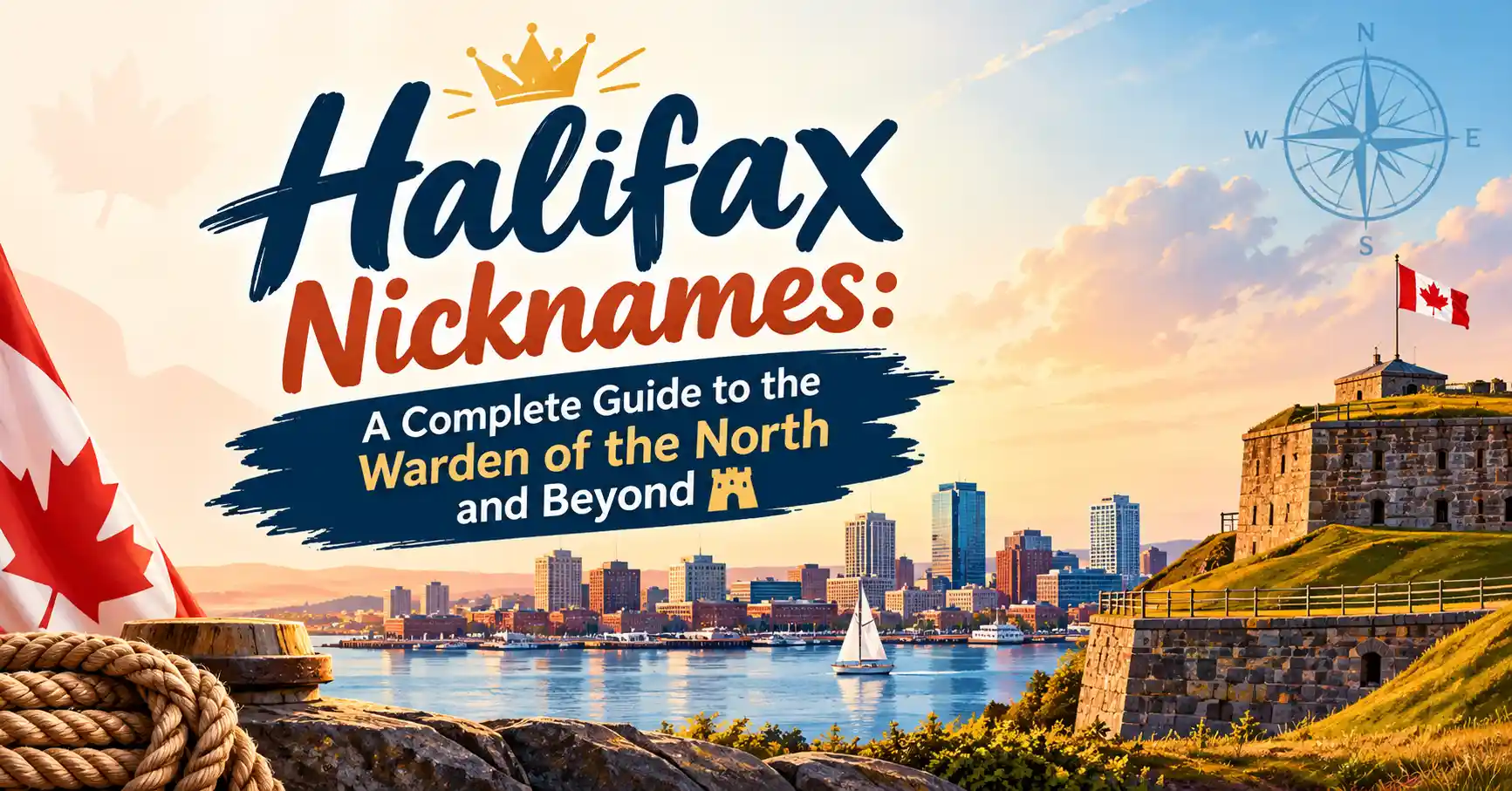
Halifax, the vibrant capital of Nova Scotia, stands as one of Canada’s most historically significant port cities. Perched on the rugged shores of the Atlantic Ocean, this maritime gem has earned several colorful monikers throughout its storied past. From its strategic military role to its thriving cultural scene, Halifax nicknames reflect the city’s unique identity as a resilient, welcoming, and deeply proud East Coast community.
Whether you’re a curious traveler, a history enthusiast, or someone planning a move to this coastal treasure, understanding Halifax’s nicknames offers a fascinating window into what makes this city so special.
🎯 Quick Answer Box
Quick Answer
The most famous nickname of Halifax is “The Warden of the North” due to its strategic military importance. Other well-known nicknames include “City of Trees,” “The City by the Sea,” and “New Scotland’s Capital.”
📊 Quick Facts Table
🏛️ Official Nickname of Halifax
Halifax does not have an officially designated nickname sanctioned by the municipal government. However, “The Warden of the North” is widely recognized as the city’s most historically significant and commonly used moniker. This nickname emerged from Halifax’s critical role as a British naval stronghold and its strategic position as the northern guardian of the Atlantic seaboard.
While not “official” in a legal sense, several nicknames have become so deeply associated with Halifax that they function as unofficial titles. The city’s tourism materials and local media regularly reference “The Warden of the North” and “The City by the Sea,” cementing these names in public consciousness.
🌟 What Are the Nicknames of Halifax?
Halifax has accumulated a rich collection of nicknames over its nearly three-century history. These names stem from various sources: its military significance, geographic features, cultural heritage, and even its weather patterns. Understanding these nicknames provides insight into how Halifax has been perceived throughout different eras.
The nicknames generally fall into several categories:
- Military and Strategic Names: Reflecting Halifax’s role as a fortified naval base
- Geographic Descriptors: Highlighting the city’s coastal location and natural features
- Cultural and Heritage Names: Celebrating the city’s Scottish roots and maritime traditions
- Affectionate Local Terms: Used by residents to express pride in their hometown
Each nickname tells a story about Halifax’s evolution from a colonial outpost to a modern, cosmopolitan city while maintaining its distinctive East Coast character.
📝 Complete List of Halifax Nicknames
🗂️ All Halifax Nicknames Explained
🏆 Most Popular Nicknames of Halifax
Among Halifax’s many nicknames, a few stand out as particularly significant in both local and national contexts. “The Warden of the North” carries the weight of history, evoking images of a steadfast guardian watching over the Atlantic. “The City of Trees” speaks to Halifax’s surprisingly lush urban landscape, while “The City by the Sea” captures the essence of maritime life that defines the community.
These popular nicknames appear frequently in tourism campaigns, local journalism, and casual conversation among residents. They’ve become shorthand for Halifax’s identity, each emphasizing different aspects of what makes the city unique.
📖 Main Nicknames Explained
🛡️ The Warden of the North
Meaning: This nickname positions Halifax as a protective guardian of Canada’s northern Atlantic approaches, emphasizing its historical role as a military and naval bastion.
Short Origin Story: The term emerged during the 18th and 19th centuries when Halifax served as a critical British naval base. Its strategic location made it the first line of defense against potential threats from the sea.
Historical Background: Established in 1749 as a counter to French fortifications at Louisbourg, Halifax quickly became one of the most heavily fortified cities in the British Empire. The Citadel, constructed on a hill overlooking the harbor, became an iconic symbol of this defensive role.
Modern Usage: Today, “The Warden of the North” is used affectionately by locals and appears in tourism materials highlighting the city’s military heritage. The Halifax Citadel National Historic Site remains one of Canada’s most visited historic attractions.
Cultural Impact: This nickname reinforces Halifax’s identity as a city with deep military roots and a proud tradition of service. It connects modern residents to generations of sailors and soldiers who called the city home.
Interesting Fact: Despite being called “The Warden of the North,” Halifax is actually located at approximately 44.6°N latitude—south of many major Canadian cities including Toronto and Montreal.
🌳 City of Trees
Meaning: This nickname celebrates Halifax’s remarkable urban forest, which includes thousands of trees throughout its parks, streets, and green spaces.
Short Origin Story: Halifax’s commitment to green spaces dates back to its founding, when civic leaders set aside land for public parks and gardens. The result is a city that feels remarkably connected to nature.
Historical Background: The Halifax Public Gardens, established in 1867, is one of the finest surviving Victorian-era public gardens in North America. Point Pleasant Park, a 75-hectare woodland on the harbor’s edge, has been a public space since 1866.
Modern Usage: The nickname is frequently invoked in discussions of Halifax’s quality of life and environmental initiatives. The city continues to prioritize urban forestry and green infrastructure.
Cultural Impact: “City of Trees” speaks to Halifax’s balance between urban development and natural preservation—a value deeply held by residents.
Interesting Fact: Point Pleasant Park contains over 70,000 trees and is one of the largest urban parks in Canada, despite a devastating hurricane in 2003 that destroyed thousands of trees.
🌊 The City by the Sea
Meaning: A straightforward geographic descriptor emphasizing Halifax’s intimate relationship with the Atlantic Ocean.
Short Origin Story: This nickname reflects the obvious—Halifax is literally built around one of the world’s largest natural harbors, and the sea is never far from any point in the city.
Historical Background: The sea has defined Halifax since its founding. Fishing, shipping, and naval operations have been economic mainstays for nearly three centuries.
Modern Usage: “The City by the Sea” appears in tourism marketing and is often used to evoke the romantic, maritime atmosphere of Halifax.
Cultural Impact: This nickname captures the essence of Halifax’s maritime culture—the seafood, the sailing, the salty air, and the seafaring spirit of its people.
Interesting Fact: Halifax Harbour is the second-largest natural harbor in the world, after Sydney Harbour in Australia.
🏴 New Scotland’s Capital
Meaning: A direct reference to Halifax’s role as the capital of Nova Scotia, whose name is Latin for “New Scotland.”
Short Origin Story: When the British established Halifax in 1749, they named the surrounding territory Nova Scotia to honor Scotland and encourage Scottish settlement.
Historical Background: Scottish immigrants played a significant role in shaping Halifax’s culture, bringing traditions like Highland games, ceilidhs, and a distinctive work ethic.
Modern Usage: This nickname is used to emphasize Halifax’s Scottish heritage and its role as the political and cultural center of Nova Scotia.
Cultural Impact: The Scottish influence remains visible in Halifax’s place names, festivals, and the famous tartan that adorns many local institutions.
Interesting Fact: Nova Scotia has more people of Scottish descent per capita than Scotland itself.
⚓ The Cradle of Canadian Navy
Meaning: Halifax is where the Royal Canadian Navy was founded and remains its most important base on the East Coast.
Short Origin Story: The Naval Service of Canada was established in 1910, with Halifax serving as its primary operational base from the beginning.
Historical Background: Halifax played crucial roles in both World Wars, serving as a convoy assembly point and anti-submarine warfare center. The city’s naval heritage is deeply woven into its identity.
Modern Usage: This nickname is used with pride by military families and veterans, and appears in historical and educational contexts.
Cultural Impact: The presence of CFB Halifax, Canada’s largest military base, continues to shape the city’s economy and culture.
Interesting Fact: During World War II, Halifax was the western terminus for transatlantic convoys and processed over 100,000 military personnel.
🥇 Which Nickname Is Most Famous?
“The Warden of the North” is undoubtedly Halifax’s most famous nickname. This title has achieved recognition far beyond the city’s borders, appearing in national media, historical texts, and even international publications about Canadian military history.
Several factors contribute to its prominence:
- Historical Resonance: It connects directly to Halifax’s most defining historical role as a military stronghold.
- Geographic Specificity: Unlike generic nicknames like “City by the Sea,” “Warden of the North” is distinctly Halifax.
- Emotional Appeal: The nickname conveys strength, vigilance, and protection—qualities that resonate with residents.
- Media Usage: Journalists and historians consistently reference this nickname when discussing Halifax’s past.
While “City of Trees” and “The City by the Sea” are also widely used, “The Warden of the North” carries a weight and specificity that sets it apart.
🔍 How Halifax Got Its Nicknames
Halifax’s nicknames emerged from a combination of historical circumstances, geographic realities, and cultural evolution. The city’s founding as a planned British settlement in 1749 established its military character from the start. Its location on one of the world’s finest natural harbors made maritime activities inevitable, spawning nicknames related to the sea.
The Scottish heritage of Nova Scotia contributed cultural nicknames, while the city’s surprisingly abundant green spaces gave rise to “City of Trees.” Each nickname represents a different facet of Halifax’s identity, and together they paint a complete picture of this multifaceted city.
📋 Other Nicknames at a Glance
- The Foggy City – Reference to frequent coastal fog
- The Gateway to Atlantic Canada – Transportation hub for the region
- The Halifax Harbour City – Emphasizing the iconic harbor
- The Bluenose City – Connection to the famous racing schooner
- The Maritimes’ Metropolis – Largest city in Atlantic Canada
- The Fortress City – Acknowledging the extensive fortifications
- The Port City – Recognition of maritime trade importance
🎉 Fun Facts About Halifax
- Explosion History: The Halifax Explosion of 1917 was the largest man-made explosion before the atomic bomb, devastating much of the city.
- World’s Largest Natural Harbor: Halifax Harbour is one of the largest and deepest natural harbors in the world.
- Oldest English-Speaking City: Halifax is one of the oldest English-speaking cities in Canada, founded in 1749.
- Peggy’s Cove Proximity: The iconic Peggy’s Cove lighthouse, one of Canada’s most photographed structures, is just 43 km from Halifax.
- Alexander Keith’s Brewery: One of North America’s oldest breweries, established in 1820, still operates in Halifax.
- Titanic Connection: Halifax played a key role in the Titanic disaster recovery, with many victims buried in local cemeteries.
- The Bluenose: The famous racing schooner depicted on the Canadian dime was built in nearby Lunenburg but is deeply associated with Halifax.
- Underground Tunnels: Halifax has a network of underground tunnels, some dating back to the 19th century.
- Citadel Clock: The Halifax Citadel’s clock tower is one of the oldest functioning timepieces in Canada.
- Pier 21: This historic immigration shed processed over one million immigrants to Canada between 1928 and 1971.
🗺️ Famous Attractions in Halifax
Halifax offers a wealth of attractions that showcase its maritime heritage and natural beauty. The Halifax Citadel National Historic Site dominates the skyline and offers panoramic views of the harbor. The Canadian Museum of Immigration at Pier 21 tells the story of those who arrived by sea. Point Pleasant Park provides 75 hectares of woodland trails with ocean views, while the Halifax Public Gardens offers Victorian-era elegance in the heart of downtown.
The Maritime Museum of the Atlantic houses extensive collections related to the Titanic and Halifax Explosion. Peggy’s Cove, though technically outside the city, is an essential day trip for any visitor. And no trip to Halifax is complete without exploring the Waterfront Boardwalk, one of the longest urban boardwalks in North America.
⚖️ Nickname Comparison: Halifax vs. Boston
Both Halifax and Boston share a deep connection to the Atlantic Ocean and boast proud maritime traditions. While Boston’s nicknames lean toward its revolutionary history and intellectual culture, Halifax’s nicknames emphasize its role as a military guardian and its natural beauty.
🔗 Related Cities and Their Nicknames
🏙️ Explore More City Nicknames
❓ Frequently Asked Questions
What is the official nickname of Halifax?
Halifax does not have an officially designated nickname. However, “The Warden of the North” is the most widely recognized and historically significant nickname associated with the city.
Why is Halifax called “The Warden of the North”?
The nickname reflects Halifax’s historical role as a British naval stronghold and military guardian of Canada’s northern Atlantic approaches. Its strategic harbor and extensive fortifications made it a critical defensive position for centuries.
Who gave Halifax its nickname “The Warden of the North”?
The exact origin of the nickname is unclear, but it emerged during the 18th or 19th century when Halifax served as a key British naval base. The term was likely coined by military personnel or journalists describing the city’s strategic importance.
When did Halifax nicknames become popular?
Most Halifax nicknames developed gradually over the city’s history. “The Warden of the North” gained prominence in the 19th century, while “City of Trees” became popular in the 20th century as the city’s green spaces received more attention.
What are other nicknames of Halifax?
Other nicknames include “City of Trees,” “The City by the Sea,” “New Scotland’s Capital,” “The Cradle of Canadian Navy,” “The Gateway to Atlantic Canada,” and “The Foggy City.”
Do locals actually use these nicknames?
Yes, many locals use these nicknames affectionately. “The Warden of the North” appears frequently in local media and is used with pride by residents. “City of Trees” is also commonly referenced in discussions about Halifax’s quality of life.
🎬 Conclusion
Halifax nicknames offer a fascinating glimpse into the soul of this remarkable maritime city. From the imposing “Warden of the North” to the leafy “City of Trees,” each nickname captures a different dimension of Halifax’s character—its military heritage, natural beauty, Scottish roots, and enduring connection to the sea. These names aren’t just labels; they’re stories, each one reflecting the pride and resilience of Nova Scotia’s capital.
Whether you’re drawn to Halifax for its rich history, stunning coastal scenery, or legendary East Coast hospitality, understanding its nicknames helps you appreciate what makes this city truly special. For more comprehensive coverage of Canadian and international city nicknames, explore the resources available at The Canadian Encyclopedia, which offers authoritative information on Halifax’s history and heritage.