
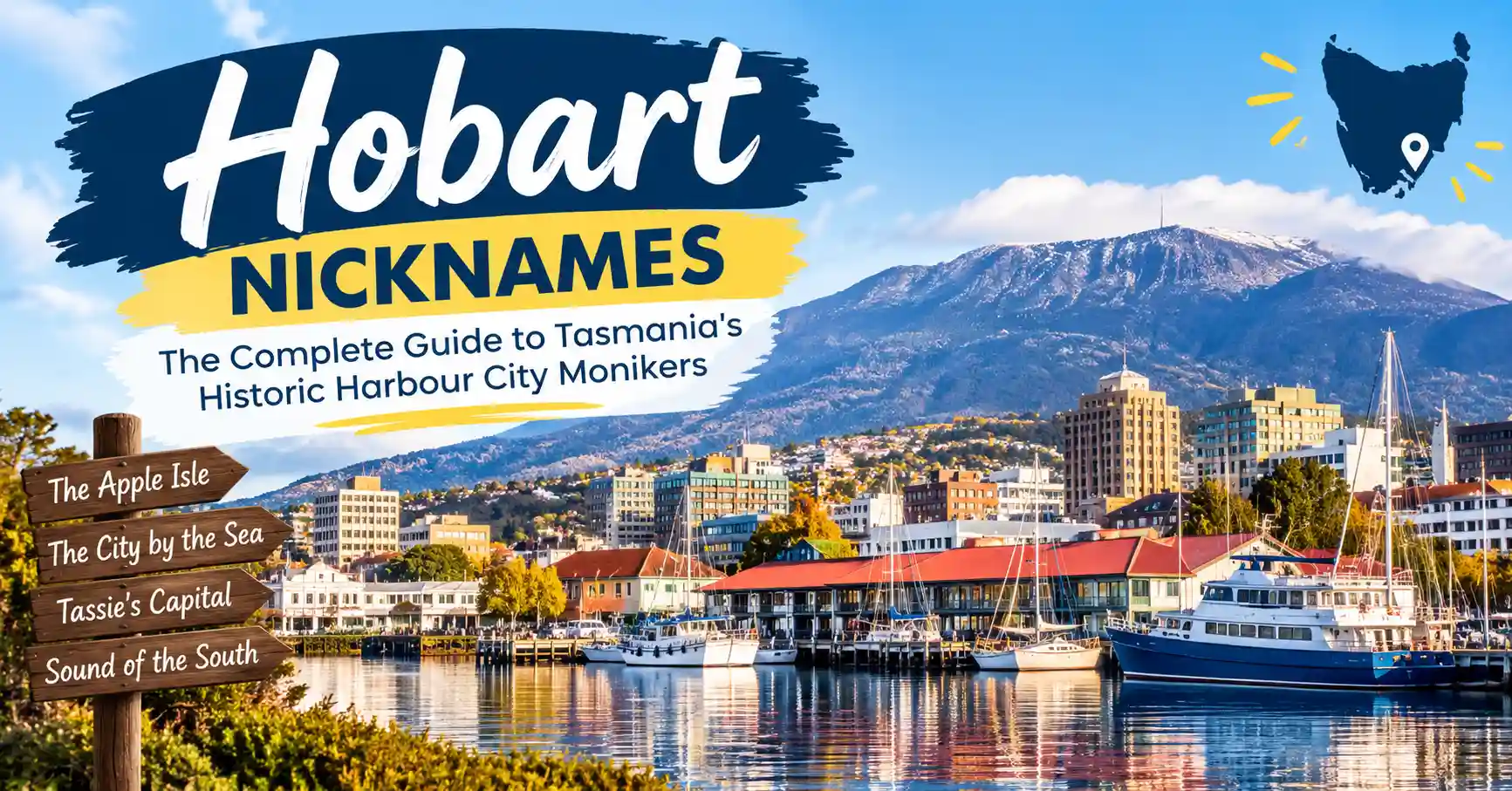
Hobart, the capital of Tasmania, sits dramatically between the Derwent River and Mount Wellington, making it one of Australia’s most scenically stunning cities. Established in 1804, it ranks as the second-oldest capital city in Australia, carrying centuries of history within its charming streets and waterfront. The city’s rich heritage, maritime culture, and unique geography have inspired a collection of memorable Hobart nicknames that capture its distinctive character and appeal.
From affectionate local terms to historical monikers, Hobart’s nicknames reflect its evolution from a colonial settlement to a vibrant cultural destination. Whether you’re a curious traveler, a geography enthusiast, or someone exploring Australian cities, understanding these nicknames opens a window into Hobart’s soul and the stories that shaped this remarkable Tasmanian capital.
⚡ Quick Answer
The most famous nickname of Hobart is “The Derwent City” or simply “Hobart Town.” Other well-known nicknames include “The Apple Isle’s Capital,” “The Gateway to Antarctica,” and “Sleepy Hollow.”
📊 Quick Facts Table
📜 Official Nickname of Hobart
Hobart does not have an officially designated nickname sanctioned by the Tasmanian government or the Hobart City Council. Unlike some cities that have formally adopted monikers through municipal declarations, Hobart’s nicknames have emerged organically through popular usage, historical context, and cultural identity.
The nickname “Hobart Town” carries semi-official status as a historical designation. During the colonial period, the settlement was formally known as Hobart Town, and this name persisted in official documents and maps well into the nineteenth century. Today, it remains a nostalgic and affectionate term used by locals and historians alike.
“The Derwent City” functions as Hobart’s most commonly recognized unofficial nickname, derived from its position along the Derwent River estuary. This moniker appears frequently in tourism materials, local media, and promotional content, effectively serving as a de facto official nickname even without formal government adoption.
🏷️ What Are the Nicknames of Hobart?
Hobart’s nicknames span multiple categories, each reflecting different aspects of the city’s identity, history, and geography. Understanding these categories helps contextualize why certain names became popular and what they reveal about Tasmania’s capital.
🌊 Geographic Nicknames
These nicknames derive from Hobart’s natural setting and physical features:
- The Derwent City – Named after the Derwent River that defines Hobart’s geography
- The Gateway to the South – References its position as the southernmost Australian capital
- The Harbour City – Highlights the significance of Sullivan’s Cove and the working waterfront
🏛️ Historical Nicknames
These names connect to Hobart’s colonial past and development:
- Hobart Town – The original colonial designation used from 1804 through the 1880s
- The Second Oldest City – Acknowledges Hobart as Australia’s second-oldest capital after Sydney
- The Convict City – References its origins as a penal settlement
🎭 Cultural Nicknames
These reflect Hobart’s contemporary identity and cultural scene:
- The MONA City – Named for the Museum of Old and New Art, which transformed Hobart’s cultural landscape
- The Foodie Capital – Recognizes Hobart’s acclaimed culinary scene and fresh produce
- The Festival City – Celebrates its packed calendar of events including Dark Mofo and Taste of Tasmania
🌏 Global Connection Nicknames
These highlight Hobart’s international significance:
- The Gateway to Antarctica – References its role as a launching point for Antarctic expeditions
- The Antarctic Hub – Acknowledges the concentration of Antarctic research organizations
📋 Complete List of Hobart Nicknames
⭐ Most Popular Nicknames of Hobart
Among Hobart’s many nicknames, several stand out as particularly recognized and widely used. “The Derwent City” and “Hobart Town” consistently rank as the most popular, appearing frequently in tourism materials, historical references, and local conversation.
“The Gateway to Antarctica” has gained significant international recognition due to Hobart’s unique role in Antarctic exploration and research. Meanwhile, “The MONA City” represents a more contemporary nickname that emerged following the 2011 opening of the Museum of Old and New Art, which fundamentally transformed Hobart’s cultural identity and tourism industry.
🔍 Main Nicknames Explained
🌊 The Derwent City
Meaning: A direct reference to Hobart’s location on the Derwent River estuary, which defines the city’s geography and maritime character.
Short Origin Story: This nickname emerged naturally from Hobart’s intimate relationship with the Derwent River, which serves as the city’s lifeline and visual centerpiece.
Historical Background: The Derwent River has been central to Hobart’s identity since the city’s founding in 1804. The river provided the primary reason for the settlement’s location, offering a protected deepwater harbour essential for colonial shipping and trade.
Modern Usage: “The Derwent City” appears regularly in tourism marketing, local media, and business names throughout the region. It functions as Hobart’s most recognizable geographic identifier.
Cultural Impact: This nickname reinforces Hobart’s maritime heritage and connection to the water, which remains central to local identity and lifestyle.
Interesting Fact: The Derwent River is one of the few major rivers in the world that flows through a capital city and supports both commercial shipping and recreational sailing.
🏛️ Hobart Town
Meaning: The original colonial name for the settlement, used before the city officially became known simply as Hobart.
Short Origin Story: When Lieutenant-Governor David Collins established the settlement in 1804, it was named Hobart Town in honour of Lord Hobart, the British Secretary of State for War and the Colonies.
Historical Background: For much of the nineteenth century, the settlement was officially known as Hobart Town. The “Town” suffix was gradually dropped in official usage during the 1880s as the settlement grew into a significant city.
Modern Usage: Today, “Hobart Town” is used nostalgically by locals, historians, and in heritage tourism contexts. It evokes the city’s colonial past and historic character.
Cultural Impact: The nickname connects modern Hobart to its colonial roots and is celebrated during historical events and heritage festivals.
Interesting Fact: Several historic buildings and businesses in Hobart still carry “Hobart Town” in their names, preserving the colonial designation.
🐧 The Gateway to Antarctica
Meaning: A recognition of Hobart’s role as a major launching point for Antarctic expeditions and research missions.
Short Origin Story: Hobart’s strategic location as the southernmost major port made it an ideal base for Antarctic exploration starting in the early twentieth century.
Historical Background: Famous explorers including Roald Amundsen and Douglas Mawson used Hobart as a supply base for their Antarctic expeditions. Today, the city remains a key hub for Australian and international Antarctic programs.
Modern Usage: This nickname features prominently in tourism materials and is reinforced by attractions like the Mawson’s Huts Replica Museum and the Australian Antarctic Division headquarters.
Cultural Impact: The Antarctic connection gives Hobart a unique global significance and attracts scientists, researchers, and adventure tourists from around the world.
Interesting Fact: Hobart hosts the largest concentration of Antarctic and Southern Ocean research organizations in the Southern Hemisphere outside of Antarctica itself.
😴 Sleepy Hollow
Meaning: An affectionate, slightly teasing nickname referring to Hobart’s relaxed pace of life compared to mainland Australian cities.
Short Origin Story: This colloquial nickname emerged from comparisons with larger, faster-paced Australian cities like Sydney and Melbourne.
Historical Background: The term gained popularity in the late twentieth century when Hobart’s economy slowed and young people migrated to mainland cities for opportunities.
Modern Usage: While still used occasionally, “Sleepy Hollow” has faded as Hobart has transformed into a vibrant cultural destination. Some locals use it self-deprecatingly.
Cultural Impact: The nickname represents both Hobart’s traditional laid-back character and the dramatic changes the city has experienced in recent decades.
Interesting Fact: The revitalization of Hobart’s cultural scene, particularly through MONA, has largely dispelled the “Sleepy Hollow” reputation.
🎨 The MONA City
Meaning: A contemporary nickname derived from the Museum of Old and New Art (MONA), which opened in 2011.
Short Origin Story: MONA’s opening transformed Hobart’s cultural landscape and tourism industry, leading to this modern nickname.
Historical Background: Founded by professional gambler and art collector David Walsh, MONA attracted international attention and positioned Hobart as a must-visit cultural destination.
Modern Usage: “The MONA City” is frequently used in tourism marketing and media coverage of Hobart’s cultural renaissance.
Cultural Impact: MONA has fundamentally changed Hobart’s identity, attracting visitors, investment, and creative energy to the city.
Interesting Fact: MONA receives more annual visitors than any other privately funded museum in Australia and has been credited with single-handedly revitalizing Hobart’s tourism economy.
🍎 The Apple Isle’s Capital
Meaning: A reference to Hobart’s status as the capital of Tasmania, historically known as “The Apple Isle” due to its apple-growing industry.
Short Origin Story: Tasmania earned the “Apple Isle” nickname from its once-thriving apple export industry, and Hobart naturally became known as its capital.
Historical Background: During the nineteenth and early twentieth centuries, Tasmania was one of the world’s major apple producers, shipping fruit internationally from Hobart’s port.
Modern Usage: While Tasmania’s apple industry has declined, the “Apple Isle” nickname persists, and Hobart’s connection to it remains recognized.
Cultural Impact: This nickname celebrates Tasmania’s agricultural heritage and Hobart’s role as the island’s administrative and commercial center.
Interesting Fact: At its peak, Tasmania exported over six million cases of apples annually, most passing through Hobart’s docks.
🏆 Which Nickname Is Most Famous?
“The Derwent City” stands as Hobart’s most famous nickname, primarily because it directly references the geographic feature that defines the city. Unlike historical or cultural nicknames that may require explanation, “The Derwent City” immediately communicates Hobart’s identity and location.
This nickname’s fame also stems from its versatility and positive connotations. It works equally well in tourism marketing, business branding, and casual conversation. The Derwent River’s central role in Hobart’s daily life and visual identity makes this nickname feel natural and enduring.
“Hobart Town” follows closely in recognition, particularly among Australians familiar with the city’s history. However, as a nickname that references the past rather than the present, it has less contemporary relevance than “The Derwent City.”
📖 How Hobart Got Its Nicknames
Hobart’s nicknames emerged from three primary sources: geographic features, historical circumstances, and cultural developments.
Geographic nicknames like “The Derwent City” and “The Harbour City” arose naturally from Hobart’s stunning natural setting. The city’s position on the Derwent River estuary, surrounded by hills and mountains, created an unmistakable sense of place that inspired these descriptive monikers.
Historical nicknames emerged from the city’s colonial past. “Hobart Town” served as the official designation for decades, while “The Convict City” acknowledged the settlement’s origins as a penal colony. These names preserve important historical context and connect modern Hobart to its complex past.
Cultural nicknames developed more recently, reflecting Hobart’s transformation into a vibrant arts and food destination. “The MONA City” and “The Festival City” celebrate the cultural energy that has revitalized Tasmania’s capital in the twenty-first century.
📝 Other Nicknames at a Glance
Beyond the major nicknames, Hobart has accumulated various informal monikers:
- The Gateway to the South – References its position as Australia’s southernmost capital
- The Mountain City – Acknowledges the dramatic presence of Mount Wellington (Kunanyi)
- The Sailing Capital – Celebrates the city’s thriving sailing community and role in the Sydney to Hobart Yacht Race
- The Colonial Gem – Highlights Hobart’s well-preserved historic architecture
- The Whisky Capital – Recognizes Tasmania’s booming whisky industry centered near Hobart
- The Dark Mofo City – Named for the winter solstice festival that has gained international acclaim
🎉 Fun Facts About Hobart
- Second-Oldest Capital: Hobart is Australia’s second-oldest capital city, founded just sixteen years after Sydney in 1804.
- Southernmost Capital: Hobart is the southernmost capital city in Australia and one of the southernmost capitals in the world.
- Sailing Heritage: The famous Sydney to Hobart Yacht Race finishes in Hobart each December, drawing international attention to the city’s maritime culture.
- MONA Effect: The Museum of Old and New Art (MONA) is Australia’s largest privately funded museum and has been credited with transforming Hobart’s tourism economy.
- Antarctic Connection: More Antarctic researchers pass through Hobart than any other city outside of Antarctica itself.
- Salamanca Market: The weekly Salamanca Market is one of Australia’s largest outdoor markets, attracting thousands of visitors every Saturday.
- Whisky Revolution: Tasmania produces some of the world’s most awarded whiskies, with many distilleries located near Hobart.
- Historic Gaol: The Cascades Female Factory, a UNESCO World Heritage Site, preserves the history of female convicts transported to Tasmania.
- Mount Wellington: The city’s backdrop, Mount Wellington (Kunanyi), rises 1,271 meters above sea level and occasionally receives snow in winter.
- Art and Culture: Hobart hosts major cultural events including Dark Mofo, MONA FOMA, and the Taste of Tasmania festival.
🗺️ Famous Attractions in Hobart
Hobart offers visitors an impressive range of attractions that showcase its unique character:
MONA (Museum of Old and New Art): This groundbreaking museum, accessible by ferry from Hobart’s waterfront, houses an eclectic collection spanning ancient antiquities to contemporary installations.
Salamanca Place: The historic waterfront precinct features sandstone warehouses converted into galleries, restaurants, and shops, with the famous market operating every Saturday.
Battery Point: One of Australia’s best-preserved colonial neighborhoods, featuring charming cottages, narrow streets, and stunning harbour views.
Mount Wellington (Kunanyi): The city’s dramatic backdrop offers panoramic views from its summit, accessible by car or hiking trails.
Royal Tasmanian Botanical Gardens: Established in 1818, these gardens showcase Tasmania’s unique flora and offer a peaceful retreat near the city centre.
Cascades Female Factory: A UNESCO World Heritage Site that preserves the history of female convicts and their experiences in colonial Tasmania.
Tasmanian Museum and Art Gallery: Located in the historic waterfront area, this museum explores Tasmania’s natural and cultural history.
⚖️ Nickname Comparison
🏙️ Hobart vs Melbourne Nicknames
Both Hobart and Melbourne have rich nickname traditions that reflect their unique characters. While Melbourne’s nicknames often emphasize its cultural and sporting achievements, Hobart’s nicknames highlight its geographic beauty, historical significance, and emerging cultural scene. For more Australian city nickname guides, explore our Australia City Nicknames collection.
🔗 Related Cities and Their Nicknames
🌉 Sydney Nicknames
The Harbour City, The Emerald City, and more names of Australia’s largest city.
🎭 Melbourne Nicknames
Marvellous Melbourne, The Sporting Capital, and other monikers of Victoria’s capital.
☀️ Brisbane Nicknames
Brisvegas, The River City, and other names for Queensland’s capital.
🍷 Adelaide Nicknames
The City of Churches, Radelaide, and more names of South Australia’s capital.
🌅 Perth Nicknames
The City of Light, The Wildflower City, and other names for Western Australia’s capital.
🇦🇺 Australia City Nicknames
Complete guide to nicknames of cities across Australia.
❓ Frequently Asked Questions
What is the official nickname of Hobart?
Hobart does not have an officially designated nickname. However, “The Derwent City” functions as the most widely recognized unofficial nickname, appearing frequently in tourism materials and local media. “Hobart Town” serves as a semi-official historical designation from the colonial era.
Why is Hobart called “The Derwent City”?
Hobart is called “The Derwent City” because of its location on the Derwent River estuary. The river has been central to Hobart’s identity since the city’s founding in 1804, providing the deepwater harbour that made the settlement possible. The nickname highlights this fundamental geographic connection.
Who gave Hobart its nickname “Hobart Town”?
The nickname “Hobart Town” originated with the city’s founding in 1804 when Lieutenant-Governor David Collins established the settlement and named it in honour of Lord Hobart, the British Secretary of State for War and the Colonies. The “Town” designation persisted officially until the 1880s.
When did “The Gateway to Antarctica” nickname become popular?
The “Gateway to Antarctica” nickname gained prominence throughout the twentieth century as Hobart served as a base for major Antarctic expeditions. It became particularly associated with the city following the establishment of the Australian Antarctic Division headquarters in the 1940s and continues to be widely used today.
Do locals actually use these Hobart nicknames?
Yes, locals use several of these nicknames in everyday conversation. “Hobart Town” is used affectionately by long-time residents, while “Tassie’s Capital” appears frequently in casual speech. “The Derwent City” is more common in formal contexts and tourism materials, though locals recognize and understand it readily.
🎯 Conclusion
Hobart’s nicknames tell the story of a city shaped by its dramatic geography, complex history, and vibrant cultural evolution. From the colonial echoes of “Hobart Town” to the contemporary energy of “The MONA City,” each nickname captures a different facet of Tasmania’s remarkable capital. The most enduring of these Hobart nicknames, “The Derwent City,” reminds us of the fundamental role that the river plays in defining this unique place.
Whether you’re planning a visit to explore Hobart’s historic waterfront, researching Australian cities, or simply curious about the stories behind city nicknames, understanding these monikers provides valuable insight into what makes Hobart special. The city’s transformation from a quiet colonial outpost to a dynamic cultural destination is reflected in the evolving nicknames that residents and visitors use to describe it.
For more fascinating city nickname guides from around the world, explore the comprehensive collection at CityNicknames.com, your trusted resource for discovering the stories behind the names we give our cities. You can also learn more about Hobart’s history through the official City of Hobart website.