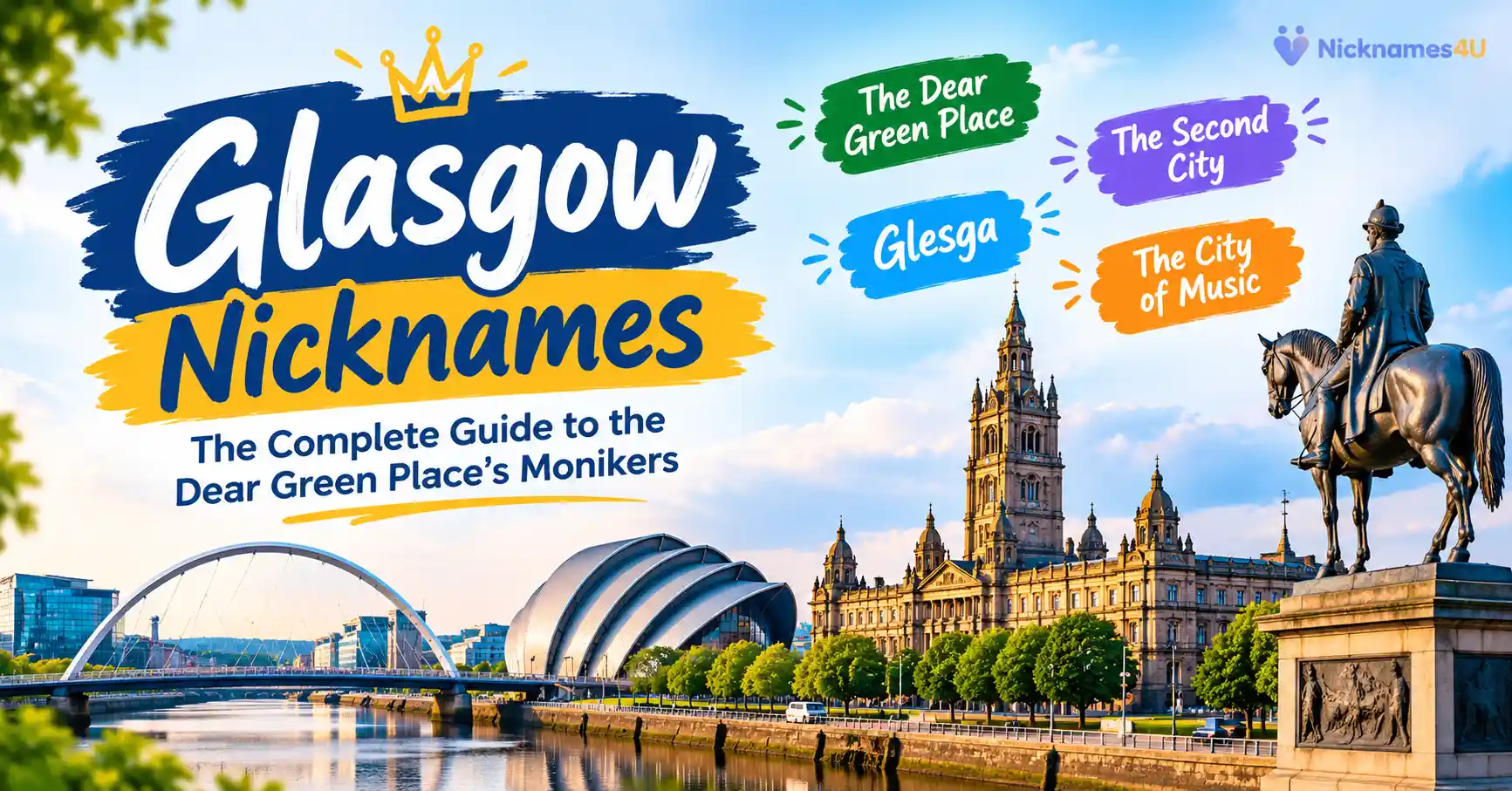
Glasgow, Scotland’s largest city, is a vibrant metropolis known for its industrial heritage, passionate football culture, and incredibly friendly locals. While its official name is steeped in history, the city is affectionately known by a variety of colorful monikers. From the “Dear Green Place” to the “Second City of the Empire,” these Glasgow Nicknames reflect the city’s unique character, sense of humor, and storied past. This guide explores the origins and meanings behind the names Glaswegians and the world use to describe this dynamic city.
Quick Answer Box Section
💡 Quick Answer: What is Glasgow’s Nickname?
The most famous nickname for Glasgow is “The Dear Green Place” (derived from the Gaelic Glaschu). Other widely recognized nicknames include “The Second City of the Empire,” “The Friendly City,” and “The Dear Green Place.” Locals are colloquially known as “Weegies.”
Quick Facts Table
| Feature | Details |
|---|---|
| City | Glasgow |
| Country | Scotland, United Kingdom |
| Official Nickname | None officially legislated, but “Dear Green Place” is the historical translation. |
| Most Famous Nickname | The Dear Green Place |
| Population | ~635,000 (City), ~1.7 million (Greater Glasgow) |
| Founded | 6th Century (Religious settlement), 1175 (Burgh) |
| Known For | Shipbuilding, Architecture (Mackintosh), Football (Old Firm), Friendly Locals |
Official Nickname of Glasgow
Glasgow does not possess a legally binding “official” nickname in the same way some cities do. However, the name Glasgow itself is derived from the Gaelic Glaschu, which translates to “Dear Green Place.” This is widely considered the city’s official historical nickname.
It is categorized as both historical and commonly recognized. While the city council does not enforce a specific nickname for branding purposes, “Dear Green Place” is universally accepted as the accurate translation of the city’s ancient name. Other nicknames, such as “Second City of the Empire,” are historical titles reflecting a specific era of prominence rather than permanent official designations.
What Are the Nicknames of Glasgow?
Glasgow has accumulated a vast array of nicknames over the centuries. These names fall into several categories, reflecting the city’s geography, industrial prowess, and cultural identity.
Industrial & Historical Monikers
During the 19th and early 20th centuries, Glasgow was a global powerhouse. These nicknames reflect that era:
- Second City of the Empire: Indicated Glasgow’s status as the most important city in the British Empire after London.
- The Workshop of the Empire: Highlighted the city’s massive shipbuilding and manufacturing output.
- Clyde-built: A term referring to the quality of ships built on the River Clyde.
Cultural & Social Nicknames
These names reflect the personality and reputation of the city and its people:
- The Friendly City: A nod to the local reputation for warmth and humor.
- The Dear Green Place: A translation of the city’s name, referring to the abundance of parks.
- The No Mean City: A reference to the city’s gritty past, derived from the novel No Mean City.
Colloquial & Slang
- Weegie: The demonym for a person from Glasgow (often used affectionately, sometimes derisively by outsiders).
- The Toon: A local slang term simply meaning “The Town.”
Complete List of Glasgow Nicknames
| Nickname | Meaning | Origin | Popularity |
|---|---|---|---|
| The Dear Green Place | Translation of the Gaelic name *Glaschu*. | 6th Century Gaelic | High |
| Second City of the Empire | Ranked second in importance to London. | Victorian Era | High (Historical) |
| The Friendly City | Reputation for hospitality and humor. | Modern Tourism | Medium-High |
| The Workshop of the Empire | Center of shipbuilding and heavy industry. | Industrial Revolution | Medium |
| No Mean City | A tough, gritty city (from a 1935 novel). | 20th Century Literature | Medium |
| The Toon | Local slang for “The Town.” | Local Dialect | High (Local) |
Most Popular Nicknames of Glasgow
While Glasgow has many names, two stand out as the most recognized globally: The Dear Green Place and The Second City of the Empire. The former is poetic and rooted in the city’s ancient heritage, while the latter is a badge of honor from a time when Glasgow helped build the modern world. In modern tourism, The Friendly City is frequently used to differentiate Glasgow from the more reserved reputation of Edinburgh.
Main Nicknames Explained
The Dear Green Place
- Meaning: A literal translation of the Gaelic Glaschu.
- Short Origin Story: Founded by St. Mungo in the 6th century, the settlement was named for the green landscape surrounding the Molendinar Burn.
- Historical Background: The name has been used for over 1,500 years, predating the industrial era.
- Modern Usage: Used by the city council and tourism boards to promote Glasgow’s parks and environmental initiatives.
- Cultural Impact: It reminds locals of the city’s roots before it became a smoky industrial hub.
- Interesting Fact: Glasgow has more parks per square mile than any other city in Europe.
The Second City of the Empire
- Meaning: Glasgow was the primary industrial hub of the British Empire after London.
- Short Origin Story: Coined during the Victorian era when Glasgow’s shipyards and factories produced goods for the globe.
- Historical Background: At its peak, Glasgow produced a significant portion of the world’s ships and locomotives.
- Modern Usage: Now used historically to describe the city’s golden age of architecture and wealth.
- Cultural Impact: It instills a sense of pride in the city’s engineering heritage.
- Interesting Fact: In 1900, Glasgow was one of the richest cities in the world.
The Friendly City
- Meaning: Reflects the warm, welcoming nature of Glaswegians.
- Short Origin Story: A modern marketing slogan that stuck due to the city’s genuine reputation for hospitality.
- Historical Background: While newer, it is rooted in the “Glasgow Smile” and the city’s tradition of socializing.
- Modern Usage: Heavily featured in tourism campaigns.
- Cultural Impact: Helps combat the “No Mean City” stereotype of violence.
- Interesting Fact: Locals often strike up conversations with strangers on the street or on public transport.
No Mean City
- Meaning: A reference to a tough, uncompromising urban environment.
- Short Origin Story: Taken from the title of a 1935 novel by H. Kingsley Long and Alexander McArthur.
- Historical Background: The book depicted the slums of the Gorbals and gang culture in the 1930s.
- Modern Usage: Sometimes used self-deprecatingly by locals or in gritty crime dramas.
- Cultural Impact: It defined a perception of Glasgow that the city has spent decades trying to modernize.
- Interesting Fact: The phrase actually comes from the Bible (Acts 21:39), where Paul states he is from “no mean city” (meaning Tarsus was not insignificant).
The Workshop of the Empire
- Meaning: The engine room of British industrial power.
- Short Origin Story: Derived from the sheer volume of manufacturing output on the River Clyde.
- Historical Background: Refers to the shipbuilding heyday when “Clyde-built” meant quality.
- Modern Usage: Used in historical contexts and museum exhibits.
- Cultural Impact: A reminder of the working-class roots of the city.
- Interesting Fact: The phrase “Clyde-built” was a global benchmark for ship quality.
Which Nickname Is Most Famous?
The Dear Green Place is arguably the most famous and enduring nickname. While “Second City of the Empire” is historically significant, “Dear Green Place” is unique because it is a direct translation of the city’s actual name. It is the nickname that connects the modern city back to its 6th-century origins and is used in official branding, poetry, and song.
How Glasgow Got Its Nicknames
Glasgow got its nicknames primarily through two avenues: translation and reputation. The name “Dear Green Place” comes directly from the Gaelic language, describing the physical geography of the area. Other nicknames, like “Second City of the Empire” and “Workshop of the Empire,” were earned through economic might during the Industrial Revolution. As the city evolved, social nicknames like “The Friendly City” and “No Mean City” emerged from the literature and the lived experience of the people, reflecting the duality of Glasgow’s tough exterior and warm heart.
Other Nicknames at a Glance
- The Grey City: Referring to the sandstone architecture and industrial smog of the past.
- The Dear Green Place: The most common translation.
- The Second City: Shortened form of Second City of the Empire.
- The Shipbuilding Capital: A functional description of its past industry.
- The Toon: Local slang.
- The Weegie Capital: Playful term derived from the demonym.
Fun Facts About Glasgow
- Park Life: Glasgow is known as the “Dear Green Place” because it has over 90 parks and gardens within its city limits.
- UNESCO City of Music: It was the first UK city to be designated a UNESCO City of Music.
- The Real Dr. Dolittle: The character was inspired by a Glasgow veterinarian, William MacKenzie.
- Kodak Moments: The world’s first camera obscura is in Glasgow.
- The Tall Ship: The SV Glenlee, one of only five remaining Clyde-built sailing ships, is moored at the Riverside Museum.
- Deep Fried Mars Bar: The infamous delicacy was allegedly invented in a Glasgow chip shop.
- Subway Loop: Glasgow has the world’s third-oldest underground railway system.
- Tree Roots: The name Glasgow comes from Glas (green) and Ghu (dear place), but some historians argue it means “green hollow.”
- City of Architecture: The Glasgow School of Art, designed by Charles Rennie Mackintosh, is a masterpiece of Art Nouveau.
- Friendly Rivalry: The Old Firm derby between Celtic and Rangers is one of the fiercest rivalries in world football.
Famous Attractions in Glasgow
Visitors to the “Dear Green Place” should not miss the Kelvingrove Art Gallery and Museum, the Riverside Museum (dedicated to transport and shipbuilding), and the Glasgow Cathedral. For a taste of the city’s culture, the Barrowland Ballroom and the King Tut’s Wah Wah Hut (where Oasis was discovered) are essential. The Willow Tea Rooms, designed by Mackintosh, offer a glimpse into the city’s artistic heritage.
Nickname Comparison: Glasgow vs. Edinburgh
Glasgow and Edinburgh are Scotland’s two largest cities, and their nicknames reflect their distinct personalities.| Feature | Glasgow | Edinburgh |
|---|---|---|
| Primary Nickname | The Dear Green Place | Auld Reekie |
| Meaning | Green landscape (Gaelic) | Old Smoky (referring to chimney smoke) |
| Vibe | Industrial, Friendly, Gritty | Historical, Elegant, Reserved |
| Secondary Nickname | Second City of the Empire | Athens of the North |
Related Cities and Their Nicknames
Explore how other cities around the world got their famous nicknames:
Frequently Asked Questions (FAQs)
What is the official nickname of Glasgow?
Glasgow does not have a legally official nickname, but “The Dear Green Place” is the recognized historical translation of its name and serves as its primary moniker.
Why is Glasgow called the Dear Green Place?
The name comes from the Gaelic Glaschu, which translates to “dear green place,” referring to the lush landscape where St. Mungo founded the city.
Who gave Glasgow its nickname?
The nickname “Dear Green Place” was not given by a single person; it evolved from the original Gaelic name of the settlement founded in the 6th century.
When did the nickname become popular?
“The Dear Green Place” has been associated with the city since its founding. The nickname “Second City of the Empire” became popular during the Victorian era in the 19th century.
Do locals use this nickname?
Locals generally refer to the city simply as “Glasgow” or “The Toon.” However, they are proud of the “Dear Green Place” translation and often use it in poetry, song, and civic pride contexts.
Conclusion
Glasgow is a city of many names, each telling a different part of its story. Whether it is the ancient Glasgow Nicknames like “The Dear Green Place,” the industrial might of “The Second City of the Empire,” or the modern warmth of “The Friendly City,” these monikers capture the essence of Scotland’s largest city. They reflect a place that has evolved from a small religious settlement to a global industrial powerhouse and finally to a vibrant cultural hub. For more detailed information on the history and culture of Scotland’s largest city, you can visit the official Visit Scotland website.