
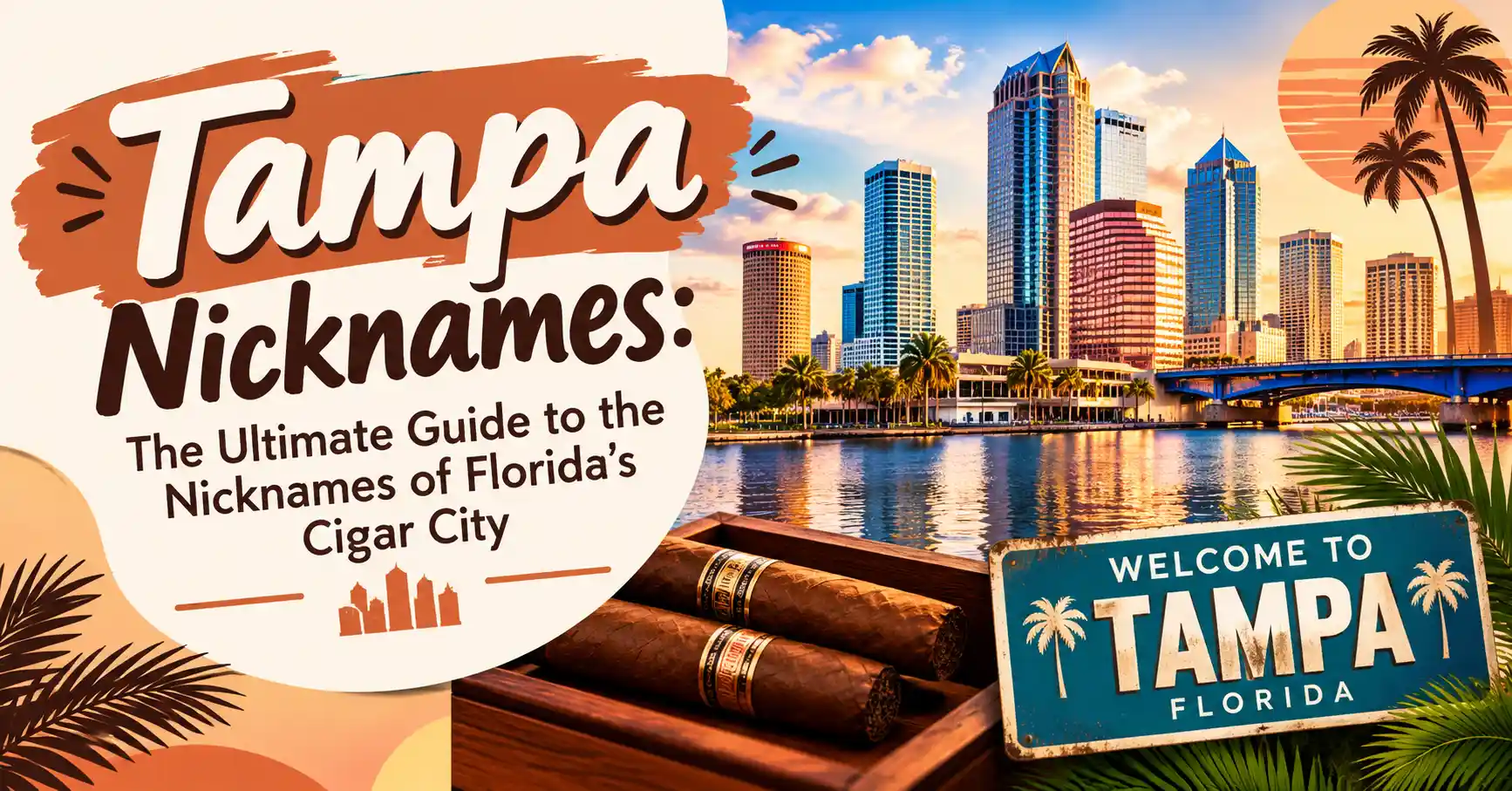
Tampa, Florida, is a vibrant Gulf Coast metropolis known for its rich history, cultural diversity, and dynamic economy. From its Cuban heritage to its role as a major port city, Tampa has earned several memorable nicknames over the years. These Tampa nicknames reflect the city’s unique identity, from its historic cigar industry to its reputation as a premier destination.
This comprehensive guide explores the most famous Tampa nicknames, their origins, meanings, and cultural significance. Whether you’re a local, a curious traveler, or a history enthusiast, understanding these nicknames provides valuable insight into what makes Tampa one of America’s most fascinating cities.
⚡ Quick Answer
The most famous nickname of Tampa is “Cigar City,” stemming from its historic cigar manufacturing industry. Other well-known Tampa nicknames include “The Big Guava,” “Tampa Bay,” and “America’s Next Great City.” Each nickname captures a different aspect of Tampa’s identity and heritage.
📊 Quick Facts Table
🏛️ Official Nickname of Tampa
Tampa does not have an officially designated nickname by municipal decree. However, “Cigar City” is widely recognized as the city’s most iconic and historically significant nickname. This moniker is considered a commonly recognized, historical nickname rather than an official one.
The nickname emerged organically during the late 19th and early 20th centuries when Tampa became the cigar manufacturing capital of the United States. At its peak, the Ybor City district produced millions of cigars annually, earning Tampa its reputation as the heart of American cigar production.
While not official in a legal sense, “Cigar City” has been embraced by locals, businesses, and cultural institutions. You’ll find it referenced in brewery names, restaurant titles, and local branding throughout the Tampa Bay region.
📍 What Are the Nicknames of Tampa?
Tampa has accumulated numerous nicknames throughout its history, each reflecting different aspects of the city’s character, history, and culture. From its industrial heritage to its natural beauty, these Tampa nicknames tell the story of a city that has continuously evolved while honoring its past.
Categories of Tampa Nicknames
Historical and Industrial Nicknames
- These nicknames emerged during Tampa’s formative years as a major industrial and port city
- Reflect the city’s role in cigar manufacturing, shipping, and trade
- Include names like “Cigar City” and “The Cigar Capital of the World”
Geographic and Natural Nicknames
- Derived from Tampa’s location on Florida’s Gulf Coast
- Reference the city’s natural surroundings, climate, and geography
- Include names like “The Big Guava” and “Tampa Bay”
Cultural and Modern Nicknames
- Reflect Tampa’s contemporary identity and aspirations
- Highlight the city’s growth, diversity, and cultural offerings
- Include names like “America’s Next Great City” and “The New South”
Sports and Entertainment Nicknames
- Associated with Tampa’s professional sports teams and entertainment venues
- Include references to the Buccaneers, Lightning, and Rays
- Reflect the city’s passion for sports and entertainment
📋 Complete List of Tampa Nicknames
🌟 Most Popular Nicknames of Tampa
Among the many Tampa nicknames, a few stand out as the most recognized and widely used. These nicknames have become integral to the city’s identity and are used by locals, businesses, and media alike.
Cigar City remains the most iconic and historically significant nickname, directly tied to Tampa’s industrial heritage. Tampa Bay is perhaps the most commonly used in everyday conversation, referring to both the body of water and the broader metropolitan region. The Big Guava offers a playful, Florida-appropriate alternative to New York’s famous nickname. Champa Bay emerged recently as a celebration of the region’s remarkable sports success.
📖 Main Nicknames Explained
🚬 Cigar City
Meaning: A direct reference to Tampa’s historic role as the cigar manufacturing capital of the United States.
Short Origin Story: In the late 1880s, Vicente Martinez Ybor established a cigar factory in Tampa, attracting thousands of Cuban and Spanish cigar workers. The industry flourished, and Tampa became synonymous with premium cigar production.
Historical Background: At its peak in the early 1900s, Tampa’s Ybor City district housed numerous cigar factories producing millions of cigars annually. The industry shaped the city’s culture, architecture, and demographics.
Modern Usage: Today, “Cigar City” is used by local businesses, breweries (most notably Cigar City Brewing), and cultural organizations. It remains a point of civic pride and historical connection.
Cultural Impact: The nickname represents Tampa’s immigrant heritage and industrial past. It serves as a reminder of the Cuban, Spanish, and Italian communities that built the city.
Interesting Fact: Tampa’s cigar industry was so significant that it earned the city the title “Cigar Capital of the World” in the early 20th century.
🍈 The Big Guava
Meaning: A playful Florida-themed alternative to New York City’s “The Big Apple.”
Short Origin Story: The nickname gained popularity in the mid-20th century as Tampa sought to establish its own identity separate from other Florida cities.
Historical Background: While never as widely adopted as “Cigar City,” “The Big Guava” appeared in marketing materials and local publications as a whimsical nickname.
Modern Usage: The nickname is occasionally used in local media and by longtime residents. It has seen a resurgence in social media and casual conversation.
Cultural Impact: “The Big Guava” reflects Tampa’s desire to be recognized as a major city while embracing its unique Florida character.
Interesting Fact: Guavas actually grow in Florida, making the nickname geographically appropriate, though Tampa is not particularly known for guava production.
🌊 Tampa Bay
Meaning: A reference to the large natural harbor and the surrounding metropolitan region.
Short Origin Story: The name derives from the body of water that has been central to Tampa’s development since indigenous peoples first inhabited the area.
Historical Background: Tampa Bay has served as a vital port and fishing ground for centuries, shaping the region’s economy and culture.
Modern Usage: “Tampa Bay” is used to describe both the city and the broader metropolitan area including St. Petersburg, Clearwater, and surrounding communities.
Cultural Impact: The name unites the region’s diverse communities under a shared geographic identity.
Interesting Fact: Tampa Bay is Florida’s largest open-water estuary, covering approximately 400 square miles.
🏆 Champa Bay
Meaning: A celebratory nickname highlighting Tampa’s professional sports championships.
Short Origin Story: The nickname emerged in 2020-2021 when Tampa’s sports teams achieved unprecedented success.
Historical Background: The Tampa Bay Lightning won consecutive Stanley Cup championships (2020, 2021), the Tampa Bay Buccaneers won Super Bowl LV (2021), and the Tampa Bay Rays competed in the World Series (2020).
Modern Usage: “Champa Bay” is used by sports fans, local media, and businesses to celebrate the region’s athletic achievements.
Cultural Impact: The nickname represents civic pride and the unifying power of sports in the Tampa Bay community.
Interesting Fact: Tampa Bay is one of the few metropolitan areas to simultaneously hold multiple major sports championships.
☀️ America’s Next Great City
Meaning: A recognition of Tampa’s growth, economic development, and rising national profile.
Short Origin Story: The nickname gained traction in the 2010s as Tampa experienced significant population growth and urban revitalization.
Historical Background: National publications and urban planners began recognizing Tampa’s potential as a major American city.
Modern Usage: The nickname is used by civic leaders, economic development organizations, and media to promote Tampa.
Cultural Impact: It reflects Tampa’s transformation from a regional city to a nationally significant metropolitan area.
Interesting Fact: Tampa has consistently ranked among the fastest-growing cities in the United States.
🏅 Which Nickname Is Most Famous?
“Cigar City” is undoubtedly the most famous nickname for Tampa. This nickname has achieved widespread recognition both within Florida and across the United States. Several factors contribute to its prominence:
Historical Authenticity: Unlike some nicknames that were created for marketing purposes, “Cigar City” emerged organically from Tampa’s actual industrial heritage.
Unique Identity: The nickname is specific to Tampa and doesn’t apply to other cities, making it a distinctive identifier.
Cultural Resonance: It connects to the city’s immigrant history and the Cuban-American community that remains vital to Tampa’s character.
Commercial Adoption: Local businesses, especially in the craft beer and hospitality industries, have embraced the nickname, increasing its visibility.
National Recognition: Publications like USA Today, The New York Times, and travel magazines regularly reference Tampa as “Cigar City.”
📜 How Tampa Got Its Nicknames
Tampa’s nicknames emerged from a combination of historical events, geographic features, and cultural developments. The city’s evolution from a small military outpost to a major metropolitan area is reflected in the various names it has acquired over time.
Industrial Heritage: The cigar industry transformed Tampa from a modest town into a bustling city, earning it the “Cigar City” moniker. This nickname represents the most significant period of Tampa’s early development.
Geographic Identity: Tampa’s location on a large natural bay has always been central to its identity. The name “Tampa Bay” serves both as a geographic descriptor and a regional identifier.
Civic Boosterism: Nicknames like “The Big Guava” and “America’s Next Great City” reflect efforts by civic leaders and media to promote Tampa’s image and attract investment.
Sports Success: Recent championships by Tampa’s professional teams gave rise to “Champa Bay,” demonstrating how contemporary events can create new nicknames.
Cultural Pride: Each nickname represents a different facet of Tampa’s identity, from its immigrant roots to its modern aspirations.
📝 Other Nicknames at a Glance
- The Lightning Capital – Reference to frequent thunderstorms and the NHL team
- The Sunshine State’s Rising Star – Recognition of Tampa’s growing prominence in Florida
- The Cuban Sandwich Capital – Tribute to Tampa’s famous Cuban sandwich tradition
- Gasparilla City – Reference to the annual Gasparilla Pirate Festival
- The Gateway to Florida’s Gulf Coast – Geographic descriptor for Tampa’s location
- The City by the Bay – Simple geographic reference
- The Big Sombrero – Historical reference to the former Tampa Stadium
- The Cigar Capital – Shortened version of the full historical title
🎉 Fun Facts About Tampa
- Tampa’s Cuban sandwich is considered by many to be the original and authentic version, predating Miami’s variation.
- The Gasparilla Pirate Festival is one of the largest parades in the United States, attracting over 300,000 spectators annually.
- Ybor City was once known as the “Cigar Capital of the World” and produced more cigars than any other city globally.
- Tampa’s Bayshore Boulevard features one of the world’s longest continuous sidewalks, stretching 4.5 miles along the water.
- The Tampa Bay Lightning have won three Stanley Cup championships (2004, 2020, 2021).
- Busch Gardens Tampa Bay is one of the oldest theme parks in Florida, opening in 1959.
- Tampa was named one of the best places to live in the United States by U.S. News & World Report multiple times.
- The University of South Florida in Tampa is one of the fastest-growing research universities in the nation.
- Tampa’s port is the largest in Florida and one of the busiest cruise terminals in the world.
- The Tampa Theatre is one of America’s most elaborate and historic movie palaces, opening in 1926.
🎢 Famous Attractions in Tampa
Tampa offers a diverse array of attractions that draw millions of visitors each year. Busch Gardens Tampa Bay combines thrilling roller coasters with an extensive zoo featuring African wildlife. The Florida Aquarium showcases marine life from Florida’s waters and beyond. Ybor City preserves the city’s cigar heritage with historic buildings, restaurants, and nightlife. The Tampa Riverwalk connects many of the city’s top attractions along a scenic 2.6-mile path. Raymond James Stadium hosts the Tampa Bay Buccaneers and major events. Amalie Arena is home to the Tampa Bay Lightning and hosts concerts and shows throughout the year.
⚖️ Nickname Comparison: Tampa vs. Chicago
Both Tampa and Chicago have earned multiple nicknames that reflect their unique histories and identities. While Chicago’s “Windy City” is famous worldwide, Tampa’s “Cigar City” carries similar weight in representing the city’s industrial heritage and cultural pride. For more city nicknames, explore our guides on Chicago Nicknames and New York City Nicknames.
🔗 Related Cities and Their Nicknames
Explore more city nicknames from across the United States:
🌴 Miami Nicknames
Discover the Magic City and its many monikers
🤠 Austin Nicknames
Explore the Live Music Capital of the World
🎰 Las Vegas Nicknames
Sin City and beyond: Vegas nicknames revealed
🇺🇸 USA City Nicknames
Browse nicknames for cities across America
🌊 Florida City Nicknames
All the Sunshine State’s city nicknames
❓ Frequently Asked Questions
What is the official nickname of Tampa?
Tampa does not have an officially designated nickname by the city government. However, “Cigar City” is widely recognized as the city’s most iconic and historically significant nickname, embraced by locals and businesses alike.
Why is Tampa called Cigar City?
Tampa earned the nickname “Cigar City” during the late 19th and early 20th centuries when it became the cigar manufacturing capital of the United States. The Ybor City district was home to numerous cigar factories that produced millions of cigars annually, attracting thousands of Cuban and Spanish workers.
Who gave Tampa its nickname?
The nickname “Cigar City” emerged organically from Tampa’s industrial heritage rather than being attributed to a specific person. It became widely used as the cigar industry grew and Tampa gained national recognition for its cigar production.
When did the nickname become popular?
“Cigar City” became popular during the peak of Tampa’s cigar industry in the early 1900s. The nickname has remained in use ever since, experiencing renewed popularity in recent decades through local businesses and cultural references.
What are other nicknames of Tampa?
Other Tampa nicknames include “The Big Guava,” “Tampa Bay,” “Champa Bay,” “America’s Next Great City,” “The Cigar Capital of the World,” “Lightning City,” and “The Big Sombrero,” among others.
🎬 Conclusion
Tampa’s nicknames tell the story of a city that has transformed from a small military outpost to one of America’s most dynamic metropolitan areas. From the historic “Cigar City” to the celebratory “Champa Bay,” these nicknames capture different chapters of Tampa’s ongoing story. Understanding these Tampa nicknames provides valuable insight into the city’s cultural heritage, economic evolution, and civic pride.
Whether you’re planning a visit, considering a move, or simply curious about this Gulf Coast gem, exploring Tampa’s nicknames offers a unique window into what makes this city special. For more comprehensive information about Tampa and its attractions, visit the official Visit Tampa Bay website, the region’s authoritative tourism resource.