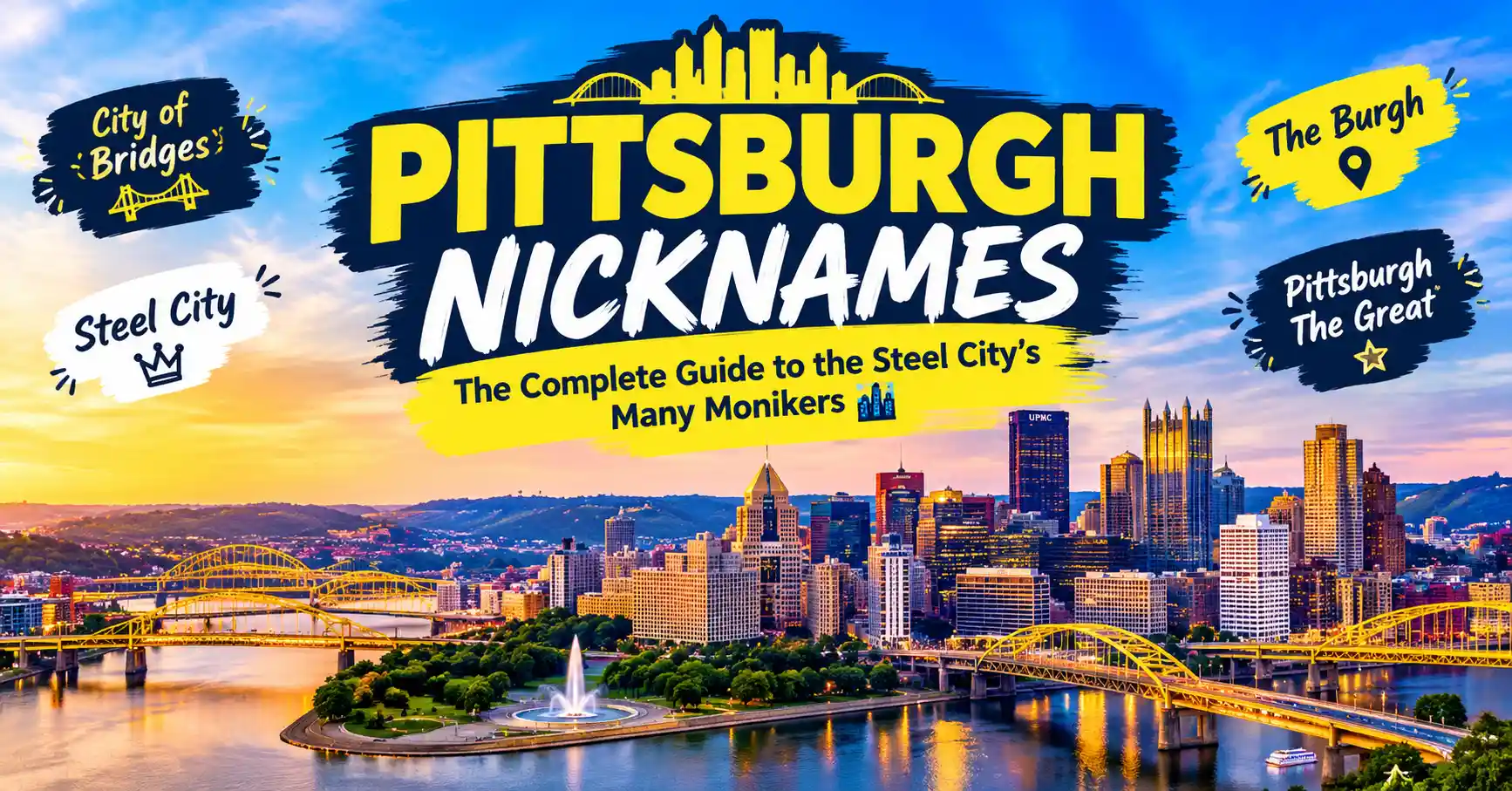
Pittsburgh, Pennsylvania, nestled at the confluence of three rivers in the heart of Appalachia, has earned countless nicknames throughout its storied history. From its industrial might to its sports glory, Pittsburgh nicknames reflect the city’s remarkable transformation and enduring spirit.
Known globally for its iconic skyline, passionate sports fans, and rich cultural heritage, Pittsburgh has accumulated monikers that tell the story of a city that rebuilt itself from industrial powerhouse to modern innovation hub. Each nickname captures a different facet of this beloved American city.
The most famous nickname of Pittsburgh is “The Steel City,” honoring its historic steel industry. Other well-known nicknames include “The City of Bridges,” “The Burgh,” and “The Paris of Appalachia.” Pittsburgh has earned over 30 nicknames throughout its history.
Quick Facts Table
Official Nickname of Pittsburgh
Pittsburgh does not have an officially designated city nickname. Unlike some cities that have passed resolutions or formal declarations, Pittsburgh’s nicknames emerged organically through popular usage, media attention, and local pride. “The Steel City” functions as the most widely recognized and accepted nickname, though it has never been formally adopted by any governmental body.
The lack of an official nickname reflects Pittsburgh’s characteristic authenticity. The city’s many monikers arose from genuine cultural, industrial, and geographic realities rather than marketing campaigns or civic proclamations. This organic development gives each Pittsburgh nickname a sense of legitimacy and connection to the city’s actual identity and history.
What Are the Nicknames of Pittsburgh?
Pittsburgh has accumulated more than 30 nicknames throughout its history, making it one of the most nicknamed cities in the United States. These names fall into several distinct categories that reflect different aspects of the city’s identity.
Industrial and Historical Nicknames capture Pittsburgh’s role as an industrial powerhouse. Names like “The Steel City,” “Iron City,” and “Smoky City” honor the region’s manufacturing heritage that built the nation.
Geographic Nicknames highlight Pittsburgh’s unique topography. “The City of Bridges,” “The Golden Triangle,” and “Where the Rivers Meet” reference the city’s position at the confluence of the Allegheny, Monongahela, and Ohio Rivers.
Cultural and Pop Culture Nicknames reflect local identity and national perceptions. “The Burgh,” “Da Burgh,” and “The Paris of Appalachia” showcase regional pride and the city’s cultural renaissance.
Sports-Inspired Nicknames celebrate Pittsburgh’s passionate sports culture. “The City of Champions” and “Title Town” recognize the remarkable success of the Steelers, Pirates, and Penguins.
Complete List of Pittsburgh Nicknames
Most Popular Nicknames of Pittsburgh
Among Pittsburgh’s extensive collection of nicknames, several stand out as the most recognized and frequently used. “The Steel City” remains the dominant nickname, instantly connecting the city to its industrial heritage. “The City of Bridges” has gained tremendous popularity in recent decades as Pittsburgh has embraced its unique topography. “The Burgh” serves as the affectionate local shorthand, used daily by residents and appearing in everything from social media hashtags to local business names.
These three nicknames—Steel City, City of Bridges, and The Burgh—form the core of Pittsburgh’s nickname identity. They appear most frequently in national media, tourism materials, and everyday conversation. Understanding these primary nicknames provides essential context for comprehending Pittsburgh’s cultural identity and civic pride.
Main Nicknames Explained
The Steel City 🏭
Meaning: A direct reference to Pittsburgh’s historic role as the center of American steel production.
Short Origin Story: The nickname emerged during the late 19th and early 20th centuries when Pittsburgh became the nation’s leading producer of steel. Andrew Carnegie, Henry Clay Frick, and other industrialists built massive steel mills along the city’s rivers, employing tens of thousands of workers.
Historical Background: At its peak, the Pittsburgh region produced more steel than any other area in the world. The city’s mills supplied steel for skyscrapers, bridges, ships, and countless other structures across America.
Modern Usage: Despite the decline of the steel industry in the 1970s and 1980s, “The Steel City” remains Pittsburgh’s most recognized nickname. It appears in tourism campaigns, sports branding, and national media coverage.
Cultural Impact: The nickname represents both pride in industrial heritage and the resilience of a city that reinvented itself. It connects modern Pittsburgh to its past while symbolizing the strength and durability of its people.
Interesting Fact: Pittsburgh’s steel mills produced the steel used in the Empire State Building, the Golden Gate Bridge, and countless other American landmarks.
The City of Bridges 🌉
Meaning: A reference to Pittsburgh’s remarkable collection of 446 bridges within the city limits.
Short Origin Story: Pittsburgh’s unique geography, situated where the Allegheny and Monongahela Rivers merge to form the Ohio River, necessitated extensive bridge construction. The city’s first bridge was built in 1818, and construction has continued ever since.
Historical Background: The city’s topography created a natural need for bridges connecting neighborhoods separated by rivers and valleys. Different eras left their architectural mark, from elegant suspension bridges to sturdy steel spans.
Modern Usage: “The City of Bridges” has become increasingly popular as Pittsburgh embraces its unique infrastructure. The nickname appears in tourism marketing and civic promotion.
Cultural Impact: The bridges represent Pittsburgh’s ability to overcome geographic challenges and connect diverse communities. They’ve become symbols of the city’s engineering heritage and aesthetic appeal.
Interesting Fact: Pittsburgh has more bridges than Venice, Italy, and three times as many as any other city in the world relative to its size.
The Burgh 🏙️
Meaning: A shortened, affectionate form of “Pittsburgh” used by locals and adopted widely in popular culture.
Short Origin Story: “The Burgh” emerged from Pittsburgh’s distinctive local dialect, known as “Pittsburghese.” Residents naturally shortened the city’s name in casual conversation, creating this friendly, informal nickname.
Historical Background: The nickname gained broader recognition in the late 20th century as Pittsburgh’s cultural identity strengthened. It represents local pride and the unique character of the city’s residents.
Modern Usage: “The Burgh” appears constantly in local media, social media hashtags, and everyday conversation. It’s particularly popular among younger residents and expatriates.
Cultural Impact: The nickname embodies Pittsburgh’s blue-collar roots and friendly, unpretentious character. It signals insider status and local authenticity.
Interesting Fact: The related term “Yinzer,” describing Pittsburgh residents who use the local dialect, comes from the ubiquitous Pittsburgh phrase “yinz,” meaning “you all.”
Iron City ⚙️
Meaning: A reference to Pittsburgh’s iron and steel manufacturing heritage, similar to “The Steel City.”
Short Origin Story: The nickname developed during the 19th century when Pittsburgh became a center for iron production before transitioning to steel. The city’s iron mills provided materials for railroads, tools, and construction.
Historical Background: Pittsburgh’s iron industry laid the foundation for its later steel dominance. The city’s access to coal, limestone, and transportation routes made it ideal for iron production.
Modern Usage: “Iron City” appears in local branding, most famously in the name of Iron City Beer. It’s less common than “Steel City” but remains recognized.
Cultural Impact: The nickname connects Pittsburgh to its industrial origins and working-class identity. It represents the foundational era of the city’s economic development.
Interesting Fact: Iron City Brewing Company, founded in 1861, is one of the oldest breweries in the United States and takes its name from this nickname.
The City of Champions 🏆
Meaning: A celebration of Pittsburgh’s remarkable success in professional sports.
Short Origin Story: The nickname gained prominence in the 1970s when the Pittsburgh Steelers won four Super Bowls in six years, and the Pirates won two World Series. The Penguins later added multiple Stanley Cups.
Historical Background: Pittsburgh’s sports teams have won numerous championships across all major sports. The Steelers’ six Super Bowl victories tie for the most in NFL history.
Modern Usage: The nickname appears during championship runs and in sports media coverage. Local fans embrace it as a celebration of Pittsburgh’s sports dominance.
Cultural Impact: The nickname reflects the city’s passionate sports culture and the unifying power of athletic success. It represents civic pride and collective achievement.
Interesting Fact: Pittsburgh is the only city to have won championships in the NFL, MLB, and NHL in the same calendar year (1979).
The Paris of Appalachia 🎨
Meaning: A recognition of Pittsburgh’s cultural amenities, architectural beauty, and renaissance, comparing it favorably to the French capital.
Short Origin Story: The nickname gained traction in the early 2000s as Pittsburgh underwent dramatic transformation. Writers and journalists noted the city’s world-class museums, stunning architecture, and vibrant cultural scene.
Historical Background: Pittsburgh has long possessed significant cultural institutions, including the Carnegie Museums, Pittsburgh Symphony Orchestra, and renowned universities. The city’s renaissance accelerated after the decline of steel.
Modern Usage: “The Paris of Appalachia” appears in travel writing and cultural commentary. It celebrates Pittsburgh’s emergence as a destination for arts, food, and innovation.
Cultural Impact: The nickname challenges stereotypes about Appalachia while highlighting Pittsburgh’s cultural sophistication. It represents the city’s successful reinvention.
Interesting Fact: The nickname was popularized by journalist Brian O’Neill and has been embraced by locals as a point of pride.
Which Nickname Is Most Famous?
“The Steel City” stands as Pittsburgh’s most famous nickname, recognized nationally and internationally. This nickname achieved dominance because it directly connects to the city’s most significant historical contribution—steel production that built America.
The Steel City nickname benefits from its clarity and historical accuracy. During Pittsburgh’s industrial peak, the city’s steel mills operated around the clock, producing the materials for skyscrapers, bridges, and ships worldwide. This industrial heritage remains central to Pittsburgh’s identity even decades after the mills closed.
National media consistently uses “The Steel City” when referring to Pittsburgh. Sports broadcasts, news reports, and travel features employ this nickname most frequently. The Pittsburgh Steelers football team further reinforces the connection between the city and steel.
While “The City of Bridges” has gained popularity and “The Burgh” dominates local usage, neither matches the international recognition of “The Steel City.” This nickname has become synonymous with Pittsburgh in the global consciousness.
How Pittsburgh Got Its Nicknames
Pittsburgh’s nicknames developed organically over more than two centuries, reflecting the city’s evolving identity and the various forces that shaped its development.
Geographic factors provided the foundation for several nicknames. Pittsburgh’s position at the confluence of three rivers created the need for bridges and defined the Golden Triangle downtown area. The surrounding hills and valleys contributed to the city’s distinctive neighborhoods and isolated communities.
Industrial development generated the most enduring nicknames. The discovery of coal and the establishment of iron and steel mills transformed Pittsburgh into an industrial powerhouse. Nicknames like “Steel City,” “Iron City,” and “Smoky City” emerged directly from this economic activity.
Sports success created a new category of nicknames in the 20th century. Championships by the Steelers, Pirates, and Penguins inspired names like “The City of Champions” and “Sixburgh,” celebrating Pittsburgh’s athletic achievements.
Cultural renaissance produced modern nicknames like “The Paris of Appalachia.” As Pittsburgh reinvented itself as a center for healthcare, education, and technology, new nicknames reflected this transformation.
Local dialect contributed informal nicknames like “The Burgh” and “Da Burgh.” These names emerged from Pittsburghese, the distinctive regional dialect that gives Pittsburgh speech its unique character.
Other Nicknames at a Glance
- The Smoky City – Reference to industrial-era air pollution
- The Glass City – Pittsburgh’s glass manufacturing heritage
- The Workshop of America – Industrial production center
- The Arsenal of America – Wartime manufacturing contribution
- The Gateway to the West – Historical starting point for westward expansion
- Hell with the Lid Off – Description of industrial pollution by writer James Parton
- The American Manchester – Comparison to English industrial city
- The City of Three Rivers – Geographic reference to river confluence
- Zinc City – Reference to zinc production
- The Birthplace of the Aluminum Industry – Alcoa’s origins in Pittsburgh
- Roboburgh – Modern nickname for robotics and technology sector
- The Healthcare City – Reference to world-class medical institutions
- Eds and Meds – Economy based on education and healthcare
- The Most Livable City – Recognition from various rankings
- The City of Murals – Public art initiative featuring hundreds of murals
Fun Facts About Pittsburgh
- Bridge Capital: Pittsburgh has 446 bridges, more than any other city in the world, including three of the longest suspension bridges in the United States.
- Steel Production Legacy: At its peak, Pittsburgh produced nearly half of all the steel in the United States, employing over 100,000 workers in the industry.
- First Commercial Radio Station: KDKA Pittsburgh became the world’s first commercially licensed radio station in 1920, broadcasting the Harding-Cox election results.
- Super Bowl Dominance: The Pittsburgh Steelers have won six Super Bowls, tied for the most in NFL history, earning the city the “Sixburgh” nickname.
- Unique Dialect: Pittsburgh has one of the most distinctive regional dialects in America, known as “Pittsburghese,” with unique words like “yinz” (you all) and “n’at” (and that).
- Millionaire’s Row: Pittsburgh’s Fifth Avenue once had more millionaires per capita than any other place in the world during the late 19th century.
- First Ferris Wheel: The world’s first Ferris wheel was built in Pittsburgh by George Washington Gale Ferris Jr. for the 1893 Chicago World’s Fair.
- Big Mac Invention: The Big Mac was invented in Pittsburgh by Jim Delligatti, a McDonald’s franchise owner, in 1967.
- Film Industry: Pittsburgh has become a major film production center, with over 200 films shot in the region, earning it the nickname “Hollywood of the East.”
- Green Building Leader: Pittsburgh has more certified “green” buildings per capita than any other U.S. city, symbolizing its transformation from industrial to sustainable.
Famous Attractions in Pittsburgh
Pittsburgh offers numerous world-class attractions that showcase the city’s transformation and cultural richness. The Carnegie Museums complex includes the Carnegie Museum of Art, Carnegie Museum of Natural History, and the Andy Warhol Museum, celebrating the city’s most famous artist.
PNC Park, consistently ranked among the best baseball stadiums in America, offers stunning views of the Pittsburgh skyline and Allegheny River. Acrisure Stadium, home of the Steelers, provides an electric atmosphere on game days.
The Duquesne Incline and Monongahela Incline transport visitors up Mount Washington for breathtaking views of the Golden Triangle. The Strip District offers a vibrant market experience with ethnic foods, specialty shops, and local character.
Point State Park marks the confluence of the three rivers and preserves Fort Pitt’s history. The Phipps Conservatory and Botanical Gardens showcases stunning plant collections in a historic glasshouse.
The Mattress Factory and Contemporary Craft highlight Pittsburgh’s thriving arts scene. Kennywood Park, one of America’s oldest amusement parks, continues to delight visitors with historic rides.
Nickname Comparison
Both cities have rich nickname traditions, but Pittsburgh’s monikers tend to celebrate industrial achievement and geographic features, while Chicago’s nicknames often stem from rivalry and reputation. For a deeper exploration of Chicago’s many names, see our guide to Chicago Nicknames.
Related Cities and Their Nicknames
New York City Nicknames
The Big Apple, The City That Never Sleeps, Gotham
🎰Las Vegas Nicknames
Sin City, Entertainment Capital of the World
🎸Austin Nicknames
Live Music Capital, Silicon Hills, ATX
🌴Miami Nicknames
Magic City, Gateway to the Americas
🇺🇸USA City Nicknames
Complete guide to American city nicknames
Frequently Asked Questions
What is the official nickname of Pittsburgh?
Pittsburgh does not have an officially designated nickname. “The Steel City” serves as the most widely recognized and commonly used nickname, but it has never been formally adopted by the city government. The nickname emerged organically from the city’s industrial heritage.
Why is Pittsburgh called “The Steel City”?
Pittsburgh earned “The Steel City” nickname because it was the center of American steel production during the late 19th and early 20th centuries. The city’s mills produced more steel than any other region in the world, supplying materials for countless American landmarks and infrastructure projects.
Who gave Pittsburgh its nickname “The City of Bridges”?
No single person coined “The City of Bridges.” The nickname emerged naturally from Pittsburgh’s geographic reality—the city’s rivers and valleys necessitated the construction of 446 bridges, more than any other city in the world. The name gained popularity throughout the 20th century.
When did Pittsburgh’s nicknames become popular?
Different nicknames became popular at different times. “The Steel City” and “Iron City” emerged during the industrial era of the late 1800s. “The City of Bridges” gained prominence in the 20th century. “The City of Champions” became popular during the Steelers’ 1970s dynasty. “The Paris of Appalachia” is a 21st-century nickname.
Do locals use Pittsburgh’s nicknames?
Yes, locals frequently use “The Burgh” and “Da Burgh” in everyday conversation and social media. “The Steel City” appears regularly in local media and sports contexts. However, residents also simply call their home “Pittsburgh” or “the city” in casual conversation.
Conclusion
Pittsburgh’s remarkable collection of nicknames tells the story of a city that has continually reinvented itself while maintaining pride in its heritage. From the industrial might that earned the title “The Steel City” to the geographic uniqueness that makes it “The City of Bridges,” each nickname captures an essential aspect of Pittsburgh’s identity. The affectionate local shorthand “The Burgh” reflects the genuine warmth and community spirit of Pittsburgh residents.
These Pittsburgh nicknames continue to evolve as the city transforms from industrial powerhouse to center of healthcare, education, and technology. New names like “Roboburgh” and “The Paris of Appalachia” reflect Pittsburgh’s ongoing renaissance while honoring the foundations laid by previous generations. For those seeking to understand this remarkable American city, its nicknames provide an excellent starting point—each one a window into Pittsburgh’s past, present, and future. To explore the fascinating histories and nicknames of other American cities, the National Geographic offers excellent resources for understanding urban identity and development across the United States.