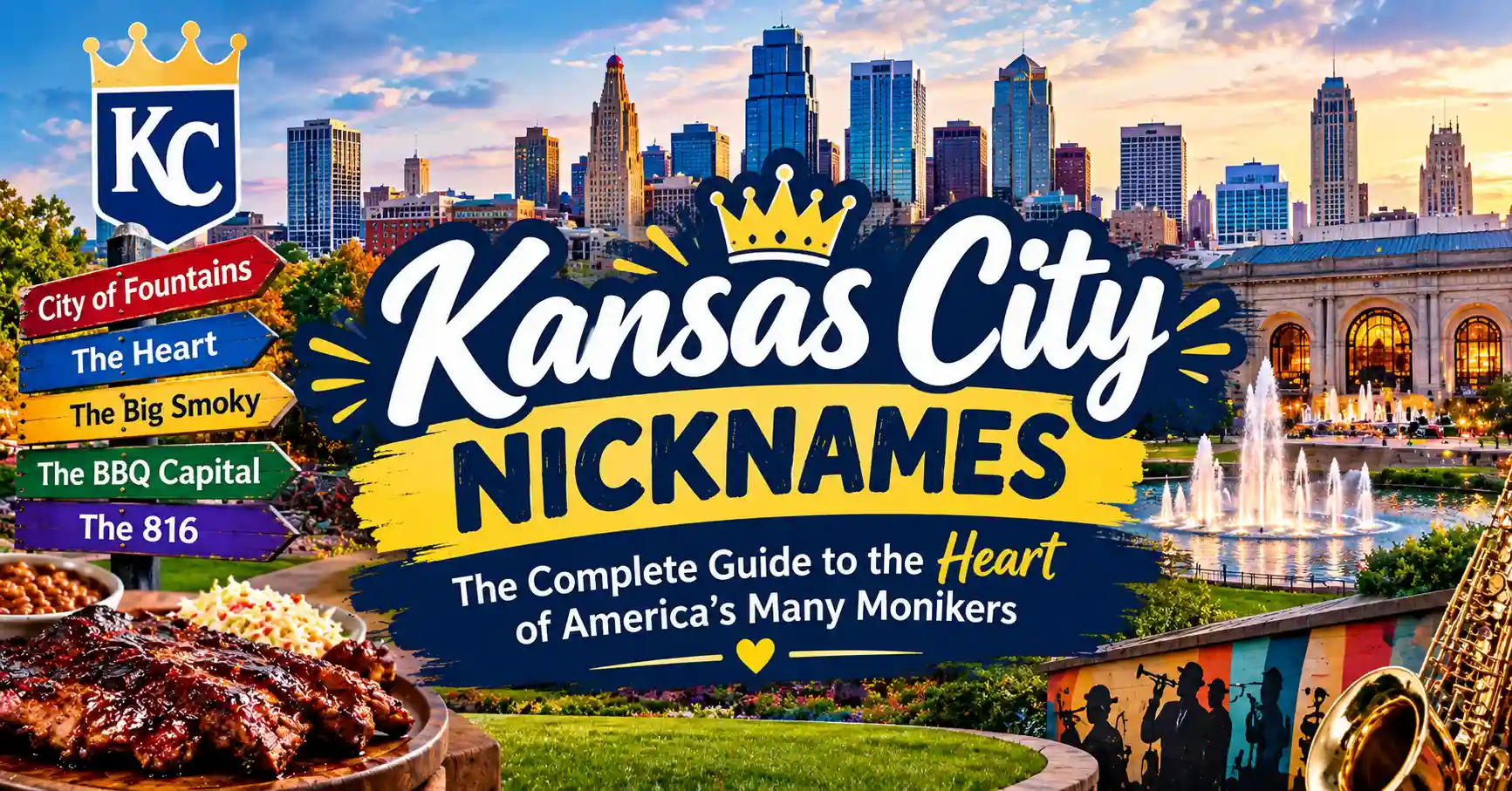
Kansas City sits proudly on the Missouri River, straddling the border between Missouri and Kansas. Known for its mouthwatering barbecue, passionate sports fans, and rich jazz heritage, this Midwestern metropolis has earned numerous affectionate nicknames over the years. From “The Heart of America” to “The City of Fountains,” these nicknames tell the story of a city that has always punched above its weight.
Understanding Kansas City nicknames reveals the character, history, and cultural identity of one of America’s most underrated cities.
⚡ Quick Answer
The most famous nickname of Kansas City is “The Heart of America” due to its central geographic location. Other well-known nicknames include “The City of Fountains” (second only to Rome in fountain count), “KC” (a simple, beloved abbreviation), and “The Paris of the Plains” for its elegant architecture and cultural sophistication.
📊 Quick Facts Table
🏛️ Official Nickname of Kansas City
Kansas City’s most officially recognized nickname is “The City of Fountains.” This designation was formally embraced by the city government and is prominently featured in official tourism materials and city branding.
The nickname reflects Kansas City’s remarkable collection of more than 200 fountains, making it second only to Rome, Italy, in the number of public fountains. The city’s fountain tradition began in the late 19th century and flourished through the early 20th century, with many fountains serving both decorative and practical purposes.
While “The City of Fountains” holds official status, several other nicknames are widely recognized and used by locals and visitors alike. These range from geographic descriptions like “The Heart of America” to cultural celebrations like “The Barbecue Capital of the World.”
📍 What Are the Nicknames of Kansas City?
Kansas City has accumulated an impressive collection of nicknames throughout its history. These monikers reflect different aspects of the city’s identity—its central location, its cultural achievements, its culinary excellence, and its civic pride. Understanding these nicknames provides insight into how Kansas City sees itself and how the rest of the country perceives this vibrant Midwestern metropolis.
Categories of Kansas City Nicknames
Geographic Nicknames
These nicknames highlight Kansas City’s central location within the United States.
- The Heart of America – References the city’s near-exact center of the contiguous United States
- The Midwest’s Metropolis – Acknowledges KC’s role as a major urban center in the Midwest
Cultural Nicknames
These celebrate Kansas City’s artistic and cultural contributions.
- The Paris of the Plains – References the city’s elegant architecture, boulevards, and cultural sophistication
- The Jazz Capital – Honors KC’s pivotal role in jazz history
- The City of Fountains – Celebrates the city’s extensive fountain collection
Culinary Nicknames
These recognize Kansas City’s famous food traditions.
- The Barbecue Capital of the World – A tribute to KC’s legendary BBQ scene
- The Steak Capital – References the city’s historic stockyards and steakhouse tradition
Sports-Related Nicknames
These celebrate Kansas City’s passionate sports culture.
- Chiefs Kingdom – The devoted fanbase of the Kansas City Chiefs
- The Soccer Capital of America – Recognizes Sporting KC and the city’s soccer culture
📋 Complete List of Kansas City Nicknames
🌟 Most Popular Nicknames of Kansas City
While Kansas City has many nicknames, a few stand out as the most recognized and beloved. These nicknames have become integral to the city’s identity and are used regularly in tourism marketing, local media, and everyday conversation.
The most popular Kansas City nicknames include “The Heart of America,” “The City of Fountains,” “The Paris of the Plains,” and “The Barbecue Capital of the World.” Each captures a different facet of what makes Kansas City special.
🔍 Main Nicknames Explained
The Heart of America ❤️
Meaning: This nickname emphasizes Kansas City’s central geographic location within the United States, positioning it as the nation’s literal and symbolic heart.
Short Origin Story: The nickname gained traction in the 20th century as Kansas City grew into a major transportation hub. Its location near the geographic center of the contiguous United States made it a natural crossroads for railroads, highways, and airlines.
Historical Background: Kansas City’s central location made it a critical junction for westward expansion and interstate commerce. The city’s Union Station became one of the busiest train stations in the country.
Modern Usage: “The Heart of America” appears frequently in civic branding, tourism campaigns, and local pride materials. It’s often used to emphasize Kansas City’s welcoming, down-to-earth character.
Cultural Impact: The nickname reinforces Kansas City’s identity as a friendly, central meeting place for Americans from all regions.
Interesting Fact: The geographic center of the contiguous 48 states is actually in Kansas, about 150 miles west of Kansas City.
The City of Fountains ⛲
Meaning: This nickname celebrates Kansas City’s extraordinary collection of more than 200 public fountains.
Short Origin Story: The fountain tradition began in the late 19th century when the city’s growing wealth and civic pride led to the installation of decorative fountains throughout public spaces.
Historical Background: Many of Kansas City’s fountains were inspired by European designs, particularly those found in Rome and Paris. The J.C. Nichols Fountain on the Country Club Plaza is among the most iconic.
Modern Usage: “The City of Fountains” is officially recognized and used extensively in tourism promotion. The city even has a Fountain Day celebration each April.
Cultural Impact: The fountains represent Kansas City’s commitment to public beauty and civic investment.
Interesting Fact: Kansas City has more fountains than any city in the world except Rome, Italy.
The Paris of the Plains 🗼
Meaning: This nickname compares Kansas City’s elegance, architecture, and cultural sophistication to that of Paris, France.
Short Origin Story: The nickname emerged in the early 20th century when Kansas City underwent a period of rapid growth and beautification, including the development of the Country Club Plaza—the first suburban shopping district in the United States.
Historical Background: City leaders intentionally modeled aspects of Kansas City after European cities, particularly Paris. The wide boulevards, public art, and architectural styles reflected this ambition.
Modern Usage: “The Paris of the Plains” is used nostalgically and affectionately, celebrating Kansas City’s cultural aspirations and achievements.
Cultural Impact: The nickname highlights Kansas City’s self-image as a sophisticated cultural center, not just a cow town.
Interesting Fact: The Country Club Plaza was designed with Seville, Spain, in mind, not Paris, but the nickname persisted.
The Barbecue Capital of the World 🍖
Meaning: This nickname recognizes Kansas City’s world-renowned barbecue tradition and its unique style of slow-smoked meats.
Short Origin Story: Kansas City barbecue traces its roots to the early 1900s when Henry Perry, a Mississippi native, began selling smoked meats from a street stand in the city’s Black neighborhood.
Historical Background: Perry’s success spawned a barbecue dynasty that continues today with legendary establishments like Arthur Bryant’s and Gates Bar-B-Q. The Kansas City style is characterized by slow-smoked meats with thick, sweet, and tangy tomato-based sauces.
Modern Usage: The nickname is proudly displayed on restaurant signs, tourism materials, and even on the city’s official website. The American Royal World Series of Barbecue is the largest barbecue competition in the world.
Cultural Impact: Barbecue is central to Kansas City’s identity, bringing together people from all walks of life.
Interesting Fact: Kansas City has more barbecue restaurants per capita than any other major American city.
The Jazz Capital 🎷
Meaning: This nickname honors Kansas City’s pivotal role in the development and popularization of jazz music.
Short Origin Story: Kansas City’s jazz scene exploded in the 1920s and 1930s, centered around the 18th and Vine District. The city’s relaxed attitudes toward nightlife during Prohibition made it a haven for musicians.
Historical Background: Legends like Charlie Parker, Count Basie, and Lester Young developed their skills in Kansas City’s vibrant club scene. The city’s style of jazz—bluesy, swinging, and improvisational—became known as “Kansas City jazz.”
Modern Usage: The American Jazz Museum in the 18th and Vine District keeps this legacy alive. The nickname is used to promote cultural tourism.
Cultural Impact: Kansas City jazz influenced the development of bebop and other jazz styles worldwide.
Interesting Fact: Charlie Parker’s childhood home in Kansas City is a National Historic Landmark.
Chiefs Kingdom 🏈
Meaning: This nickname refers to the passionate fanbase of the Kansas City Chiefs NFL team.
Short Origin Story: The nickname gained popularity in the 2010s as the Chiefs experienced sustained success, culminating in Super Bowl victories in 2020, 2023, and 2024.
Historical Background: The Chiefs arrived in Kansas City in 1963 when Lamar Hunt moved the Dallas Texans to the city. The team’s passionate following grew steadily over decades.
Modern Usage: “Chiefs Kingdom” is used extensively in team marketing and by fans worldwide. It represents the community of Chiefs supporters.
Cultural Impact: The nickname has become synonymous with Kansas City pride, especially during playoff runs.
Interesting Fact: Arrowhead Stadium is one of the loudest stadiums in the world, holding the Guinness World Record for crowd noise.
🏆 Which Nickname Is Most Famous?
“The Heart of America” is widely considered the most famous Kansas City nickname. Its fame stems from several factors:
- Geographic Accuracy: Kansas City’s central location makes the nickname literally true, which resonates with people across the country.
- National Recognition: The nickname has been used in national media, including sports broadcasts, political coverage, and travel programming.
- Civic Pride: Kansas Citians embrace the nickname as a source of identity and pride.
- Versatility: “The Heart of America” works in countless contexts—from tourism to business to sports.
While “The City of Fountains” holds official status and “The Barbecue Capital” dominates culinary circles, “The Heart of America” captures the essence of Kansas City’s place in the national imagination.
📜 How Kansas City Got Its Nicknames
Kansas City’s nicknames emerged organically over more than a century, reflecting the city’s growth, cultural development, and civic ambitions.
Geographic Nicknames arose from the city’s central location and role as a crossroads for American commerce and migration.
Cultural Nicknames developed as Kansas City invested in public amenities, supported the arts, and developed distinctive cultural institutions.
Culinary Nicknames emerged from the city’s rich food traditions, particularly its barbecue heritage.
Sports Nicknames reflect the city’s passionate sports culture and the success of its professional teams.
The process continues today, as new nicknames emerge with each generation of Kansas Citians.
📝 Other Nicknames at a Glance
- KCMO – Kansas City, Missouri (distinguishes from Kansas City, Kansas)
- The 816 – A reference to the area code
- Cowtown – A historic nickname referencing the city’s stockyard past
- The Kaw – A reference to the Kansas River
- BBQ City – A casual reference to the barbecue tradition
- The Metro – A general reference to the metropolitan area
- Gateway to the West – An older nickname referencing westward expansion
- The Heartland – A regional reference
- City of Champions – Celebrates the Chiefs and Royals championships
🎉 Fun Facts About Kansas City
- Fountain Count: Kansas City has more than 200 fountains, second only to Rome.
- Barbecue Central: There are over 100 barbecue restaurants in the metro area.
- Jazz Legacy: The 18th and Vine District was a hub for jazz legends like Charlie Parker.
- Super Bowl Success: The Chiefs won Super Bowls LIV, LVII, and LVIII.
- Sister Cities: Kansas City has 14 sister cities across the world.
- Union Station: Once one of the busiest train stations in the U.S., now a science center and event space.
- The Plaza Lights: The Country Club Plaza’s holiday lighting ceremony dates back to 1925.
- Hallmark Home: The greeting card company was founded in Kansas City in 1910.
- World War I Museum: The National WWI Museum and Memorial is the only one of its kind in the U.S.
- KC Strip: The Kansas City strip steak was popularized here.
🗺️ Famous Attractions in Kansas City
Kansas City offers a wealth of attractions for visitors and locals alike:
- Country Club Plaza – The first suburban shopping district in the U.S., known for its Spanish-inspired architecture and fountains
- The Nelson-Atkins Museum of Art – Home to an impressive collection including European and Asian art
- National WWI Museum and Memorial – The only American museum dedicated to World War I
- Union Station – A historic train station now housing museums and attractions
- The Kansas City Zoo – One of the top zoos in the country
- 18th and Vine District – The historic jazz district with museums and clubs
- Kauffman Stadium – Home of the Kansas City Royals
- Arrowhead Stadium – Home of the Kansas City Chiefs
- The Kansas City Power & Light District – Entertainment district with dining and nightlife
- Loose Park – A beautiful park with a rose garden and Civil War history
⚖️ Nickname Comparison: Kansas City vs. St. Louis
🏙️ Kansas City vs. St. Louis Nicknames
🌻 Kansas City
- The Heart of America – Central location
- The City of Fountains – 200+ fountains
- The Paris of the Plains – Cultural elegance
- BBQ Capital – Culinary fame
- Chiefs Kingdom – Sports pride
🏛️ St. Louis
- The Gateway to the West – Gateway Arch
- The Mound City – Ancient mounds
- St. Lou – Local shorthand
- The Lou – Modern nickname
- Cardinal Nation – Sports pride
Both cities have rich nickname traditions, but Kansas City’s are more geographically and culturally focused, while St. Louis’s reflect its role as a gateway and its distinctive landmarks.
Explore more city nicknames: St. Louis Nicknames
🔗 Related Cities and Their Nicknames
🏙️ Chicago Nicknames
The Windy City, Second City, and more
🗽 New York City Nicknames
The Big Apple, Gotham, and more
🎸 Nashville Nicknames
Music City, Athens of the South
🎵 Memphis Nicknames
Bluff City, Home of Blues
🇺🇸 USA City Nicknames
Complete guide to American city nicknames
❓ Frequently Asked Questions
What is the official nickname of Kansas City?
Kansas City’s official nickname is “The City of Fountains,” recognizing its collection of more than 200 public fountains. This nickname is formally recognized by the city and used in official tourism materials.
Why is Kansas City called “The Heart of America”?
Kansas City is called “The Heart of America” because of its central geographic location within the contiguous United States. The city’s position near the country’s midpoint made it a natural crossroads for transportation and commerce.
Who gave Kansas City its nickname “The Paris of the Plains”?
The nickname “The Paris of the Plains” emerged organically in the early 20th century as Kansas City invested in European-style architecture, wide boulevards, and cultural amenities. No single person is credited with coining the phrase.
When did “Chiefs Kingdom” become popular?
“Chiefs Kingdom” gained widespread popularity in the 2010s and especially after the Chiefs won Super Bowl LIV in 2020. The nickname celebrates the team’s passionate fanbase.
What are other nicknames of Kansas City?
Other Kansas City nicknames include “KC,” “KCMO,” “The Barbecue Capital,” “The Jazz Capital,” “The Soccer Capital,” “Cowtown,” and “The Steak Capital.”
🎬 Conclusion
Kansas City’s nicknames tell the story of a city that has always been more than the sum of its parts. From “The Heart of America” to “The City of Fountains,” from “The Paris of the Plains” to “The Barbecue Capital of the World,” these monikers capture the diverse elements that make Kansas City unique. They reflect its central location, its cultural ambitions, its culinary excellence, and its unshakeable civic pride.
Whether you’re a lifelong resident or a first-time visitor, understanding these nicknames provides a deeper appreciation for what makes Kansas City special. The city’s nicknames aren’t just labels—they’re stories, each one revealing a different facet of this remarkable Midwestern metropolis.
For more information about Kansas City’s history and culture, visit the official Kansas City website.