
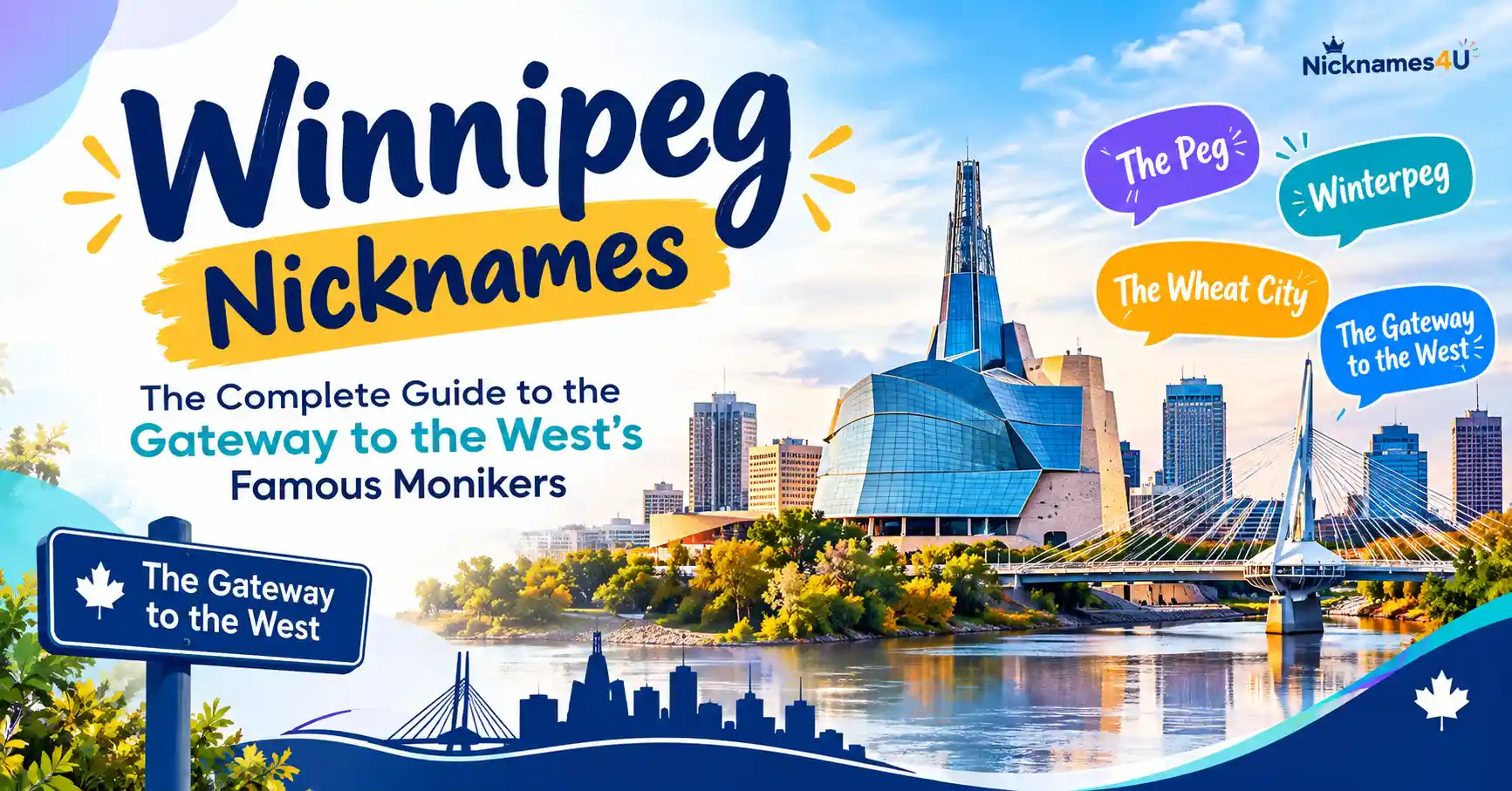
Winnipeg, Manitoba’s vibrant capital, sits at the historic crossroads of the Canadian Prairies where the Red and Assiniboine Rivers meet. This culturally rich city has earned numerous Winnipeg nicknames throughout its storied history, each capturing a unique facet of its identity—from its role as a transportation hub to its legendary winters and thriving arts scene.
🎯 Quick Answer Box
📊 Quick Facts Table
🏛️ Official Nickname of Winnipeg
Winnipeg does not have an officially designated nickname by municipal or provincial government decree. However, “Gateway to the West” has achieved near-official status through decades of common usage in tourism materials, historical documents, and civic promotions. This nickname reflects Winnipeg’s historical role as the primary entry point to the Canadian Prairies and western territories.
The lack of an “official” nickname is common among Canadian cities, which tend to embrace organic, community-driven monikers rather than government-sanctioned ones. Winnipeg’s nicknames have emerged naturally from its geography, history, climate, and cultural identity.
📝 What Are the Nicknames of Winnipeg?
Winnipeg’s nicknames reflect its multifaceted identity as a prairie metropolis, cultural hub, and gateway city. From affectionate local shorthand to historical designations, these names tell the story of a city that has served as a crossroads of Indigenous, European, and immigrant cultures for centuries.
Categories of Winnipeg Nicknames
Geographic Nicknames
- Gateway to the West – References Winnipeg’s location as the historic entry point to western Canada
- River City – Highlights the confluence of the Red and Assiniboine Rivers
- The Forks – Named for the historic meeting of two rivers at the city’s heart
Climate-Based Nicknames
- Winterpeg – A playful acknowledgment of the city’s famously harsh winters
- The Frozen North – Occasionally used to describe Winnipeg’s extreme cold
Cultural and Historical Nicknames
- Chicago of the North – Compares Winnipeg’s architectural heritage and cultural ambitions to Chicago
- Cultural Cradle of Canada – Recognizes Winnipeg’s contributions to Canadian arts and culture
Affectionate Local Nicknames
- The Peg – A shortened, casual form used affectionately by locals
- Winnie – An endearing diminutive
📋 Complete List of Winnipeg Nicknames
⭐ Most Popular Nicknames of Winnipeg
The most recognized Winnipeg nicknames are “Gateway to the West,” “Winterpeg,” “The Peg,” and “Chicago of the North.” These names appear most frequently in media, tourism materials, and everyday conversation. Each captures a distinct aspect of Winnipeg’s character—its historical significance, challenging climate, local pride, and cultural ambitions.
While “Gateway to the West” carries historical weight and formal recognition, “Winterpeg” has become perhaps the most instantly recognizable nickname outside Manitoba, often used humorously by Canadians nationwide. “The Peg” represents local affection, while “Chicago of the North” speaks to the city’s architectural and cultural aspirations.
🔍 Main Nicknames Explained
Gateway to the West
Meaning: Winnipeg serves as the historic entry point to western Canada, a gateway connecting eastern provinces to the Prairie and Pacific regions.
Short Origin Story: When the Canadian Pacific Railway reached Winnipeg in 1881, the city became the primary staging point for westward expansion. Immigrants, goods, and settlers passed through Winnipeg before continuing their journey west.
Historical Background: Before railways, the Red River settlements and fur trade routes already positioned Winnipeg as a critical meeting point. The city’s location at the confluence of the Red and Assiniboine Rivers made it a natural transportation hub for Indigenous peoples and later European traders.
Modern Usage: Tourism Manitoba and civic organizations frequently use “Gateway to the West” in promotional materials. The nickname appears on signage, in historical literature, and in official communications.
Cultural Impact: This nickname emphasizes Winnipeg’s role as a bridge between eastern and western Canada, highlighting its historical importance in nation-building.
Interesting Fact: The Gateway to the West nickname predates Winnipeg’s incorporation as a city in 1873, having been used during the Red River Colony era.
Winterpeg
Meaning: A portmanteau of “Winnipeg” and “winter,” acknowledging the city’s notoriously cold and long winter season.
Short Origin Story: This playful nickname emerged in the mid-20th century as Canadians across the country recognized Winnipeg’s extreme winter temperatures, which regularly drop below -30°C (-22°F) with wind chill.
Historical Background: Winnipeg’s continental climate produces some of the coldest winters of any major Canadian city. The nickname gained traction through media coverage of weather extremes and became a badge of honor for resilient locals.
Modern Usage: “Winterpeg” appears frequently in social media, tourism campaigns (often embraced ironically), and casual conversation. Locals use it with a mix of pride and humor.
Cultural Impact: Rather than being derogatory, Winterpeg has become a symbol of Winnipeg’s toughness and ability to thrive despite challenging conditions. The city hosts winter festivals and embraces its cold-weather identity.
Interesting Fact: Winnipeg has been recorded as colder than Mars on certain winter days, and the city’s average January temperature is -16.4°C (2.5°F).
The Peg
Meaning: A shortened, affectionate form of Winnipeg used primarily by locals and younger generations.
Short Origin Story: Like many city abbreviations (Chi-Town for Chicago, The Lou for St. Louis), “The Peg” emerged organically from local speech patterns as a convenient shorthand.
Historical Background: This nickname gained widespread popularity in the late 20th and early 21st centuries, particularly through music, sports, and social media. It represents a casual, insider familiarity with the city.
Modern Usage: “The Peg” appears in local marketing, social media hashtags (#ThePeg), and everyday conversation. It’s particularly popular among younger residents and expatriates.
Cultural Impact: Using “The Peg” signals local identity and familiarity. It’s a term of endearment that only true Winnipeggers use naturally.
Interesting Fact: The Winnipeg Jets NHL team’s return in 2011 popularized “The Peg” nationally, with sports commentators adopting the shorthand.
Chicago of the North
Meaning: Compares Winnipeg’s architectural heritage, cultural institutions, and urban ambitions to those of Chicago.
Short Origin Story: This nickname emerged in the early 20th century when Winnipeg experienced rapid growth and architectural development, attracting prominent architects who designed impressive buildings in styles similar to Chicago’s famed skyline.
Historical Background: During Winnipeg’s boom years (1880s-1910s), the city constructed many grand buildings, including the Manitoba Legislative Building and early skyscrapers. The Exchange District contains one of North America’s finest collections of turn-of-the-century architecture.
Modern Usage: “Chicago of the North” is used less frequently today but appears in architectural tours, historical discussions, and cultural commentary. It remains a point of civic pride.
Cultural Impact: This nickname highlights Winnipeg’s architectural significance and its historical role as a major Canadian metropolis during the prairie settlement era.
Interesting Fact: Winnipeg’s Exchange District National Historic Site contains over 150 heritage buildings, many designed in the Chicago School architectural style.
River City
Meaning: References Winnipeg’s location at the confluence of the Red and Assiniboine Rivers.
Short Origin Story: This geographic nickname emerged from the city’s founding at The Forks, a historic meeting place for Indigenous peoples for over 6,000 years.
Historical Background: The rivers were crucial to Winnipeg’s development as a fur trading post, transportation route, and settlement site. The Red River served as a major north-south artery, while the Assiniboine connected to western territories.
Modern Usage: “River City” appears in local media, business names, and cultural references. The Forks remains Winnipeg’s premier gathering place and tourist destination.
Cultural Impact: The nickname emphasizes Winnipeg’s connection to water and its role as a meeting place for diverse peoples throughout history.
Interesting Fact: The Forks has been a meeting place for over 6,000 years, making it one of Canada’s oldest continuously used gathering sites.
🏆 Which Nickname Is Most Famous?
“Gateway to the West” is widely considered Winnipeg’s most famous nickname due to its historical significance, longevity, and continued use in official capacities. It captures the city’s essential role in Canadian history as the primary entry point to western expansion.
However, “Winterpeg” has achieved near-equal recognition, particularly outside Manitoba, where it serves as an instantly recognizable (if humorous) identifier. For locals, “The Peg” represents everyday affection, while “Chicago of the North” appeals to civic pride.
The most famous nickname ultimately depends on context: “Gateway to the West” dominates historical and official usage, while “Winterpeg” dominates popular culture and national conversation.
📚 How Winnipeg Got Its Nicknames
Winnipeg’s nicknames emerged from three primary sources: geography, history, and climate.
Geographic nicknames like “River City” and “Gateway to the West” stem from the city’s location at the confluence of two major rivers and its position as the eastern gateway to the Canadian Prairies.
Historical nicknames like “Chicago of the North” reflect Winnipeg’s rapid development during the late 19th and early 20th centuries, when the city aspired to become a major North American metropolis.
Climate nicknames like “Winterpeg” arose from the city’s extreme weather, which became a defining characteristic discussed across Canada.
Local nicknames like “The Peg” developed organically from everyday speech, representing the informal way locals refer to their city.
The name “Winnipeg” itself comes from the Cree word “win-nipi,” meaning “murky waters,” referring to the sediment-rich Red River. This Indigenous origin connects all of Winnipeg’s nicknames to its fundamental identity as a river city.
📖 Other Nicknames at a Glance
- The Gateway City – Variation of Gateway to the West
- The Prairie Metropolis – Acknowledges Winnipeg’s status as Manitoba’s largest city
- The Cultural Capital of the Prairies – Recognizes artistic and cultural contributions
- City of Festivals – References the many festivals held throughout the year
- The Red River City – Geographic reference to the Red River
- Manitoba’s Capital – Official designation as provincial capital
- The Heart of the Continent – Geographic reference to central North American location
- Winnie – Affectionate diminutive used by some locals
- The 204 – References the city’s area code, popular in social media
🎉 Fun Facts About Winnipeg
- Winnipeg has the largest Indigenous population of any Canadian city, with over 92,000 people identifying as Indigenous (12% of the population).
- The city’s temperature has dropped to -47.8°C (-54°F), one of the coldest temperatures ever recorded in a major North American city.
- Winnipeg is home to the Canadian Museum for Human Rights, the first museum in the world dedicated solely to human rights.
- The Exchange District contains one of North America’s largest collections of turn-of-the-century architecture, with over 150 heritage buildings.
- Winnipeg was the first city in North America to develop a modern transit system with the introduction of electric streetcars in 1892.
- The city’s Assiniboine Park Zoo is home to the Journey to Churchill exhibit, featuring polar bears, seals, and other Arctic species.
- Winnipeg has more restaurants per capita than any other Canadian city, reflecting its diverse immigrant communities.
- The Forks National Historic Site welcomes over 4 million visitors annually, making it Manitoba’s top tourist destination.
- Winnipeg-born Neil Young, The Guess Who, and Bif Naked represent the city’s significant contributions to Canadian music.
- The Royal Winnipeg Ballet is Canada’s oldest ballet company, founded in 1939 and holding a royal charter since 1953.
🏛️ Famous Attractions in Winnipeg
Winnipeg offers visitors a rich array of cultural, historical, and natural attractions:
The Forks – This National Historic Site at the confluence of the Red and Assiniboine Rivers features shops, restaurants, museums, and year-round events. It has been a gathering place for over 6,000 years.
Canadian Museum for Human Rights – An architectural marvel and the world’s first museum dedicated to human rights, located at The Forks.
Assiniboine Park and Zoo – A 1,100-acre park featuring the zoo, conservatory, English garden, and the Leo Mol Sculpture Garden.
Manitoba Legislative Building – This impressive neoclassical building features the famous Golden Boy statue atop its dome.
Exchange District – A National Historic Site with stunning early 20th-century architecture, now home to galleries, restaurants, and performance venues.
St. Boniface – Winnipeg’s French quarter, home to the largest Franco-Manitoban community in Canada and the historic St. Boniface Cathedral.
FortWhyte Alive – A 660-acre nature center offering wildlife viewing, hiking, and environmental education.
⚖️ Nickname Comparison: Winnipeg vs Chicago
🍁 Winnipeg
- Primary Nickname: Gateway to the West
- Climate Nickname: Winterpeg
- Local Shorthand: The Peg
- Comparison Nickname: Chicago of the North
- Population: ~749,607
- Founded: 1873
- Known For: Rivers, culture, cold winters
🏙️ Chicago
- Primary Nickname: The Windy City
- Historical Nickname: The Second City
- Poetic Nickname: City of Big Shoulders
- Local Shorthand: Chi-Town
- Population: ~2.7 million
- Founded: 1833
- Known For: Architecture, pizza, jazz
💡 Did You Know? Winnipeg’s “Chicago of the North” nickname reflects the city’s architectural ambitions during its early boom years. Both cities developed distinctive skylines during the late 19th and early 20th centuries, though Chicago’s grew significantly larger. Winnipeg’s Exchange District preserves this architectural heritage today.
🔗 Related Cities and Their Nicknames
❓ Frequently Asked Questions
What is the official nickname of Winnipeg?
Winnipeg does not have an officially designated nickname. However, “Gateway to the West” is the most historically significant and widely recognized nickname, often used in tourism and civic contexts.
Why is Winnipeg called Winterpeg?
Winnipeg is called “Winterpeg” because of its extremely cold winters. The city regularly experiences temperatures below -30°C (-22°F) with wind chill, making it one of Canada’s coldest major cities. The nickname combines “Winnipeg” with “winter.”
Who gave Winnipeg its nickname “Gateway to the West”?
The nickname emerged organically during the late 19th century when Winnipeg became the primary staging point for westward expansion via the Canadian Pacific Railway. No single person is credited with coining it; it developed through common usage.
When did “The Peg” become popular?
“The Peg” gained widespread popularity in the late 20th century, particularly among younger locals. The nickname received national attention when the Winnipeg Jets NHL team returned in 2011, with sports media adopting the shorthand.
What does “Chicago of the North” mean for Winnipeg?
“Chicago of the North” compares Winnipeg’s architectural heritage and early 20th-century ambitions to Chicago. During Winnipeg’s boom years, the city constructed impressive buildings in the Chicago School style, and many of these heritage structures remain in the Exchange District today.
Conclusion
Winnipeg’s nicknames paint a vivid portrait of a city defined by its geography, climate, history, and resilient spirit. From the historic “Gateway to the West” to the humorous “Winterpeg,” each moniker captures a genuine aspect of Winnipeg’s identity. Whether you call it The Peg, River City, or the Chicago of the North, you’re acknowledging a place of remarkable character at the heart of Canada.
For more fascinating city nickname insights and to explore how other cities earned their famous monikers, visit the Canadian Encyclopedia’s Winnipeg entry for authoritative historical context. Winnipeg nicknames represent more than just labels—they’re stories of a city that has served as a crossroads, cultural hub, and gateway to a nation’s western expanse.