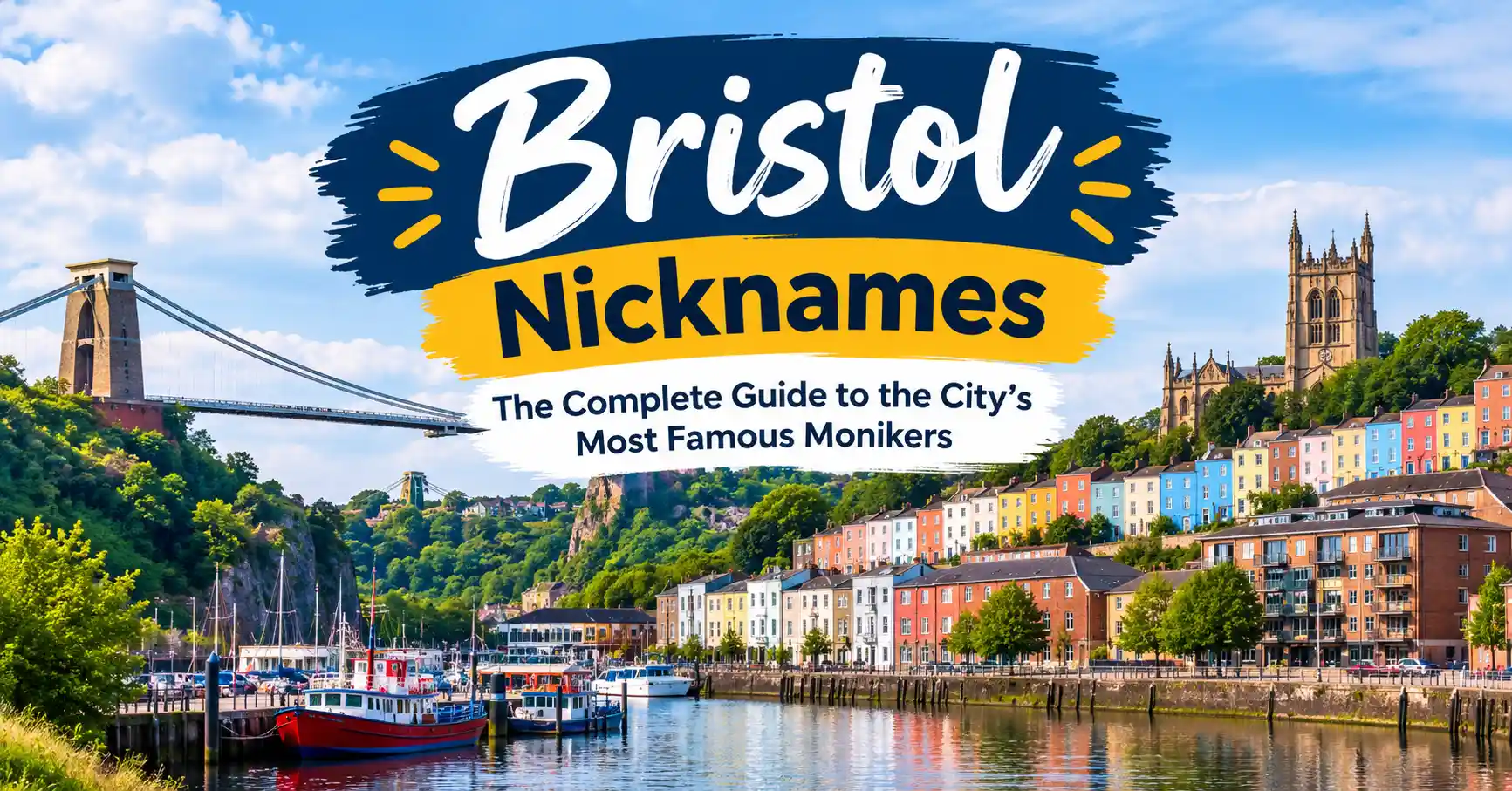
Bristol, a vibrant city in South West England, carries a rich history spanning over a thousand years. From its maritime heritage to its modern cultural scene, this distinctive city has earned several memorable Bristol nicknames that reflect its unique character and storied past.
🎯 Quick Answer Box
⚡ Quick Answer
The most famous nickname of Bristol is “Bristol City” or simply “The City” in local parlance. Other well-known nicknames include “The Bristolian Capital,” “The Gateway to the West,” and historically, “The Metropolis of the West.”
📊 Quick Facts Table
🏛️ Official Nickname of Bristol
Bristol does not have an officially designated nickname sanctioned by any governing body or royal decree. However, the city has been historically and colloquially known by several monikers that have become deeply embedded in local and national consciousness.
The most commonly recognized unofficial nickname is “Bristol City,” which locals use affectionately to distinguish their urban identity. Historically, Bristol was referred to as “The Metropolis of the West” due to its status as the largest and most important city in western England during the medieval and early modern periods.
These nicknames are considered commonly recognized rather than official. They emerged organically through centuries of usage in literature, commerce, and local pride.
📍 What Are the Nicknames of Bristol?
Bristol nicknames represent a fascinating mix of geographic, historical, and cultural references. The city’s identity has been shaped by its position as a major port, its role in exploration and trade, and its distinct regional character.
Several categories of nicknames exist for Bristol:
- Geographic Nicknames – References to its western location and relationship to London
- Historical Nicknames – Names derived from its maritime and trading heritage
- Cultural Nicknames – Modern monikers reflecting its arts and music scene
- Affectionate Local Names – Informal terms used by residents
Each category reveals different aspects of Bristol’s multi-layered identity.
📋 Complete List of Bristol Nicknames
⭐ Most Popular Nicknames of Bristol
Among the various Bristol nicknames, a few stand out as particularly recognized both locally and nationally. “Bristol City” remains the most straightforward and commonly used, while “The Gateway to the West” captures the city’s geographic and historical significance. “Brizzle” has gained popularity in recent decades as a term of endearment among locals and in popular culture.
🔍 Main Nicknames Explained
Bristol City
Meaning: A direct, simple reference to the city of Bristol itself.
Short Origin Story: This nickname emerged naturally from local usage, distinguishing the city from surrounding areas. It became formalized through sports teams and local institutions bearing the name.
Historical Background: The term has been used for centuries as inhabitants identified themselves as citizens of Bristol proper, as opposed to residents of nearby towns and villages.
Modern Usage: Widely used in sports (Bristol City Football Club), local media, and everyday conversation.
Cultural Impact: Represents civic pride and straightforward Bristolian identity.
Interesting Fact: Bristol City Football Club, founded in 1894, helped popularize this nickname nationally through their participation in English football leagues.
The Gateway to the West
Meaning: Bristol serves as the primary entry point to western England and South Wales.
Short Origin Story: This nickname developed from Bristol’s strategic geographic position as a major port and trading hub connecting England to the West.
Historical Background: During the 18th and 19th centuries, Bristol was the principal port for trade with the Americas and the West Indies, cementing its role as a western gateway.
Modern Usage: Still used in tourism marketing and regional descriptions.
Cultural Impact: Emphasizes Bristol’s historical role as a connector between regions.
Interesting Fact: The phrase became particularly popular during the Victorian era when Bristol’s docks were among the busiest in the world.
The Metropolis of the West
Meaning: Recognition of Bristol as the largest and most significant city in western England.
Short Origin Story: This grandiose title was bestowed during Bristol’s peak as a commercial powerhouse in the 18th and 19th centuries.
Historical Background: At its height, Bristol was second only to London in importance among English cities, making “metropolis” a fitting description.
Modern Usage: Now primarily historical, though occasionally used in heritage contexts.
Cultural Impact: Reflects Bristol’s historical ambition and self-perception as a major urban center.
Interesting Fact: Bristol’s population and economic output surpassed many other English cities during the Industrial Revolution.
Brizzle
Meaning: An affectionate, colloquial term for Bristol.
Short Origin Story: This nickname derives from the distinctive Bristolian accent, which emphasizes certain vowel sounds and adds an “l” sound to words ending in vowels.
Historical Background: The term gained popularity in the late 20th century as Bristol’s unique cultural identity became more celebrated.
Modern Usage: Commonly used by locals, in music, and on social media.
Cultural Impact: Represents the city’s distinctive dialect and sense of humor.
Interesting Fact: The Bristolian accent is so distinctive that it has its own dictionary, “Krek Waiters Peak Bristle.”
The Port of the West
Meaning: Reference to Bristol’s historic maritime significance.
Short Origin Story: This nickname emerged from Bristol’s centuries-long role as a major trading port.
Historical Background: From medieval times through the Industrial Revolution, Bristol’s harbor was crucial to England’s international trade.
Modern Usage: Used in historical and maritime contexts.
Cultural Impact: Connects modern Bristol to its seafaring heritage.
Interesting Fact: The SS Great Britain, designed by Isambard Kingdom Brunel, was launched in Bristol in 1843 and is now preserved in the city’s harbor.
The Bristolian Capital
Meaning: A playful acknowledgment of Bristol’s regional prominence.
Short Origin Story: This modern nickname emphasizes Bristol’s status as the cultural and economic capital of the West Country.
Historical Background: While informal, it reflects Bristol’s ongoing role as the dominant city in southwestern England.
Modern Usage: Used in local media and marketing.
Cultural Impact: Reinforces civic pride and regional identity.
Interesting Fact: Bristol has been named the best place to live in the UK multiple times by various publications.
🏆 Which Nickname Is Most Famous?
“Bristol City” is undoubtedly the most famous and widely recognized nickname, primarily due to its association with the city’s professional football club and its straightforward, unambiguous reference to the city itself. “The Gateway to the West” follows closely, particularly in tourism and historical contexts.
📖 How Bristol Got Its Nicknames
Bristol’s nicknames emerged from a combination of geographic, historical, and cultural factors. The city’s position as a major port on the River Avon made it a natural gateway to western England and beyond. Its historical prominence as England’s second city during the medieval and early modern periods earned it grand titles like “The Metropolis of the West.” Meanwhile, the distinctive local dialect gave rise to affectionate terms like “Brizzle.”
These nicknames developed organically over centuries, reflecting how residents and outsiders perceived the city at different points in its history.
📝 Other Nicknames at a Glance
- The Second City – Historical reference to Bristol’s former status
- The Merchant City – Acknowledging its trading heritage
- The Avon City – Named after the River Avon
- The West Country Capital – Regional designation
- The Engineer’s City – Honoring Brunel’s legacy
- The Festival City – Reference to its cultural events
- The Creative City – Modern cultural identity
🎉 Fun Facts About Bristol
- Bristol Bridge is one of the oldest bridges in England, with origins dating back to the 12th century.
- The Bristol Channel has the second-highest tidal range in the world, reaching up to 15 meters.
- Bristol Zoo, opened in 1836, was one of the oldest zoos in the world before its closure in 2022.
- The Clifton Suspension Bridge, designed by Isambard Kingdom Brunel, opened in 1864 and remains an iconic symbol of the city.
- Bristol was the first city in the UK to be named a “City of Film” by UNESCO in 2017.
- The Bristol Old Vic, opened in 1766, is the oldest continuously operating theatre in the English-speaking world.
- Bristol’s Harbourside was transformed from industrial docks to a vibrant cultural quarter in the late 20th century.
- The city gave its name to Bristol board, Bristol blue glass, and Bristol cars.
- Bristol has more than 400 parks and green spaces within its boundaries.
- The SS Great Britain was the first iron-hulled, propeller-driven ship to cross the Atlantic Ocean.
🗺️ Famous Attractions in Bristol
Bristol offers visitors a wealth of attractions that reflect its rich history and vibrant culture:
- Clifton Suspension Bridge – Iconic engineering marvel with stunning views
- SS Great Britain – Historic ship and museum
- Bristol Museum & Art Gallery – Houses extensive collections
- Bristol Zoo Gardens – Historic zoological park
- Cabot Tower – Offers panoramic city views
- Bristol Cathedral – Medieval architecture
- Stokes Croft – Street art and cultural hub
- Bristol Harbourside – Waterfront dining and entertainment
⚖️ Nickname Comparison: Bristol vs London
Both cities have nicknames that reflect their unique identities. While London’s nicknames often reference its size and historical significance, Bristol’s emphasize its regional role and distinctive local character. For more city nicknames, explore our guides on Chicago Nicknames and New York City Nicknames.
🔗 Related Cities and Their Nicknames
🇬🇧 London Nicknames
The Big Smoke, The Square Mile, Londinium
🇺🇸 Chicago Nicknames
The Windy City, The Second City, Chi-Town
🇺🇸 New York City Nicknames
The Big Apple, The City That Never Sleeps
🇺🇸 Las Vegas Nicknames
Sin City, Vegas, The Entertainment Capital
🇺🇸 Austin Nicknames
The Live Music Capital, ATX, Bat City
❓ Frequently Asked Questions
What is the official nickname of Bristol?
Bristol does not have an officially designated nickname. However, “Bristol City” is the most commonly used and recognized moniker, while “The Gateway to the West” is frequently used in tourism and historical contexts.
Why is Bristol called “The Gateway to the West”?
Bristol earned this nickname due to its geographic position as the primary entry point to western England and South Wales. Its historic port made it a natural gateway for trade and travel to the west.
Who gave Bristol its nickname “The Metropolis of the West”?
This nickname emerged organically during the 18th and 19th centuries when Bristol was England’s second-largest city and a major commercial center. It was used in literature, commerce, and civic discourse rather than being bestowed by any single person.
When did “Brizzle” become popular?
“Brizzle” gained widespread popularity in the late 20th and early 21st centuries as Bristol’s distinctive dialect and cultural identity received more national attention through music, media, and comedy.
Do locals actually use these nicknames?
Yes, locals commonly use “Bristol City” and “Brizzle” in everyday conversation. “The Gateway to the West” is more often used in formal or tourism contexts, while “The Metropolis of the West” is primarily historical.
🏁 Conclusion
Bristol’s nicknames tell the story of a city that has been a major port, a cultural powerhouse, and a distinctly independent-minded community for over a thousand years. From the straightforward “Bristol City” to the affectionate “Brizzle,” these Bristol nicknames capture different facets of the city’s identity. Whether you’re a local, a visitor, or a history enthusiast, understanding these nicknames provides insight into what makes Bristol one of England’s most fascinating cities.
For more information about Bristol’s rich history and heritage, visit Visit Bristol, the official tourism website for the city.