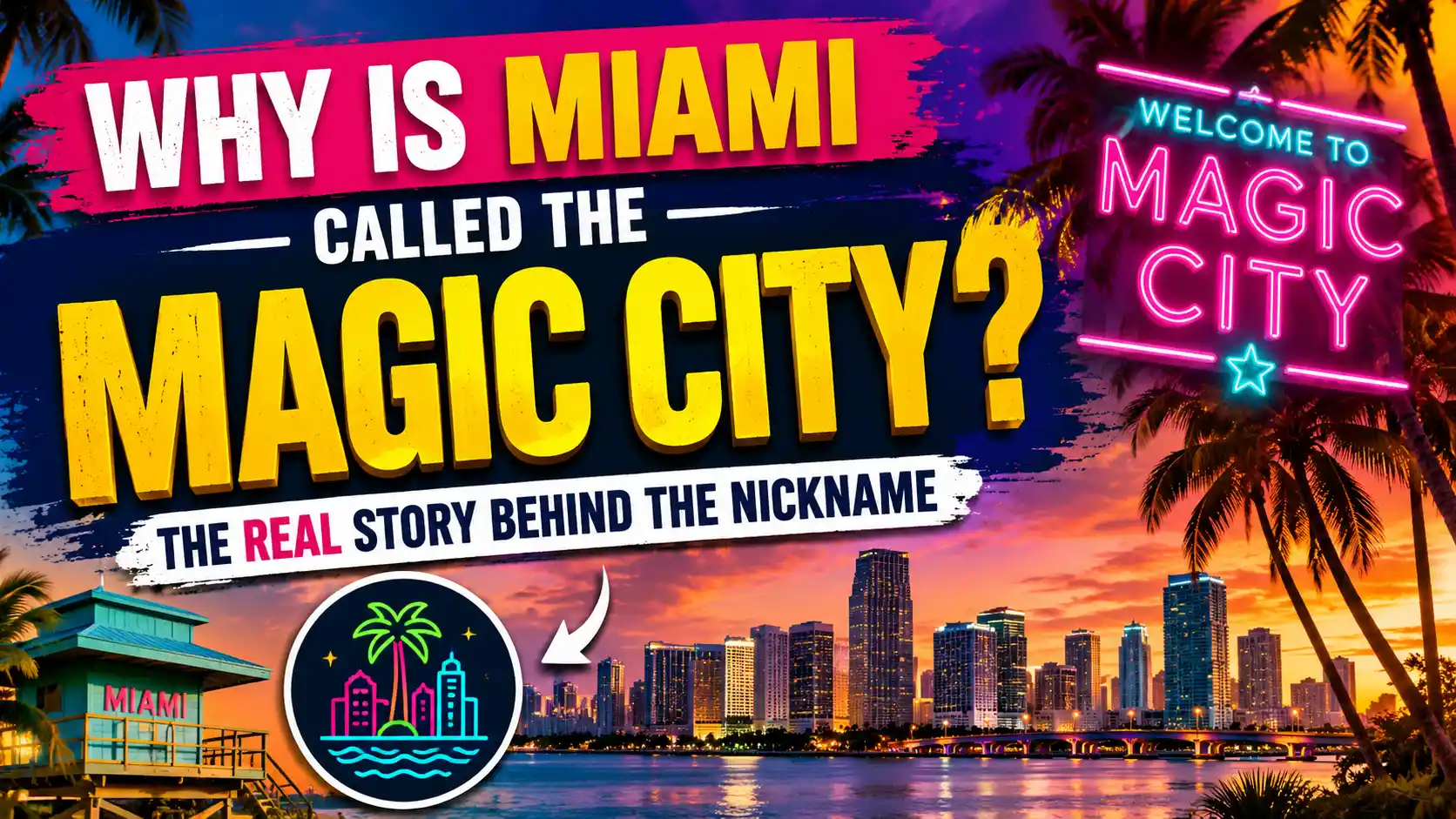
If you want to know about “Why Is Miami Called the Magic City?” Here is a Ans below
Short Answer
Miami is called the Magic City because of its seemingly overnight transformation in the late 19th century. When Henry Flagler’s railroad arrived in 1896, the tiny settlement exploded into a bustling city in a matter of months. The nickname was first printed by the Miami Metropolis newspaper that same year, capturing the astonishment of locals who felt the growth happened “like magic.”
Quick Facts Table
What Does “Magic City” Mean?
On the surface, “Magic City” simply means a city that came into existence as if by magic. But the phrase carries much more weight in Miami’s story. It speaks to a place that repeatedly re‑invents itself — from a mosquito‑infested trading post to a global destination in just a few decades. Locals often use it to describe the city’s resilience, its ability to attract dreamers from everywhere, and the feeling that anything can happen under the Miami sun.
Why Is Miami Called the “Magic City”?
The nickname answers a very simple “why” question: Miami’s population and infrastructure exploded at a pace that stunned everyone who witnessed it. Within a single year in the 1890s, a sparse wilderness on the banks of the Miami River turned into an incorporated city with paved streets, a hotel, a newspaper, and hundreds of new residents. That “overnight” miracle earned it the enduring title, “The Magic City.”
The Origin of the Nickname
The origin story begins not in a boardroom or a government office, but in the ink of a small frontier newspaper. In the spring of 1896, the area that would become Miami was little more than a few wooden houses, a trading post, and a scattering of Seminole camps. Then came Henry Flagler’s Florida East Coast Railway. As soon as the tracks pushed south, the population surged. Construction crews, land speculators, farmers, and fortune‑seekers poured in. Almost overnight, blocks of wooden commercial buildings lined the dusty streets. The transformation was so dramatic that journalists from around the country took notice.
The very day Miami was officially incorporated — July 28, 1896 — the Miami Metropolis (which would later become The Miami News) ran a front‑page article describing the new city. The headline or lead line reportedly declared, “Miami is the Magic City.” The phrase immediately stuck. It captured the breathless excitement of early residents who had seen orchards and pine scrub give way to a real downtown in a matter of months.
Who Coined the Nickname?
The most widely accepted answer points to Ethan V. Blackman, the editor and publisher of the Miami Metropolis. As the man who wrote and approved the paper’s content, Blackman is credited with putting the words “Magic City” into print for the first time. However, there is a friendly historical dispute.
John Sewell, one of Miami’s first settlers and later a well‑known city booster, claimed in his personal diary that he was the one who first called Miami the “Magic City.” Sewell wrote that he had been “doing some magic on this city” and intended to name it so. While Sewell’s claim adds color, no printed evidence predates the Miami Metropolis article. Most historians treat Blackman’s newspaper as the definitive origin, with Sewell playing a powerful role in spreading the term through his speeches and real estate ventures.
History Behind the Nickname
To understand why the name resonated so deeply, you have to picture what Miami looked like before 1896. The area was a remote subtropical frontier. Julia Tuttle, a wealthy widow from Cleveland, owned large tracts of land on the north bank of the Miami River. She believed the region could become a great city if only it were connected by rail. For years she lobbied Henry Flagler, the oil and railroad magnate, to extend his line south from Palm Beach. A devastating freeze in the winter of 1894–1895 wiped out citrus groves across Central and North Florida, but left Miami’s crops untouched. Tuttle sent Flagler a box of fresh orange blossoms to prove it. Convinced, Flagler agreed.
In April 1896, the railroad reached the Miami River. What followed was a real‑estate frenzy. Workers cleared land, built a grand hotel (the Royal Palm), laid out streets, and constructed a power plant, waterworks, and a newspaper office — all in a few months. By the time the city was chartered in July, it had already become the hub of South Florida. For people who had seen the land empty only weeks earlier, the change felt literally magical. The “Magic City” name wasn’t just a catchy slogan; it was a genuine expression of awe.
Timeline of the Nickname
How the Nickname Became Popular
The nickname didn’t stay locked in a newspaper archive. It spread quickly through four powerful channels:
- Media influence: The Miami Metropolis and later the Miami Herald used the term in headlines and editorials. Out‑of‑town journalists who came to write about the Florida land rush repeated it.
- Tourism and railroad marketing: Henry Flagler’s Florida East Coast Railway brochures began to advertise Miami as “The Magic City of the South,” turning the phrase into a brand before modern branding even existed.
- Political and civic boosterism: City founders and early mayors wove the nickname into speeches, campaign materials, and municipal reports.
- Cultural pride: As Miami grew with waves of Cuban, Haitian, and other Latin American immigrants, the idea of a city that could transform lives — and itself — became a shared part of local identity. The nickname fit each successive reinvention.
Myths vs Facts
Is the Nickname Still Used Today?
Absolutely. “Magic City” is woven into the everyday life of Miami. You’ll see it emblazoned on T‑shirts in South Beach, painted on murals in Wynwood, and used in the names of dozens of local businesses — from the Magic City Casino to Magic City Orthopedics. News anchors refer to it casually, and the Miami Heat’s pre‑game hype videos often invoke the Magic City spirit. It is not an obsolete piece of trivia; it is a living, breathing alias that locals use with pride.
Cultural Impact of the Nickname
The nickname shapes how the world sees Miami, and how Miami sees itself.
- Local identity: For many Miamians, calling their home “The Magic City” is a way of honoring the grit, the diversity, and the improbable success of their hometown.
- Tourism branding: Visit Florida and the Greater Miami Convention & Visitors Bureau have repeatedly built campaigns around “The Magic City” theme, linking it to promises of endless summer, luxury, and excitement.
- Sports teams: Though no major professional team uses “Magic City” as an official mascot, the Miami Marlins, Dolphins, and Heat all integrate the phrase into fan events. The Heat’s “White Hot” playoff runs are often accompanied by “Welcome to the Magic City” signage.
- Media and entertainment: Rappers, filmmakers, and novelists have adopted the term. The Starz series Magic City (2012‑2013) about a glamorous 1950s Miami Beach hotel introduced the nickname to a new national audience.
- Popular culture: Today, Instagram hashtags like #MagicCity collect millions of posts, turning a 19th‑century newspaper line into a global digital brand.
Interesting Facts About the Nickname
- The phrase “Magic City” appeared in the Miami Metropolis just three months after the railroad arrived.
- Miami’s first hotel, the Royal Palm, was built in less than a year — a feat that perfectly illustrated the “magic” transformation.
- During the 1920s land boom, developers actually spelled out “The Magic City” in electric lights on Biscayne Boulevard.
- Miami is one of the few major U.S. cities whose most popular nickname directly references growth speed rather than weather, geography, or an industry.
- The name was so effective that Birmingham, Alabama, adopted “The Magic City” around the same time for its own industrial boom, leading to a friendly century‑long competition.
- Julia Tuttle, the woman who made the magic possible, is still the only woman to found a major American city.
- Before the “Magic City” nickname stuck, early settlers jokingly called Miami “Fort Dallas” or “Tuttle’s Folly.”
- The 1896 Miami Metropolis edition that coined the nickname was a single‑sheet newspaper sold for five cents.
- Pitbull, the famous Miami‑born rapper, often shouts out “305 till I die, Magic City!” in his songs and interviews.
- The University of Miami’s official spirit program once used the tagline “Bring the Magic” to energize Hurricanes fans.
Other Nicknames of Miami
While “The Magic City” is the crown jewel, Miami has collected a few other nicknames over the decades. You’ll sometimes hear it called the “Gateway to the Americas” because of its role as a financial and cultural link between North and South America. The “Capital of Latin America” reflects the deep Hispanic and Caribbean roots. Surfers and beach lovers refer to it as the “Sunshine City” (though St. Petersburg, Florida, also claims that one). There’s also “Vice City,” a nod to the neon‑soaked, slightly dangerous glamour immortalized by the Grand Theft Auto video game series. Each name tells a different chapter of the Miami story. To dig deeper into all of them, explore our full Miami Nicknames pillar page.
Related City Nicknames
Chicago’s famous and often misunderstood nickname.
Read Story →New York City’s iconic moniker with jazz‑age roots.
Read Story →How Boston’s beloved baked beans inspired a nickname.
Read Story →Seattle’s evergreen beauty and its magical name.
Read Story →Comparison: Magic City vs. Emerald City
Both Miami and Seattle carry nicknames that sparkle with a touch of fantasy, but they couldn’t be more different in origin.
🌴 The Magic City
City: Miami
Origin: 1896 newspaper article about rapid growth
Meaning: A city that seemed to appear overnight
Vibe: Speed, transformation, tropical ambition
Read Full Story →🌲 The Emerald City
City: Seattle
Origin: 1982 contest entry, embraced by tourism board
Meaning: Lush evergreen forests surrounding the city
Vibe: Natural beauty, sustainability, Pacific Northwest calm
Read Full Story →While Miami’s magic was born from a boomtown miracle, Seattle’s emerald sparkle comes from the natural environment. Together they show how a city’s nickname can frame its entire personality.
Frequently Asked Questions
What does “Magic City” mean in Miami? ▼
It means a city that experienced sudden, dramatic growth as if conjured by magic. The name refers specifically to Miami’s explosive population and construction boom after the railroad arrived in 1896.
Who created the nickname “Magic City” for Miami? ▼
Ethan V. Blackman, editor of the Miami Metropolis newspaper, is credited with the first printed use on July 28, 1896. Early settler John Sewell also claimed to have coined it, but no published record supports his version earlier than the newspaper.
When did Miami officially become the Magic City? ▼
The nickname was born the same day Miami was incorporated: July 28, 1896. The city charter and the nickname arrived together.
Is “Magic City” an official nickname? ▼
It is not an official government designation, but it is widely recognized and used by the city’s tourism board, businesses, and residents. It’s as official as any nickname can get through cultural adoption.
Do locals actually call Miami the Magic City? ▼
Yes. You’ll hear it in casual conversation, on local radio, and throughout social media. It’s a strong part of Miami’s self‑image.
What other nicknames does Miami have? ▼
“Gateway to the Americas,” “Capital of Latin America,” “Vice City,” and occasionally “Sunshine City.” Each reflects a different facet of Miami’s identity.
Is Birmingham, Alabama, also called the Magic City? ▼
Yes. Birmingham earned the same nickname around the same time due to its own rapid industrial boom. The two cities have shared the “Magic City” title for over a century.
How did the Miami Metropolis newspaper contribute to the nickname? ▼
It published the first recorded use of the phrase on the day the city was born. The paper’s influence as Miami’s earliest daily helped cement the nickname in the public mind.
Was the nickname ever used in official city marketing? ▼
Yes, consistently. From early Flagler railroad brochures to modern “It’s So Miami” campaigns, “The Magic City” has always been a centerpiece of how the city sells itself.
Does the nickname have anything to do with Miami’s nightlife? ▼
Not originally. The “magic” referred to growth, not neon. However, today’s vibrant nightlife certainly adds to the enchanting feeling many visitors experience.
Why did Miami grow so fast in the 1890s? ▼
The arrival of Henry Flagler’s railway, Julia Tuttle’s land offerings, and a freeze that proved Miami’s climate advantage all converged to create a population and construction explosion.
Is “The Magic City” trademarked? ▼
Certain businesses have trademarked “Magic City” for specific goods and services (like the famous Magic City Casino), but the general nickname belongs to the public domain.
Explore More City Nicknames
Conclusion
The nickname “Magic City” is far more than a relic of old newspaper copy. It is the distilled essence of Miami’s origin story — a stubborn, improbable rise from swamp and scrub to a global capital in the blink of history’s eye. Every time a new high‑rise climbs into the sky, every time another dreamer steps off a plane, the magic happens all over again. The name endures because Miami keeps proving it true. Whether you’re walking through the streets of Little Havana, dancing under the neon of South Beach, or reading about Julia Tuttle’s orange blossoms, you’re standing inside a nickname that was earned, not given.