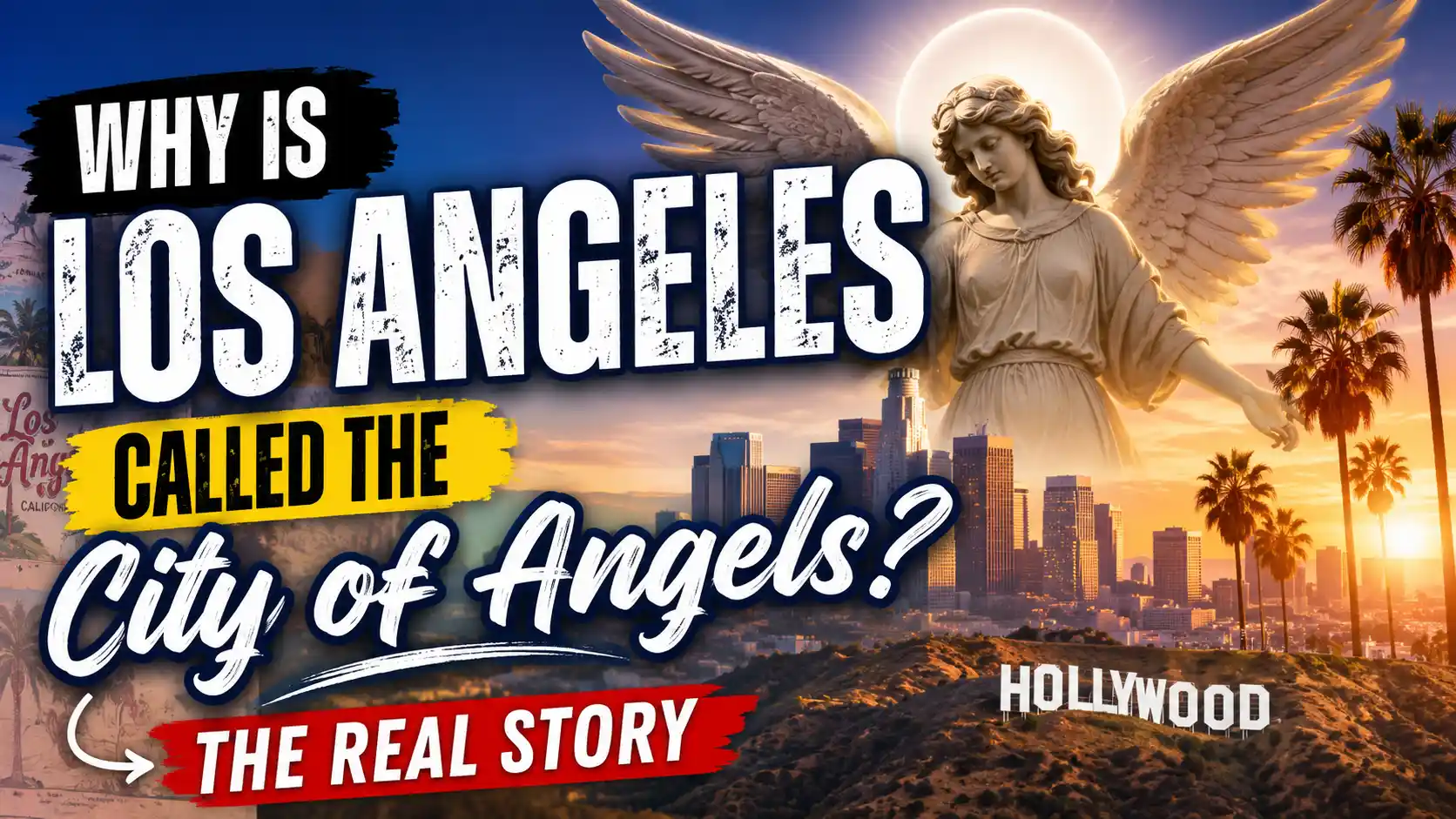
If you want to know about “Why Is Los Angeles Called the City of Angels?” Here is a Ans below
Short Answer: Los Angeles is called the City of Angels because its name is a direct translation of the original Spanish “Los Ángeles.” The full founding name, El Pueblo de Nuestra Señora la Reina de los Ángeles del Río Porciúncula, means “The Town of Our Lady the Queen of the Angels of the Porciúncula River.” The angelic reference to the Virgin Mary gave the settlement its heavenly nickname, which was later adopted by English-speaking settlers and became a global brand.
| Fact | Detail |
|---|---|
| City | Los Angeles |
| State / Country | California, United States |
| Nickname | City of Angels |
| Literal Meaning | “The Angels” – a reference to the Virgin Mary as Queen of the Angels |
| First Known Usage | September 4, 1781 (founding of the pueblo) |
| Popularized By | 19th‑century newspapermen, land‑boom promoters, Hollywood cinema |
| Known For | Enterertainment industry, beaches, Mediterranean climate, cultural diversity |
What Does “City of Angels” Mean?
The nickname “City of Angels” is a straightforward translation from Spanish. Los Ángeles means “the angels.” In Catholic tradition, angels are heavenly beings who serve as messengers of God. The name ultimately honors the Virgin Mary under her title Nuestra Señora de los Ángeles (Our Lady of the Angels). So when people call L.A. the City of Angels, they are using an English version of the name that has identified the city since its very first day.
Why Is Los Angeles Called “The City of Angels”?
Los Angeles is called the City of Angels simply because its official name is “Los Angeles.” That name is a shortened form of the original Spanish dedication: El Pueblo de Nuestra Señora la Reina de los Ángeles – The Town of Our Lady the Queen of the Angels. As English became the dominant language in California after the Mexican‑American War, newcomers began calling the growing settlement “the city of the angels.” The phrase stuck, embedding itself in tourism slogans, movies, sports, and everyday speech.
The Origin of the Nickname
The story begins not with a single creative writer but with an expedition of Spanish soldiers and Franciscan missionaries. In 1769, the Gaspar de Portolá expedition camped along a river in what is now Los Angeles. The Franciscans named the river El Río de Nuestra Señora la Reina de los Ángeles de Porciúncula – the River of Our Lady the Queen of the Angels of Porciúncula – because it was discovered near the feast day of Our Lady of the Angels of the Porciúncula (August 2).
Twelve years later, Governor Felipe de Neve of Alta California received orders from the Spanish crown to establish a civilian agricultural settlement. On September 4, 1781, a group of 44 settlers known as Los Pobladores founded the pueblo. The official recorded name was El Pueblo de Nuestra Señora la Reina de los Ángeles del Río Porciúncula. In everyday use, the name was quickly shortened to Los Ángeles.
The English nickname “City of Angels” appeared organically. After California became a U.S. state in 1850, English‑language newspapers, land developers, and travel writers began translating the Spanish name. By the late 19th century, the phrase was regularly used in booster pamphlets that marketed the region’s climate and opportunity to Midwestern migrants.
Who Coined the Nickname?
No single person can be credited with coining the English phrase “City of Angels.” It was born out of translation. The true “creator” is the royal Spanish governor and the mission system that formally named the pueblo. Governor Felipe de Neve selected the site and the name, but the actual dedication followed the religious naming conventions carried by the Franciscan friars.
The earliest known English‑language printed reference to “City of Angels” appears in the 1850s in California newspapers and emigrant guides. One strong candidate is a brochure from the Los Angeles Chamber of Commerce in the 1880s that used the phrase prominently. However, because it was a direct translation rather than an invention, the nickname evolved through collective usage rather than a single moment of branding.
History Behind the Nickname
To understand the nickname fully, you need to appreciate how deeply 18th‑century Spanish colonizers embedded Catholic devotion into geography. Naming a settlement after Mary was an act of political and spiritual possession. The specific title “Queen of the Angels” has deep roots in Franciscan spirituality, linked to the small chapel of the Porziuncola in Assisi, Italy, where St. Francis founded his order.
When the pueblo of Los Ángeles was plotted, the river had already carried its long angelic name for twelve years. The settlement’s name was both a geographical tag and a prayer. The official name would have appeared on land grants and church documents, but for the farmers and artisans who lived there, it was simply “Los Ángeles.”
After the U.S. conquest of California (1846‑1848), the Spanish‑speaking population became a minority, and the city’s Anglo‑American residents translated the name into English. In a place where real estate speculation and mythmaking were already taking root, “City of Angels” sounded romantic, aspirational, and slightly sacred—a perfect fit for a town that would later sell dreams on celluloid.
Timeline of the Nickname
| Year | Event |
|---|---|
| 1769 | Portolá expedition names the Los Angeles River the Río de los Ángeles. |
| 1781 | Pueblo founded with the full religious name; “Los Ángeles” used in daily life. |
| 1835 | Mexican Congress elevates the settlement to a city, officially Ciudad de Los Ángeles. |
| 1850 | California statehood. English newspapers begin printing “City of Angels.” |
| 1880s | Land boom. Boosters widely use “City of Angels” in brochures targeting Easterners. |
| 1910–1930 | Hollywood film industry cements the nickname in song lyrics and movie titles. |
| 1961 | Los Angeles Angels baseball team founded, reinforcing the angelic theme. |
| 1990s–today | The nickname is a global brand, appearing in films, tourism campaigns, and everyday references. |
How the Nickname Became Popular
The “City of Angels” transitioned from a literal translation to a beloved slogan through several forces.
Media influence: As early as the 1880s, newspapers like the Los Angeles Times used the phrase in headlines about growth and civic pride. Hollywood then amplified it globally—films such as City of Angels (1998) and the TV series Angel (a Buffy spinoff) played with the heavenly imagery.
Tourism influence: The Los Angeles Chamber of Commerce and the All‑Year Club of Southern California actively marketed the region as the “City of Angels,” coupling the name with images of sunshine, orange groves, and palm trees. The phrase appeared on postcards, railroad advertisements, and highway billboards.
Cultural influence: The name carries a spiritual weight that Americans from many backgrounds could appreciate, even if they weren’t Catholic. It also opened the door for ironic usage—film noir writers later painted a dark, fallen‑angel picture of L.A., which only made the nickname stickier.
Sports influence: When the Los Angeles Angels Major League Baseball team adopted the name in 1961 (and later the Los Angeles Angels of Anaheim), the angelic identity got a regular, nationwide spotlight on scoreboards and sports radio.
Myths vs Facts
| Myth | Reality |
|---|---|
| The name was inspired by actual angelic sightings over the pueblo. | No historical records mention angelic apparitions. The name comes from Catholic devotion to the Virgin Mary. |
| “City of Angels” was invented by Hollywood publicists. | The nickname predates the film industry by decades. It was used in English as early as the 1850s. |
| The nickname refers to the city’s “angelic” mild climate. | The climate is a later association. The name is a direct translation of the Spanish original. |
| “Los Angeles” means “the lost angels.” | “Los Ángeles” simply means “the angels.” There is no connotation of being lost. |
Is the Nickname Still Used Today?
Yes, the City of Angels is alive and well in everyday language. It appears in official tourism materials (“Discover the City of Angels”), song lyrics (Red Hot Chili Peppers, Kendrick Lamar), restaurant names, and even apparel. It carries both the sunshine‑and‑glamour image that boosters love and the cynical edge that artists and locals often embrace. Walk through any neighborhood and you’ll see “Angel City” murals, breweries, and soccer supporter groups.
Cultural Impact of the Nickname
Local identity: Angelenos have a complicated but affectionate relationship with the nickname. It’s used proudly in business names (Angel City Brewery), activist groups, and neighborhood councils. The idea of a “city of angels” also resonates in a sprawling, diverse metropolis where many residents are reaching for their dreams.
Tourism branding: Discover Los Angeles, the official tourism board, regularly uses “City of Angels” in campaigns that emphasize arts, culture, and a near‑heavenly lifestyle. The phrase instantly evokes sunshine, red carpets, and Pacific sunsets.
Sports teams: The Los Angeles Angels baseball team is the most obvious heir. Their logo incorporates a halo. L.A. Galaxy’s supporter group is called the Angel City Brigade. Angel City FC, the professional women’s soccer team founded in 2020, used the nickname as a literal name.
Media and entertainment: Films like City of Angels, songs like “L.A. Woman” by The Doors (with its references to the city as a fallen angel), and countless TV shows have reinforced the angelic mythology. The nickname serves as shorthand for a place where miracles and heartbreaks happen daily.
Popular culture: From the historic Angels Flight funicular railway in Downtown L.A. (named for its location on Bunker Hill, but also a wink to the nickname) to the HBO series Angels in America, the image of angels floats through the city’s creative consciousness.
Interesting Facts About the Nickname
- The full Spanish name, El Pueblo de Nuestra Señora la Reina de los Ángeles del Río Porciúncula, is one of the longest place names in the United States.
- “Los Angeles Angels” literally translates to “The The Angels Angels,” a redundancy that language lovers find amusing.
- The original Catholic feast that inspired the name is Our Lady of the Angels of the Porziuncola, tied to the tiny chapel restored by St. Francis of Assisi.
- The city’s official seal features a shield with lions, a castle, and an eagle—but no angels. The angelic theme is entirely in the name.
- Angels Flight, the world’s shortest railway, was built in 1901 and took its name from the heavenly moniker, not the other way around.
- The 1998 film City of Angels starring Nicolas Cage and Meg Ryan was a remake of the German film Wings of Desire, but setting it in L.A. gave the title a double meaning.
- During the 1932 Olympics held in Los Angeles, international reporters frequently used “City of Angels” in their dispatches, cementing it overseas.
- A local legend claims that the 44 founding pobladores included a man named Antonio Mesa who was blind—an ironic footnote for a city named after celestial sight.
Other Nicknames of Los Angeles
Los Angeles has collected a closet full of nicknames: L.A., La‑La Land, Tinseltown, The Big Orange, The Southland, and City of Flowers and Sunshine. Each one tells a different story about the city’s personality, from the entertainment industry to citrus groves. Explore the full “Los Angeles Nicknames” pillar page to discover the meanings behind every alias.
Related City Nicknames
San Francisco
The City by the Bay
Las Vegas
Sin City
Seattle
The Emerald City
Miami
The Magic City
Jazz-filled streets and Creole flavors only hint at the deeper mystery you uncover when exploring the laid-back legacy behind New Orleans’s iconic Big Easy moniker.
City of Angels vs. The Big Apple: A Tale of Two Nicknames
| Aspect | Los Angeles (City of Angels) | New York City (The Big Apple) |
|---|---|---|
| Meaning | Literal translation of the Spanish name honoring the Virgin Mary | 1920s jazz slang meaning the biggest reward or most important city |
| Origin period | 1781 (Spanish founding) | Popularized 1970s; roots in 1920s racing columns |
| Tone | Spiritual, romantic, mythic | Aspirational, competitive, energetic |
| Iconic industry | Film and television | Finance and theater |
| Common usage | Tourism, music lyrics, team names | Tourism, branding, dance‑club anthems |
Frequently Asked Questions
What does “City of Angels” mean?
Why is Los Angeles called the City of Angels?
What is the full original name of Los Angeles?
When was Los Angeles founded?
Who named Los Angeles?
Is “City of Angels” an official nickname?
Do locals use the nickname?
Does “Los Angeles Angels” mean “The The Angels Angels”?
What is the connection to the Virgin Mary?
Is there a famous angel statue in Los Angeles?
How did Hollywood impact the nickname?
What does “Porciúncula” mean?
What are other nicknames of Los Angeles?
Is the nickname still used in official tourism?
What is Los Angeles’ official motto?
Explore More City Nicknames
🏙️ Los Angeles Nicknames
Uncover all the monikers that define the City of Angels.
🌴 California City Nicknames
From the Bay to SoCal, explore the state’s colorful nicknames.
🇺🇸 USA City Nicknames
A coast‑to‑coast guide to America’s most famous city nicknames.
🌟 Related City Nicknames
See how the City of Angels compares to other iconic monikers.
Conclusion
The name “City of Angels” did not come from a marketing brainstorm or a poet’s fancy—it was born the moment Spanish settlers planted a cross and mapped out a plaza in 1781. The deeply religious dedication to the Queen of the Angels gave Los Angeles a name that translates perfectly into the English imagination. Over two centuries, the nickname has been repurposed by real estate boosters, movie studios, athletes, and street artists, but it always circles back to that original act of devotion. To call Los Angeles the City of Angels is simply to speak its true, centuries‑old name in another language.