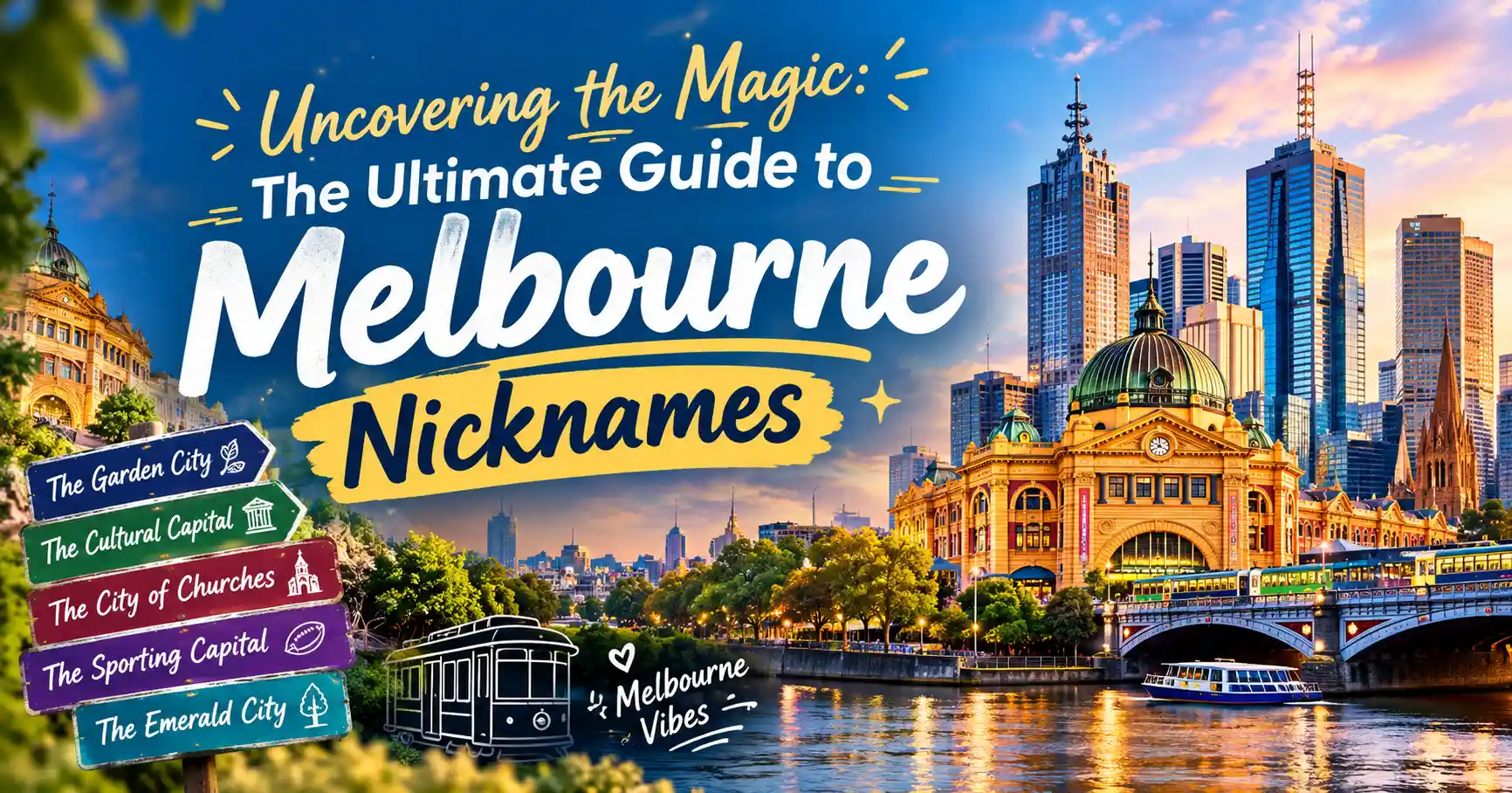
Melbourne, the vibrant capital of Victoria, Australia, is a city that defies a single definition. Known for its laneway coffee culture, street art, and unpredictable weather, it has earned a colorful array of monikers over its nearly two-century history. These Melbourne nicknames reflect its evolution from a colonial settlement to a global cultural powerhouse. Let’s explore the stories behind the names locals and visitors use to describe this dynamic metropolis.
✨ Quick Answer: What is Melbourne’s Nickname?
The most famous nickname for Melbourne is “Australia’s Cultural Capital.” Other popular nicknames include “The Sporting Capital of the World,” “Marvellous Melbourne,” and “The Fashion Capital.” It is also affectionately known as “Melbs” by locals.
📊 Quick Facts About Melbourne
| Feature | Details |
|---|---|
| City | Melbourne |
| State/Country | Victoria, Australia |
| Official Nickname | None officially legislated, but “Cultural Capital” is widely recognized. |
| Most Famous Nickname | Australia’s Cultural Capital |
| Population | Approx. 5.2 Million (Greater Melbourne) |
| Founded | 1835 |
| Known For | Coffee, Street Art, Sports, Fashion, Laneways |
🏛️ Official Nickname of Melbourne
Melbourne does not have a legally binding “official” nickname passed by an act of parliament. However, the city is formally and popularly recognized by the Victorian Government and Tourism Australia as “Australia’s Cultural Capital.” This title is used in official marketing campaigns and is widely accepted as the city’s primary descriptor due to its dominance in arts, music, and culinary scenes. Historically, the title “Marvellous Melbourne” was used to describe the city during the gold rush boom of the 1880s, and it remains a recognized historical moniker.
What Are the Nicknames of Melbourne?
Melbourne’s nicknames generally fall into three categories: cultural, sporting, and colloquial. Because the city is frequently ranked as the world’s most livable city, many of its nicknames highlight its lifestyle and atmosphere. Whether it’s the glitz of the fashion scene or the grit of its historical roots, these names capture the essence of the Victorian capital. The following sections detail the most prominent names, ranging from the elegant to the slang.
📜 Complete List of Melbourne Nicknames
| Nickname | Meaning | Origin | Popularity |
|---|---|---|---|
| Australia’s Cultural Capital | The center of arts, theatre, and food in Australia. | Modern Tourism / Media | Very High |
| Marvellous Melbourne | A term describing the city’s wealth and grandeur. | 1880s Gold Rush Era | High (Historical) |
| The Sporting Capital of the World | Home to major stadiums and sporting events. | Sports Media / Government | High |
| Melbs | Affectionate, casual abbreviation. | Local Slang | Very High (Colloquial) |
| The Fashion Capital | Center of Australian style and design. | Fashion Industry | Medium |
| The Big V | Reference to the state of Victoria. | Local Vernacular | Medium |
Most Popular Nicknames of Melbourne
The most recognized nicknames for Melbourne are tied to its livability and lifestyle. While “Marvellous Melbourne” speaks to its history, the modern era belongs to “Australia’s Cultural Capital” and the “Sporting Capital.” These titles are not just slogans; they are deeply ingrained in the city’s identity and economy.
Main Nicknames Explained
Australia’s Cultural Capital
- Meaning: The epicenter of Australia’s art, music, theater, and culinary innovation.
- Short Origin Story: Gained traction in the late 20th century as the city invested heavily in arts infrastructure like the Arts Centre Melbourne.
- Historical Background: Unlike Sydney’s focus on finance and beaches, Melbourne focused on European-style laneways, galleries, and live music.
- Modern Usage: Used by tourism boards and locals to differentiate the city from other Australian hubs.
- Cultural Impact: Justifies the city’s obsession with coffee, street art, and late-night dining.
- Interesting Fact: Melbourne has the highest concentration of street art in the world, particularly in Hosier Lane.
Marvellous Melbourne
- Meaning: A term denoting the city’s immense wealth and architectural grandeur.
- Short Origin Story: Coined by journalist George Augustus Sala in 1885 during a visit.
- Historical Background: It described the “boom” period of the 1880s when Melbourne was one of the richest cities in the British Empire due to the Gold Rush.
- Modern Usage: Primarily used in historical contexts or ironically when traffic is bad.
- Cultural Impact: It led to the construction of grand buildings like the Royal Exhibition Building.
- Interesting Fact: At one point in the 1880s, Melbourne was reputedly the wealthiest city in the world per capita.
The Sporting Capital of the World
- Meaning: A city where sports are a religion, hosting major global events.
- Short Origin Story: Earned through hosting the 1956 Olympics and the Australian Open.
- Historical Background: The Melbourne Cricket Ground (MCG) is an icon of the city.
- Modern Usage: Heavily promoted during the AFL (Australian Football League) season and the Formula 1 Grand Prix.
- Cultural Impact: The city essentially shuts down for the AFL Grand Final.
- Interesting Fact: The MCG is the largest stadium in the Southern Hemisphere.
Melbs
- Meaning: A friendly, shortened version of the city’s name.
- Short Origin Story: Emerged in the late 1990s/2000s as a mark of local pride.
- Historical Background: Fits the Australian tendency to shorten words (e.g., “barbie” for barbecue).
- Modern Usage: Used constantly in social media captions and casual conversation.
- Cultural Impact: Signals that the speaker is a local or a “Melburnian.”
- Interesting Fact: Locals also sometimes call themselves “Melburnians” rather than “Melbournians.”
The Fashion Capital
- Meaning: The hub of Australia’s fashion industry and retail.
- Short Origin Story: Driven by the Melbourne Fashion Festival and the city’s distinct street style.
- Historical Background: Collins Street and Chapel Street have historically been luxury shopping districts.
- Modern Usage: Commonly used in media and retail marketing.
- Cultural Impact: Fosters a strong independent designer scene.
- Interesting Fact: The city is home to the country’s oldest fashion school, RMIT.
Which Nickname Is Most Famous?
“Australia’s Cultural Capital” is currently the most famous and widely utilized nickname. In the 21st century, Melbourne has successfully branded itself as the heart of Australian culture. While “Marvellous Melbourne” is beloved for its historical weight, “Cultural Capital” is the title that drives tourism and defines the modern identity of the city to the rest of the world.
How Melbourne Got Its Nicknames
Melbourne’s nicknames were not assigned by a single committee but evolved organically over time. The “Marvellous” tag came from a visiting journalist impressed by the gold-fueled architecture. The “Sporting” title was earned through decades of hosting massive events. The “Cultural” and “Fashion” titles are a result of strategic urban planning and a population that values lifestyle over pure commerce. Essentially, these names reflect what the city does best.
Other Nicknames at a Glance
- The Big Smoke: A common term for any major city in Australia, but often used for Melbourne or Sydney.
- The Garden State’s Capital: A reference to Victoria’s state nickname.
- The City of Laneways: Referring to the famous grid of alleys filled with cafes.
- The Coffee Capital: A nod to the city’s world-famous coffee obsession.
- Batmania: A historical footnote; the city was almost named Batmania after John Batman, one of its founders.
Fun Facts About Melbourne
- Coffee Obsession: It is estimated there are over 2,000 cafes in the Greater Melbourne area.
- The Trams: Melbourne has the largest urban tram network in the world.
- Weather: The city is famous for having “four seasons in one day.”
- Laneways: There are over 200 laneways in the city center, many of which are covered in street art.
- Batmania: If John Batman had his way, the city would be called Batmania.
- Hook Turns: Melbourne is the only city in the world where “hook turns” are a standard part of the road rules.
- Culture: Melbourne hosts more live music venues per capita than any other city in the world.
- Sport: The Melbourne Cup is known as “the race that stops a nation.”
Famous Attractions in Melbourne
Melbourne is home to iconic attractions that support its nicknames. The Melbourne Cricket Ground (MCG) is the heart of its sporting identity. Hosier Lane represents its street art culture. The Royal Exhibition Building and Federation Square are hubs of cultural activity. For fashion and dining, Collins Street and Chapel Street are essential destinations.
⚖️ Nickname Comparison: Melbourne vs. Sydney
While Sydney is the “Harbour City,” Melbourne’s identity is less about geography and more about attitude. This natural rivalry fuels the distinct cultural outputs of both cities.
🔗 Related Cities and Their Nicknames
Frequently Asked Questions (FAQs)
What is the official nickname of Melbourne?
Melbourne does not have an official nickname. However, “Australia’s Cultural Capital” is the most widely recognized and officially promoted title by tourism bodies.
Why is Melbourne called “Marvellous Melbourne”?
The name was coined in 1885 by journalist George Augustus Sala to describe the city’s rapid growth, wealth, and grand architecture during the Victorian gold rush era.
Who gave Melbourne the nickname “Australia’s Cultural Capital”?
This is a modern title that evolved organically through media and tourism marketing. It reflects the city’s heavy investment in arts, music, and food culture over the last 30 years.
When did the nickname “Melbs” become popular?
“Melbs” became popular in the early 2000s as a term of endearment among younger locals and on social media platforms.
Is the nickname “Sporting Capital of the World” officially recognized?
While not an official legal title, it is a globally recognized descriptor due to the city hosting the Australian Open, the Formula 1 Grand Prix, the Melbourne Cup, and the AFL Grand Final.
Conclusion
Melbourne is a city of many faces, and its Melbourne nicknames perfectly capture its multifaceted personality. From the historical grandeur of “Marvellous Melbourne” to the modern vibrancy of “Australia’s Cultural Capital,” these names tell the story of a city that values art, sport, and coffee above all else.
Whether you call it Melbs, the Big V, or the Fashion Capital, Melbourne remains a unique and captivating destination. For more information on the city’s history and culture, you can visit the official City of Melbourne website.