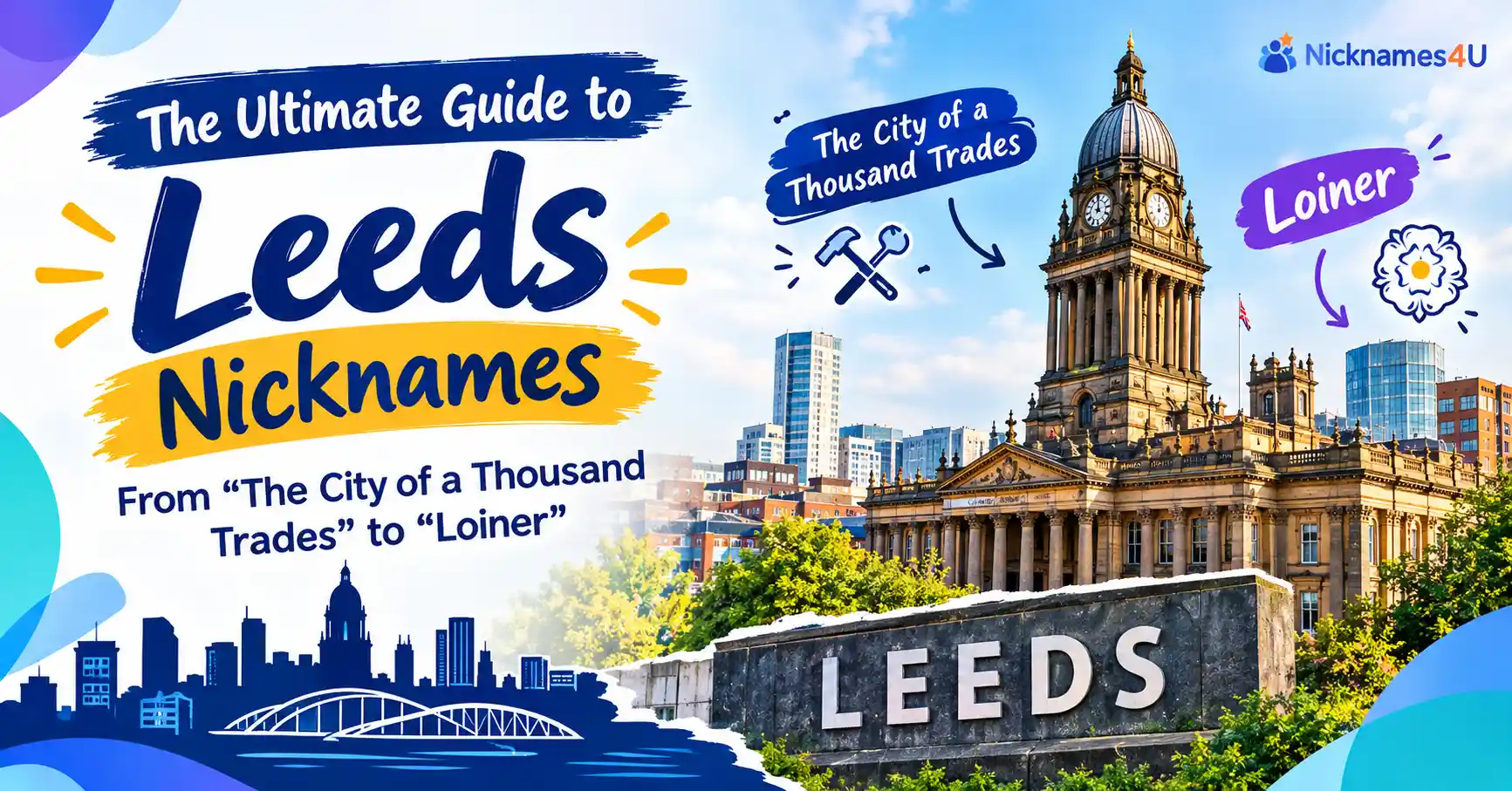
Leeds, a vibrant city in West Yorkshire, England, is a powerhouse of culture, commerce, and history. While it may not have as many famous monikers as some global metropolises, its nicknames reveal a deep and fascinating story.
The Leeds Nicknames are more than just labels; they are a reflection of the city’s industrial past, its unique local dialect, and the enduring pride of its people. From the industrial “City of a Thousand Trades” to the affectionate and mysterious “Loiner,” each name offers a glimpse into the soul of this dynamic city.
🏆 Quick Answer Box
The Most Famous Leeds Nickname
The most famous nickname for Leeds is “The City of a Thousand Trades,” a nod to its industrial heritage. However, the most unique and locally cherished nickname is “Loiner,” the demonym for a person from Leeds. Other well-known nicknames include “God’s Own Country” and “The Knightsbridge of the North.”
📊 Quick Facts Table
Official Nickname of Leeds
Leeds does not have an officially designated nickname by any governing body. However, “The City of a Thousand Trades” is often cited as a historical and commonly recognized title that captures the city’s economic spirit during the Industrial Revolution. Other nicknames like “Loiner” are cultural and unofficial but are widely used and recognized by locals and the wider UK.
What Are the Nicknames of Leeds?
Leeds’s nicknames are a mix of historical tributes, local slang, and affectionate boasts. They can be categorized into industrial, geographical, and cultural monikers. These names paint a picture of a city that has evolved from a medieval market town to a global financial and cultural hub, never losing its unique Yorkshire identity.
📋 Complete List of Leeds Nicknames
Most Popular Nicknames of Leeds
The most recognized nicknames for Leeds are “The City of a Thousand Trades” and “Loiner.” The former is a historical badge of honor, while the latter is a unique cultural identifier. “God’s Own Country” is also widely used, though it applies to the whole of Yorkshire, with Leeds often seen as its beating heart.
Main Nicknames Explained
🏭 The City of a Thousand Trades
- Meaning: A testament to the city’s incredibly diverse industrial base.
- Short Origin Story: Coined during the 19th century when Leeds was a global powerhouse of manufacturing, producing everything from wool and flax to machinery and leather goods.
- Historical Background: Unlike cities that relied on a single industry, Leeds’s economy was remarkably varied, which made it more resilient. This diversity was its defining characteristic.
- Modern Usage: Still used today to promote the city’s innovative and entrepreneurial spirit, though its industrial past is now a proud memory.
- Cultural Impact: It represents the hard work, ingenuity, and resilience of the Leeds people.
- Interesting Fact: At its peak, the city was home to over 1,000 different types of businesses, from tiny workshops to massive factories.
🧑🤝🧑 Loiner
- Meaning: A native or inhabitant of Leeds.
- Short Origin Story: The exact origin is a mystery. The most popular theory is that it comes from “Loidis,” the name of the ancient Celtic kingdom that once covered the area. Another theory suggests it comes from a dialect word for a lean-to or shed.
- Historical Background: The term has been in use for over a century, evolving as a unique and affectionate way for locals to identify themselves.
- Modern Usage: Very common in Leeds and across Yorkshire. You’ll hear “I’m a Loiner” with a sense of pride.
- Cultural Impact: It’s a badge of belonging, instantly identifying someone as a true Leeds native.
- Interesting Fact: The word is so unique that it’s often used in linguistic studies as an example of a demonym with an obscure and debated origin.
🌳 God’s Own Country
- Meaning: A phrase expressing deep affection and pride for Yorkshire.
- Short Origin Story: While it refers to all of Yorkshire, it’s frequently associated with Leeds as its largest and most prominent city.
- Historical Background: The phrase has been used for centuries to describe the beauty of the Yorkshire landscape, from the Dales to the Moors.
- Modern Usage: Used by locals and in tourism campaigns to highlight the region’s natural beauty and distinct culture.
- Cultural Impact: It fosters a strong sense of regional identity that often transcends city rivalries.
- Interesting Fact: The phrase is so beloved that it’s often used on merchandise, from mugs to t-shirts, across the county.
🛍️ The Knightsbridge of the North
- Meaning: A nickname highlighting Leeds’s reputation as a top-tier shopping destination.
- Short Origin Story: Gained popularity in the late 20th and early 21st centuries as Leeds developed a sophisticated retail scene, including the Victoria Quarter and Trinity Leeds.
- Historical Background: The city has a long history of markets, but the modern nickname reflects its shift to luxury and high-end retail.
- Modern Usage: Often used in marketing and media to attract shoppers and tourists.
- Cultural Impact: It reinforces Leeds’s status as a modern, cosmopolitan city.
- Interesting Fact: The Victoria Quarter is home to the largest stained-glass window in Europe, adding to its grand shopping experience.
Which Nickname Is Most Famous?
“The City of a Thousand Trades” is arguably the most famous and historically significant nickname. It perfectly encapsulates the city’s explosive growth and industrial might, which shaped its modern identity. While “Loiner” is more personal and culturally unique, “The City of a Thousand Trades” is the moniker that best tells the story of Leeds’s rise to prominence on the world stage.
How Leeds Got Its Nicknames
Leeds’s nicknames are a product of its history and its people’s character. The industrial nicknames arose from the city’s pivotal role in the Industrial Revolution. The cultural nicknames, like “Loiner,” stem from the local dialect and a strong sense of community. The geographical and boastful nicknames, like “God’s Own Country” and “The Knightsbridge of the North,” reflect the pride of its residents and the city’s modern achievements in retail and lifestyle.
Other Nicknames at a Glance
- The Motorway City: For its strategic location on the UK’s motorway network.
- Moo-tside: A humorous, phonetic spelling reflecting the local accent.
- The Queen of the North: A less common but flattering title, sometimes used in the media.
🎉 Fun Facts About Leeds
- The Birthplace of Cluedo: The world-famous board game was invented in Leeds by Anthony E. Pratt in 1944.
- The First Traffic Lights: The world’s first-ever traffic lights were installed in Leeds in 1868 (though they exploded shortly after!).
- A City of Firsts: Leeds was home to the first Marks & Spencer Penny Bazaar, which opened in Kirkgate Market in 1884.
- Dual-City Status: Leeds is twinned with cities like Lille in France, Dortmund in Germany, and Louisville in the USA.
- The Grand Theatre: This historic theatre is said to have been where the famous painter J.M.W. Turner was inspired to create some of his works.
- The Leeds Grand: The city is home to one of the oldest and most beautiful markets in the UK, Kirkgate Market, which dates back to 1822.
- The Rhubarb Triangle: Leeds is at the heart of the “Rhubarb Triangle,” a famous area for producing the world’s best forced rhubarb.
- The Emmerdale Connection: The popular soap opera “Emmerdale” is set in a fictional village in the Yorkshire Dales, but its production is based in Leeds.
- A Sporting Hub: Leeds is home to the iconic Leeds United Football Club and the famous Headingley Stadium, a major venue for cricket and rugby.
- The First ever… The world’s first commercially successful steam locomotive, the “Salamanca,” was built in Leeds in 1812.
🎭 Famous Attractions in Leeds
Leeds boasts a wealth of attractions, including the historic Royal Armouries Museum, the stunning Harewood House, and the vibrant Leeds Art Gallery. The city’s cultural scene is further enriched by the Leeds Playhouse and the Northern Ballet. For shopping, the Victoria Leeds district and Trinity Leeds are must-visit destinations.
🥊 Nickname Comparison: Leeds vs. Manchester
This comparison highlights the different historical paths of these two great northern cities. While Manchester was defined by the cotton industry (“Cottonopolis”), Leeds’s strength was in its variety (“The City of a Thousand Trades”). Manchester’s “Madchester” nickname reflects its influential music scene, while Leeds’s “Loiner” is a more traditional, dialect-based moniker.
🔗 Related Cities and Their Nicknames
Manchester Nicknames
Cottonopolis, Madchester
Bradford Nicknames
Wool City, The Curry Capital
York Nicknames
The Ancient Capital, Chocolate City
Sheffield Nicknames
Steel City, The Outdoor City
❓ Frequently Asked Questions
What is the official nickname of Leeds?
Leeds does not have an officially designated nickname. “The City of a Thousand Trades” is its most famous historical moniker, while “Loiner” is the most common term for its residents.
Why is Leeds called “The City of a Thousand Trades”?
This nickname originated during the Industrial Revolution to highlight the city’s incredibly diverse economy, which was not dependent on a single industry but was a hub for textiles, engineering, clothing, and many other trades.
Who gave Leeds the nickname “Loiner”?
The exact origin of “Loiner” is unknown. It is a local dialect term that evolved over time, possibly from the ancient kingdom of Loidis or an old word for a shed. It’s a name given by the people, for the people.
When did the nickname “The Knightsbridge of the North” become popular?
This nickname became popular in the late 20th and early 21st centuries as Leeds established itself as a premier destination for luxury shopping, particularly with the development of the Victoria Quarter.
Do locals use the nickname “Loiner”?
Absolutely. “Loiner” is a term of pride and identity used by people from Leeds to describe themselves. It’s a unique and cherished part of the local culture.
Conclusion
The nicknames of Leeds are a fascinating mix of history, pride, and local charm. From the industrial might of “The City of a Thousand Trades” to the unique cultural identity of “Loiner,” these names tell the story of a city that has always been a powerhouse of innovation and a place of strong community. They are a testament to the city’s journey from a medieval market town to a modern, vibrant metropolis.
For those looking to explore more, you can discover the rich history and heritage of the city by visiting the official Leeds City Council website.